How to Choose the Right Lab Grown Diamond Supplier: 10 Things Jewelry Retailers Must Check
 by lepdogroup@gmail.com
1 comment
by lepdogroup@gmail.com
1 comment
Knowing how to choose lab grown diamond supplier means evaluating a vendor across certification standards, cut consistency, supply reliability, and transparent pricing before placing a single order. For jewelry retailers, this decision directly affects product quality and customer trust. Lepdo Diamonds offers IGI-certified lab grown stones with full traceability and dedicated B2B support for USA-based buyers.
How to Choose a Lab Grown Diamond Supplier is one of the most important decisions jewelry retailers face in today’s rapidly evolving diamond market. Nearly 40% of engagement ring buyers in the United States now request lab grown diamonds, according to industry data tracked through 2024 and 2025 trade reports, and demand continues to grow. Yet despite this surge in popularity, many retailers still select suppliers based primarily on price. While lower costs may seem attractive, choosing the wrong supplier can lead to inconsistent quality, certification issues, higher return rates, damaged customer trust, and lost long-term revenue.
Knowing how to choose a lab grown diamond supplier is one of the most consequential business decisions a retailer, wholesaler, or manufacturer can make right now. Get it right, and you build a pipeline of consistent, certified inventory that sells confidently. Get it wrong, and you are fielding angry customers holding stones that do not match their certificates.
This post walks you through 10 specific things to check before you commit to any lab diamond vendor. From certification standards and cut grading consistency to red flags that signal a supplier is not ready for the US market, this is the checklist that protects your business and your buyers.
What It Actually Means to Choose the Right Lab Grown Diamond Supplier
A lab grown diamond supplier is any manufacturer, wholesaler, or trading company that sources, cuts, polishes, and sells lab-created diamonds to retail businesses or other trade buyers. The phrase sounds simple, but the reality of what separates a trustworthy vendor from a risky one is layered.
Quick Info Box
- Definition: A lab grown diamond supplier provides CVD or HPHT-grown diamonds, typically with third-party grading certificates, to B2B buyers for resale or manufacturing use.
- Key Types: Direct manufacturers, wholesale traders, online B2B platforms, and hybrid supplier-graders.
- Best For: Jewelry retailers, engagement ring brands, fine jewelry wholesalers, and independent designers sourcing consistent melee or center stones.
- Key Advantage: Lab grown diamonds carry the same chemical and optical properties as mined diamonds at a significantly lower cost per carat, making them ideal for margin-sensitive retail businesses.
Understanding the Diamond Supply Chain is the first step toward making a smart sourcing decision. Knowing where your supplier sits in that chain tells you a great deal about how much control they have over quality, pricing, and lead times.
The 10 Things Every Retailer Must Check When Evaluating a Lab Diamond Supplier
1. Third-Party Certification: IGI, GIA, or Neither?
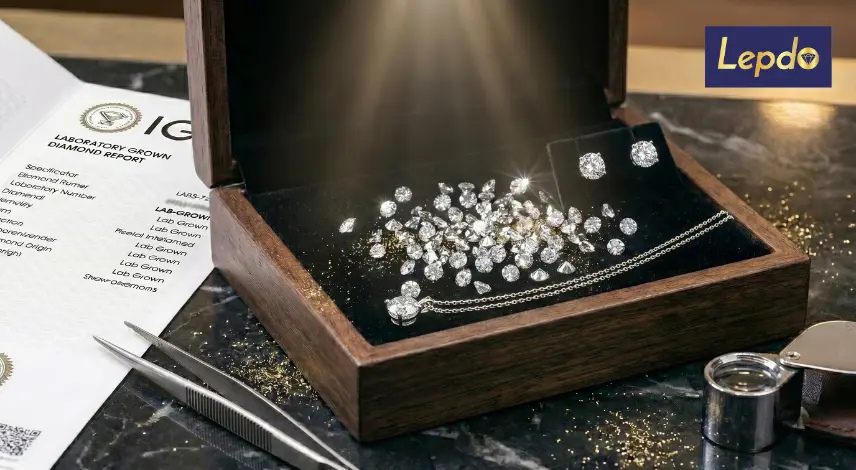
This is non-negotiable. Every stone your supplier sells to you should carry a certificate from a recognized grading laboratory. In the lab grown diamond market, the International Gemological Institute (IGI) is the most widely used grading body, and GIA now issues lab grown diamond reports as well.
Here is what too many retailers skip: actually reading the certificate. Check that the certificate number is laser-inscribed on the girdle of the stone. Ask your vendor what percentage of their inventory is IGI or GIA certified versus in-house graded. Any supplier that relies primarily on their own grading without third-party verification is a vendor you should approach with serious caution.
You will want to pay attention to the specific grading format as well. IGI lab grown reports include the 4Cs, but some older or budget report formats omit cut grading for fancy shapes. Confirm the report type before placing an order.
2. Cut Grading Consistency Across Fancy Shapes
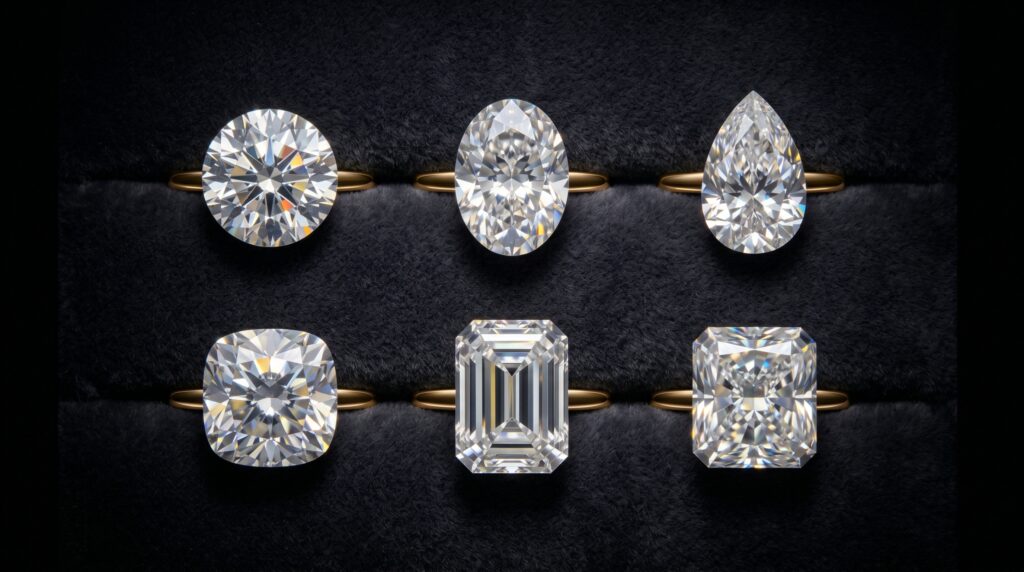
Round brilliant diamonds have standardized cut grading from GIA, but most fancy shapes, including ovals, cushions, pears, and emeralds, do not receive a formal cut grade from GIA on natural diamonds. For lab grown fancies, IGI does assign cut grades, and that makes your supplier’s relationship with IGI especially important.
The truth is, cut quality is the single biggest driver of visual performance in a diamond. A poorly cut oval will show a strong bowtie effect, weak brilliance, and flat light return, even if the color and clarity grades are excellent. A reliable Diamond Retailer cannot afford to stock diamonds that look lifeless on the display table.
Ask your vendor for light performance data, or at minimum, request videos of the specific stones before shipment. Suppliers who cannot provide that are flying blind on cut quality.
3. Inventory Depth and Replenishment Speed
One good order does not make a good supplier. What matters is whether they can fill your next order, and the one after that, with the same quality and specifications.
Ask about their live inventory system. Can you see real-time stock? Do they carry consistent depth across carat weights, say 0.50ct to 3.00ct, in the shapes you need? For a Diamond Wholesaler, inventory consistency is the backbone of their service promise.
A vendor with deep round brilliant inventory but thin supply on cushions or radiant cuts is a partial solution at best. Map your own sales data to what they can realistically supply before signing any agreement.
4. Pricing Transparency and Rapaport Alignment
Rapaport is the standard pricing benchmark for polished diamonds, and while lab grown diamonds trade at a significant discount to mined stones, the Rapaport framework still anchors how wholesale prices move in the market.
Ask your supplier how they price their lab grown goods. Do they reference a percentage of Rapaport? Do they have a published price list that updates regularly? Vendors who quote prices only verbally on a case-by-case basis without a systematic reference point are harder to trust over time, especially when market prices shift.
Transparency in pricing is not just a courtesy; it is a signal of how the vendor operates overall.
5. Production Method: CVD vs. HPHT
Lab grown diamonds are produced through two methods: Chemical Vapor Deposition (CVD) and High Pressure High Temperature (HPHT). Both produce real diamonds with identical chemical composition to mined stones. But certain buyers and certain markets have preferences.
CVD diamonds are more common in the current market, especially in the 1ct to 3ct range. HPHT diamonds tend to appear in smaller sizes and are also used as seed diamonds for the CVD process. Some retailers marketing in the luxury segment ask suppliers to specify the growth method.
Most consumers do not ask or care about growth method at the point of sale. But knowing this detail yourself signals to your customers that you understand what you are selling.
6. Returns Policy and Dispute Resolution Process
What happens when a stone arrives and does not match the certificate? What happens when you receive a parcel of 20 stones and three of them have visible inclusions that the clarity grade does not justify?
Here is what separates professional lab diamond vendors from transactional ones: they have a written returns and dispute policy. They stand behind their grading. They will replace or credit stones that do not match their documentation.
Before placing a first order, ask for the returns policy in writing. If the vendor hesitates or says disputes are handled on a case-by-case basis with no written framework, that is one of the clearest diamond supplier red flags you will encounter.
7. Communication and Dedicated Account Support
Speed of communication matters, especially across time zones. Most major lab grown diamond manufacturers are based in India, with buyers concentrated in the United States. That 10.5-hour time difference creates real friction if your supplier does not have dedicated support personnel who overlap with US business hours.
The best vendors assign a specific account manager to each retail client. That person knows your preferences, your standard order specifications, and can flag new inventory that fits your buying profile before it sells to someone else.
Test this during your vetting process. Send a detailed inquiry about a specific shape and see how fast and how specifically they respond. A generic auto-reply followed by silence is your answer.
8. Ethical Sourcing and Business Transparency
Lab grown diamonds are often positioned partly on the basis of ethical sourcing, specifically the absence of mining-related environmental or human rights concerns. Your customers may ask about this directly, especially those shopping for engagement rings with strong sustainability values.
Your supplier should be able to provide documentation of their production facilities, business registration, and trade relationships. Ask where they grow their rough, where polishing is done, and whether they can provide any supporting documentation. This is not about paperwork for its own sake; it is about knowing enough to answer your own customers confidently.
Checking a vendor against the Trusted Diamond Supplier criteria used by leading trade platforms is a practical starting point.
9. Sample Order Process and Quality Verification
Never commit to a bulk order without first placing a sample order of 10 to 20 stones across your target specifications. This is standard practice in serious B2B diamond sourcing.
When your sample arrives, send several stones for independent grading verification. If IGI graded the stones and your independent gemologist finds significant discrepancies in color or clarity, that is a serious problem. Minor variance between graders is normal; a full grade difference is not.
In my experience evaluating hundreds of parcel orders, the sample order process reveals more about a supplier than any catalog or website ever will. How they pack, how they document, how fast they ship, and how the stones actually look in person tells the whole story.
10. Long-Term Partnership Orientation
The best lab grown diamond suppliers are not just filling orders. They are thinking about your business growth. They notify you when price trends shift. They hold inventory for preferred clients. They work with you on custom specifications when needed.
Ask any vendor you are evaluating: what does your ideal retail client relationship look like? The answer will tell you whether they think in transactions or partnerships. For a retail business trying to build a consistent, profitable lab grown diamond program, that distinction matters more than almost anything else.
Certified vs. Uncertified Lab Grown Diamonds: The Real Difference
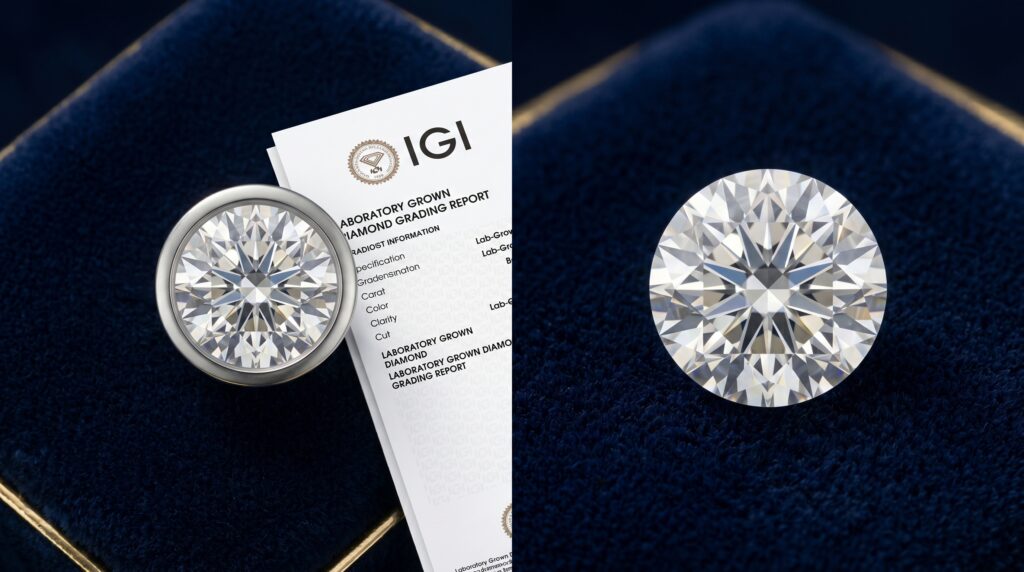
This comparison comes up constantly in B2B diamond sourcing conversations, and it is worth addressing directly with a clear breakdown.
| Factor | IGI/GIA Certified Lab Diamond | Uncertified Lab Diamond |
|---|---|---|
| Price Transparency | Graded to a verifiable standard, easier to price confidently | Pricing relies on vendor’s claim alone |
| Resale Confidence | Customers and appraisers can verify grade | No independent verification available |
| Return Handling | Certificate serves as documentation baseline | Disputes become subjective and harder to resolve |
| Retail Presentation | Certificate adds perceived value at point of sale | Harder to justify price point to informed buyers |
| Supplier Accountability | Third-party grading creates a paper trail | Supplier bears no external accountability |
That said, not every uncertified stone is a bad stone. Some vendors sell uncertified melee or commercial-grade goods for use in pave settings where certification is impractical. The issue arises when uncertified stones are sold as if their quality grades were documented. That gap is where retailers get burned and where customer trust breaks down fastest.
Understanding Diamond Certification fully before you negotiate with any vendor is one of the smartest things you can do as a buyer.
How to Choose the Right Supplier for Your Specific Business
Not every retailer needs the same type of lab grown diamond supplier. Here are six decision factors that should guide your choice.
- Your sales volume and order frequency: If you are placing orders weekly, you need a vendor with deep inventory and fast turnaround. If you order quarterly, a vendor with a strong selection but slower fulfillment may still work well for you.
- Your average price point: A store selling lab grown diamonds in the USD 500 to USD 1,500 range has different cut quality and certification needs than one selling in the USD 5,000 to USD 15,000 range. Match your supplier tier to your retail positioning.
- Shape and specification requirements: Retailers who specialize in fancy shape diamonds, including ovals, pears, and elongated cushions, need vendors with proven expertise in those cuts. Not all suppliers cut fancy shapes equally well.
- Budget and margin requirements: Lab grown diamonds already carry a significant cost advantage over natural stones. But supplier pricing still varies by 15% to 30% across vendors for the same specification. Do the margin math before you commit.
- Occasion and end consumer profile: Engagement ring buyers want certified, traceable stones with documented quality. Fashion jewelry brands sourcing commercial goods have different requirements. Know your end customer before you build your sourcing brief.
- Lab grown vs. natural in your product mix: If you sell both Lab Grown Diamonds and natural stones, you may need separate vendor relationships. Some suppliers specialize in lab grown only, and that specialization often translates to deeper expertise and better cut quality in that category.
Before you finalize your choice, talk to at least three vendors in depth. The vendor who asks the most detailed questions about your business is usually the one most prepared to serve it.
What B2B Buyers and Manufacturers Should Know About Lab Diamond Sourcing
For manufacturers and wholesale buyers, the evaluation criteria go deeper than what a retail buyer needs to check. You are sourcing at volume, often across multiple shape categories, and you need grading consistency that holds up across hundreds or thousands of stones per shipment.
IGI grading standards for lab grown diamonds have become considerably more refined over the past three years. The institute now grades cut, polish, and symmetry on lab grown rounds with the same rigor applied to natural diamonds. For fancy shapes, IGI assigns a cut grade based on proportion analysis, though the absence of a single universal fancy shape cut standard means vendor expertise in cutting these shapes is still the primary quality differentiator.
When I assess a vendor’s fancy shape lab grown goods, the first thing I check is their depth percentage and length-to-width ratio consistency across a parcel. A supplier cutting ovals to 1.35 to 1.50 L:W ratios consistently, with depths between 58% and 62%, demonstrates they have a disciplined production standard. Parcels that show wide variance in those measurements are coming from a facility without tight cutting controls.
For bulk sourcing, always request a grading report summary sheet for any parcel before shipment. This document, listing every stone’s carat weight, color, clarity, and measurements, gives you a basis for dispute resolution if individual stones arrive outside specification.
The 5Cs Explained framework is a useful reference when briefing procurement staff or training your team on what to check against a certificate.
One insider tip: ask your vendor for their rejection rate during polishing. Reputable manufacturers reject a meaningful percentage of their polished goods for not meeting their stated grading targets. A supplier that claims a near-zero rejection rate is either not checking carefully or not being honest with you.
Lab Grown Diamond Supplier Trends in the USA: 2026 to 2027
The US market for lab grown diamonds has matured significantly. Two years ago, the main conversation was whether lab grown diamonds were “real.” Today, that debate is largely settled among informed consumers. The conversation has shifted to quality, traceability, and design.
Retailers are increasingly sourcing fancy shape lab grown diamonds to meet demand for elongated ovals, east-west emerald cuts, and soft cushion shapes for solitaire engagement settings. These shapes align with broader Diamond Jewelry Trends pointing toward individuality over convention. The classic round brilliant still dominates volume, but fancy shapes are growing at a faster rate in the premium segment.
There is also a clear move toward Diamond Minimal Jewelry design in the fashion and everyday wear category. Solitaire bezel settings, thin band pavé pieces, and stackable eternity rings using lab grown melee diamonds are all performing strongly with millennial and Gen Z buyers. Suppliers who can provide consistent, well-cut melee in the 0.01ct to 0.10ct range at reliable quality are increasingly valuable partners for retailers building these collections.
According to Edahn Golan Diamond Research, lab grown diamonds accounted for nearly half of all diamond jewelry units sold in the US in 2024. That market share is expected to hold or grow through 2027, making supplier relationships in this category a strategic priority for any retailer who wants to compete on both value and quality.
How to Evaluate Quality in a Lab Grown Diamond Shipment
When I assess a lab grown diamond parcel, the first thing I check is light performance, not the certificate. A stone should show strong brilliance, fire, and scintillation when held under a standard daylight-equivalent light source. If it looks glassy, flat, or dull at arm’s length, no paper grade changes that impression.
Here are four expert evaluation steps every retailer should apply to any new shipment:
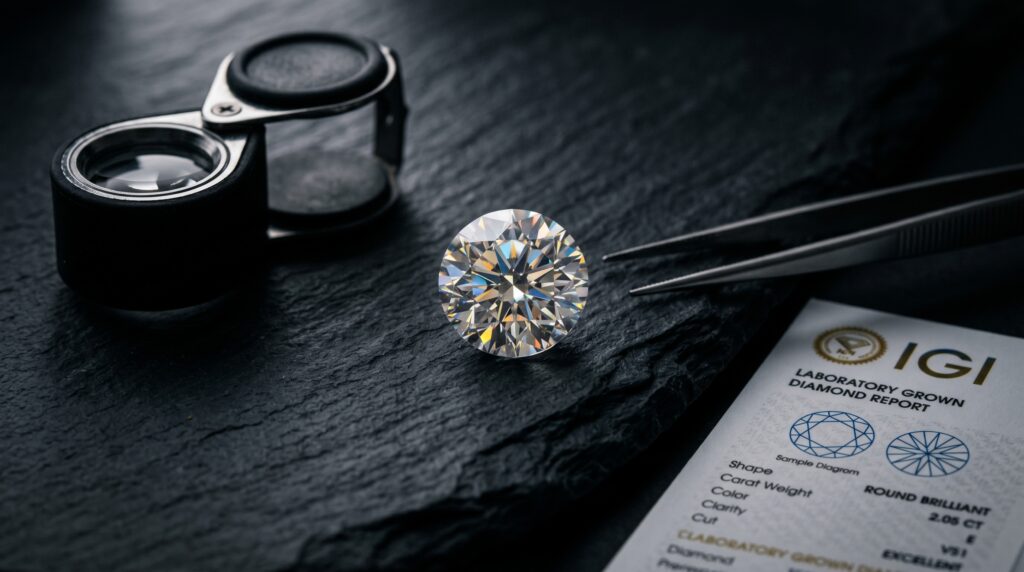
- Check inscription against certificate: Every certified stone should have its report number laser-inscribed on the girdle. Verify this under 10x magnification before accepting any shipment.
- Assess the table and depth percentage: For rounds, ideal proportions sit in specific ranges. Table percentage between 54% and 60%, depth between 59% and 62.5%, and a thin to slightly thick girdle are indicators of well-cut goods. Refer to Diamond Certification standards for shape-specific benchmarks.
- Look for growth strain patterns: CVD lab grown diamonds can sometimes show strain-related color concentrations, particularly in the D to F color range. Under UV light, some CVD diamonds show strong blue fluorescence. This is not necessarily a defect, but it is worth knowing before you price the stone.
- Check clarity under 10x loupe: Clarity grades on lab grown diamonds follow the same GIA scale used for natural diamonds. A VS1 grade means eye-clean with minor inclusions visible only under magnification. If inclusions are visible to the naked eye on a VS1 stone, the grading is suspect.
- Evaluate the pavilion: Deep pavilions or flat pavilions both kill light performance. A pavilion angle that is too steep will cause light to leak out the sides. A pavilion that is too shallow produces a nail-head effect in the table. Neither is acceptable in a well-cut stone.
Conclusion
Three things determine whether your lab grown diamond supply chain becomes an asset or a liability. The first is certification: every stone you sell should be graded by IGI or GIA, and you should verify that grading yourself on new supplier relationships. The second is cut quality: visual performance is what your customers actually experience, and no paper grade compensates for a poorly cut stone. The third is partnership quality: a vendor who communicates clearly, stands behind their goods, and thinks about your business growth is worth paying a small premium for over a cheaper, less reliable alternative.
Knowing how to choose a lab grown diamond supplier is a skill that pays dividends every time a customer walks out of your store satisfied, or every time an online order earns a five-star review without a return request.
If you are ready to work with a vendor who meets every one of these ten criteria, Lepdo Diamond is worth a conversation. Their team works directly with US-based retailers and wholesalers across a full range of certified lab grown goods, with the supply depth and account support your business needs.
The right supplier does not just fill your orders. They help you build the kind of inventory that builds your reputation.
Frequently Asked Questions About Choosing a Lab Grown Diamond Supplier
1. What is the best way to choose a lab grown diamond supplier?
The best way to choose a lab grown diamond supplier is to evaluate vendors across five core areas: third-party certification (IGI or GIA), cut grading consistency across the shapes you need, inventory depth and replenishment speed, pricing transparency referenced to market benchmarks, and a clear written returns and dispute policy. A sample order before any bulk commitment is essential.
2. Are lab grown diamonds cheaper to source than natural diamonds?
Yes, lab grown diamonds are significantly cheaper to source wholesale than natural diamonds of equivalent carat weight, color, and clarity. The price gap has stabilized in recent years, with lab grown diamonds typically wholesaling at 70% to 85% below comparable natural stones. This gap provides meaningful margin flexibility for retailers without requiring a sacrifice in visual quality.
3. Which lab grown diamond shapes look the most impressive to customers?
Oval and elongated cushion shapes consistently draw the most attention from US engagement ring buyers because they appear larger than rounds of the same carat weight. A 1.50ct oval, for example, typically looks closer to a 2.00ct round in terms of face-up surface area. Elongated radiant and pear shapes perform similarly well in face-up size perception.
4. Do lab grown diamonds receive a GIA cut grade?
GIA now issues grading reports for lab grown round brilliant diamonds that include a cut grade, just as they do for natural rounds. However, GIA does not assign formal cut grades to lab grown fancy shapes, the same policy applied to natural fancy shapes. IGI does assign cut grades to lab grown fancy shapes, which is one reason IGI certification is particularly valuable for oval, pear, and cushion lab grown diamonds.
5. What is the biggest quality risk when sourcing lab grown diamonds in bulk?
The biggest risk is grading inconsistency across a parcel. A supplier may use a consistent laboratory but still submit stones selectively, meaning lower-quality stones may carry inflated grades if submitted to less stringent graders. Verifying a random sample of incoming stones through an independent gemologist, especially on early orders from a new vendor, is the single most effective way to catch this problem before it reaches your retail floor.
6. Are lab grown diamonds from overseas suppliers as good as domestically sourced stones?
Quality is not determined by country of origin but by the cutting facility’s standards and the grading laboratory certifying the stones. The majority of the world’s polished lab grown diamonds are cut in India, and the best Indian manufacturers produce goods that meet or exceed the quality standards of any market. What matters is the specific vendor’s cutting standards, not their geography.
7. Which lab grown diamond shape is best for an engagement ring centerstone?
Round brilliant remains the bestselling shape for engagement ring centerstonesdue to its proven light performance and timeless appeal. Among fancy shapes, oval is currently the strongest performer in the US engagement ring market. Pear shapes are gaining ground with buyers who want something distinctive. The right shape ultimately depends on the buyer’s style preference and the setting design they have in mind.
8. How do I verify that a lab grown diamond supplier is reliable before placing a large order?
Start with a sample order of 10 to 20 stones across your target specifications. Send several stones for independent grading verification through IGI or a certified gemologist. Check the supplier’s business registration and trade references. Ask for their returns policy in writing. Evaluate their communication speed and specificity. A vendor that performs well on all of those tests before you have committed a large order is a vendor worth building a relationship with.