Lab Grown Diamond Resale Value: What Retailers and Investors Need to Know in 2026
 by lepdogroup@gmail.com
1 comment
by lepdogroup@gmail.com
1 comment
Lab grown diamond resale value refers to how much a lab-created diamond can be sold for after purchase, typically a fraction of its original retail price. This matters enormously for retailers and consumers because resale expectations can affect buying decisions, inventory strategy, and long-term value perception. Lepdo Diamonds helps B2B buyers and retail clients understand these dynamics clearly before committing to a purchase.
A jewelry retailer in Texas reached out to me last year after a customer returned a 2-carat lab grown diamond solitaire, purchased just eighteen months earlier for $4,200. She expected to resell it for at least half that. The best offer she got was $400.
That is not a horror story about one unlucky buyer. It is the current reality of lab grown diamond resale value, and if you are in this industry, you need to understand exactly why it happens and what it means for your business.
Lab grown diamond resale value has become one of the most searched and misunderstood topics in the diamond market today. Retailers are fielding questions from consumers. Wholesalers are adjusting inventory strategy. And investors who once saw lab-created stones as a cost-efficient alternative to natural diamonds are rethinking their position. This post covers what is actually happening with resale values in 2026, how it compares to natural diamonds, and what both B2B buyers and retail consumers need to factor in before they buy. You will also find practical guidance on certification standards from GIA and IGI, and how pricing dynamics have shifted.
What Is Lab Grown Diamond Resale Value?
Lab grown diamond resale value is the amount a lab-created diamond can be sold for on the secondary market, expressed either as a dollar figure or as a percentage of its original retail price.
Quick Info Box Definition: The resale price a lab grown diamond commands after initial purchase, typically on the secondary or pre-owned market. Key Types: CVD (Chemical Vapor Deposition) lab diamonds, HPHT (High Pressure High Temperature) lab diamonds Best For: Cost-conscious engagement ring buyers, fashion jewelry, commercial jewelry settings Key Difference: Lab grown diamonds have seen steep resale depreciation compared to natural diamonds, largely due to rapid manufacturing cost reductions
To understand the full picture of what drives pricing for these stones, it helps to explore Diamond Resale Value as a concept across both natural and lab-grown categories, since the forces at play are very different.
The Most Important Factors That Shape Lab Diamond Resale Value: And Who They Matter To
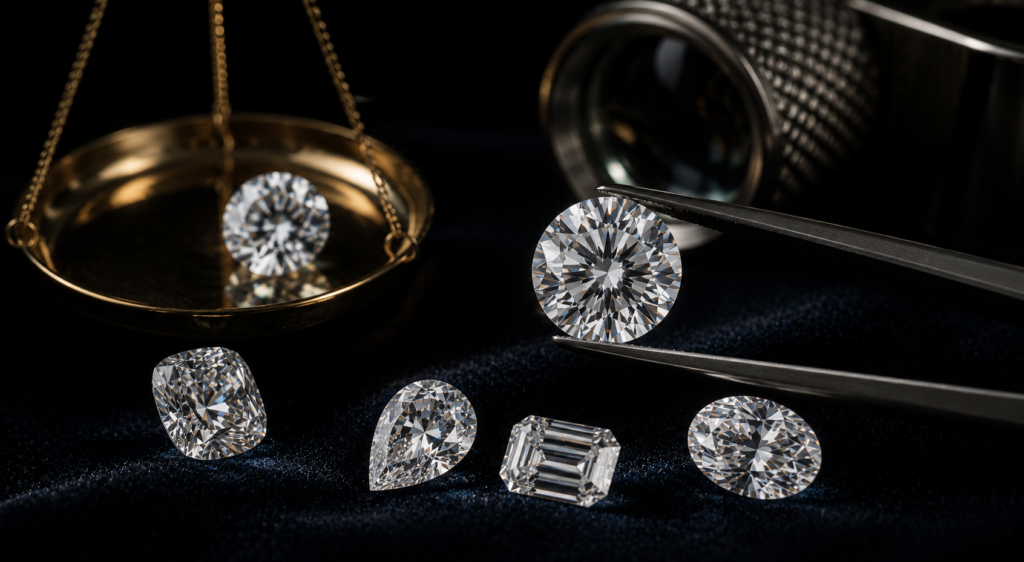
Resale value for lab grown diamonds is not a single fixed number. It shifts based on several intersecting variables. Here is what controls it in 2026, and who each factor matters most to.
1. Manufacturing Cost Collapse
This is the single biggest driver of poor resale performance. The cost to produce a lab grown diamond has dropped more than 90% over the last decade, with some industry estimates placing production costs for a one-carat CVD stone below $300 in 2025. When new diamonds can be produced that cheaply, there is almost no reason for a secondary market buyer to pay a premium for a used one. This affects every buyer: retail consumers trying to recoup value, and retailers managing trade-in expectations.
2. Certification Grade (IGI vs GIA)
Certification matters enormously for resale. Stones certified by IGI carry stronger resale credibility in the lab-grown market because IGI has developed a recognized grading standard for CVD and HPHT diamonds. GIA now grades lab grown diamonds with a full 4Cs report. Either way, an uncertified stone sells for next to nothing on resale. Retailers who stock uncertified inventory are handing buyers a long-term liability.
3. Carat Weight and Cut Quality
Larger stones in ideal or excellent cut grades hold relative value better than smaller or poorly cut alternatives. A 2-carat IGI-certified lab diamond with an excellent cut and high clarity grade will always attract more secondary interest than a comparable 0.5-carat with a good cut.
4. Brand or Retailer Perception
Where a stone was purchased does carry some weight. Diamonds sourced from recognized, certified suppliers tend to be viewed as more trustworthy on the secondary market. Buyers and resellers look for provenance.
5. Color and Clarity Grade
D-F color and VS1 or better clarity grades retain proportionally better resale value, even in lab grown stones. Lower grades lose value faster because the secondary market applies the same 4Cs logic as the primary market.
6. CVD vs HPHT Origin
HPHT stones have been on the market longer and tend to have a slightly more established resale track record. CVD stones are now dominant in production volume, which increases supply pressure and pushes resale prices further down.
7. Market Timing
The rate of price decline for lab grown diamonds has not stabilized. A stone purchased in 2021 has already lost a significant portion of its value simply because new production has pushed retail prices down. Timing matters for anyone thinking about this from an investment angle.
8. Retailer Buy-Back or Trade-In Policies
Some retailers, including suppliers who work with certified stones, offer structured trade-in programs. These exist because without them, consumers have almost nowhere to resell. For jewelry brands, offering a buy-back option is increasingly a competitive differentiator.
Lab Grown Diamond Resale Value vs Natural Diamond Resale Value: The Real Difference
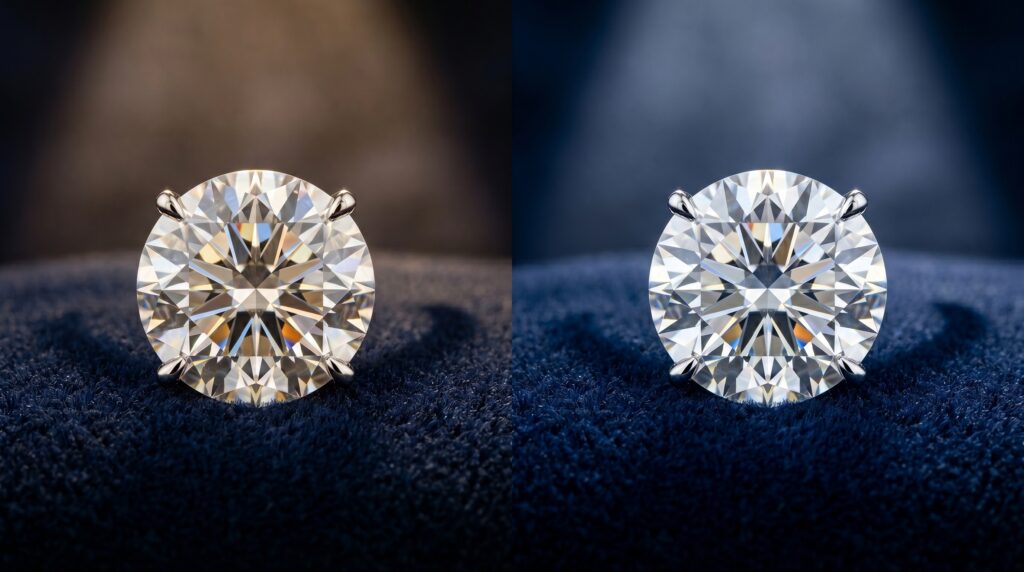
Most buyers ask this directly: do lab grown diamonds hold value the way natural diamonds do? The honest answer is no, and the gap is significant.
| Factor | Lab Grown Diamond | Natural Diamond |
|---|---|---|
| Typical Resale Value | 10% to 30% of retail | 25% to 50% of retail |
| Price Trend (2020-2026) | Declining rapidly | Relatively stable to slight decline |
| Secondary Market Demand | Limited and fragmented | Established (eBay, auction houses, dealers) |
| Certification Impact | High (IGI/GIA critical) | High (GIA especially) |
| Investment Viability | Very low for most grades | Low to moderate for rare stones |
The comparison above does not mean natural diamonds are a great investment either. The truth is, all polished diamonds, natural or lab-grown, face resale challenges because jewelry retail markups are high and secondary market buyers apply steep discounts. That said, natural diamonds have the advantage of scarcity. A high-quality natural 2-carat round brilliant certified by GIA cannot be replicated in a factory. That scarcity creates a floor for value that lab grown diamonds simply do not have.
For a complete side-by-side breakdown of both categories across additional quality and pricing dimensions, see our detailed resource on Natural vs Lab Grown diamonds for B2B buyers.
![Inner Image 1 Placeholder]
This is not an argument against lab grown diamonds. It is context. And context is what smart buyers need before making a $3,000 to $15,000 purchase decision.
How to Choose the Right Lab Grown Diamond for Your Style and Goals
Whether you are a retailer building inventory or a consumer buying an engagement ring, these six decision factors will steer you well.
- Define your purpose clearly. Are you buying for sentiment and everyday wear, or are you expecting a return on investment? Lab grown diamonds are outstanding for the former and a poor choice for the latter. Align your expectations with reality before you spend a dollar.
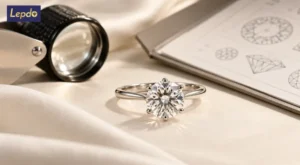
- Consider the setting and style longevity. A classic solitaire setting in platinum with a round brilliant or cushion cut lab diamond will always read as elegant and timeless. Trendy cuts or fashion-forward settings may feel dated in five years, reducing perceived value further.
- Match carat weight to your actual lifestyle. A 1.5-carat lab diamond at a fraction of the natural diamond price gives you the visual impact without overspending on a stone that will not retain value. You will want to pay attention to the carat-to-price ratio more carefully than you would with a natural diamond purchase.
- Budget for the long game differently. Because lab grown diamond resale value is low, treat this as a spend, not an asset. Budget accordingly. This actually frees many buyers to spend more on the setting, where craftsmanship and metalwork do hold value.
- Think about the occasion. For engagement rings, the emotional value is primary. For fashion jewelry purchased frequently and rotated seasonally, lab grown diamonds make extraordinary sense given the price-per-carat advantage over natural stones.
- Understand the lab-grown vs natural tradeoff at your price point. A $5,000 budget buys a very different natural diamond than a lab grown one. For more on how pricing compares at various quality tiers, explore the full breakdown at Lab Grown Price India for sourcing benchmarks that inform retail pricing globally. If resale value matters to you, natural may be the better path. If exceptional size and brilliance for daily wear is the goal, lab grown diamonds deliver.
Before you finalize your choice, be honest about what matters most: the look and experience of wearing the stone, or the long-term financial behavior of the purchase. Most buyers prioritize the former, and that is completely valid.
What B2B Buyers and Diamond Manufacturers Should Know
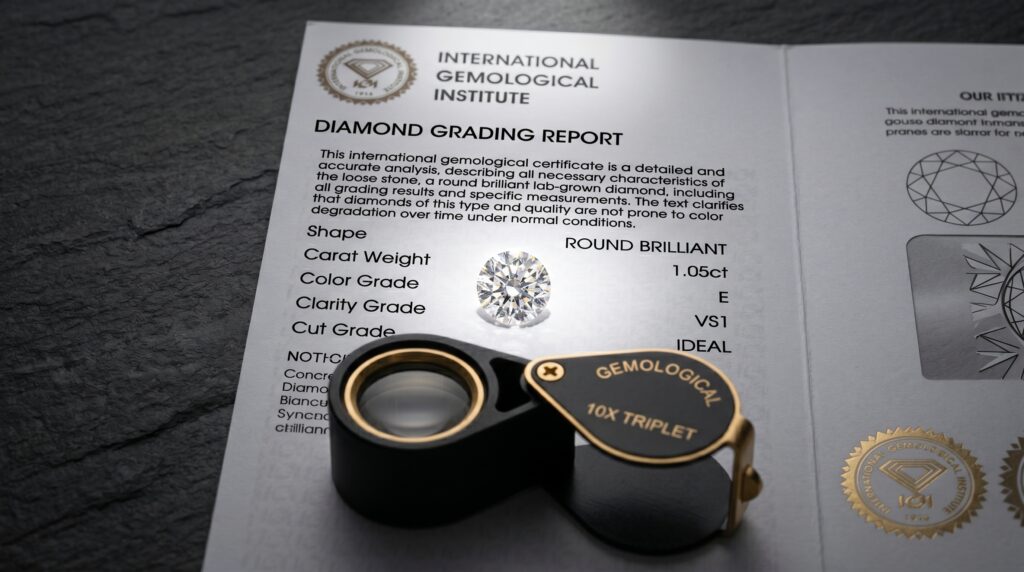
Here is what I tell wholesale clients and retail partners who come to me asking whether to expand their lab grown inventory in 2026: the opportunity is real, but it requires a clear-eyed sourcing strategy.
Lab grown diamonds are not going away. Consumer demand for them, especially in the $1,000 to $5,000 engagement ring range, is strong and growing. But the margin environment has compressed. Retailers who were making 40% to 50% margins on lab grown stones two years ago are now fighting for 20% to 25% as wholesale prices have followed the production cost curve downward.
For bulk sourcing, consistency in cut grading is critical. IGI-certified stones with triple excellent or very good cut grades are far easier to sell and command better prices than stones with inconsistent grading. GIA’s recent expansion into lab grown diamond grading has added a second trusted benchmark, and some high-end retail clients now specifically request GIA-certified lab grown diamonds for their collections.
Rapaport pricing for lab grown diamonds does not follow the same rap sheet structure as natural diamonds, but Rapaport market reports do track lab grown price trends quarterly. Savvy buyers use these reports to benchmark wholesale pricing.
In my experience, the retailers who do best with lab grown inventory are those who educate their sales staff on the resale value reality. A customer who understands going in that their stone is not a financial investment will have a better experience and fewer returns or complaints post-purchase. Transparency builds loyalty.
For a full breakdown of certification standards and sourcing quality markers, visit Certified Diamonds for guidance on what to look for when buying at scale.
Lab Grown Diamond Jewelry Trends in the USA for 2026 and 2027
The American market for lab grown diamond jewelry has matured considerably. Early adopters who bought lab stones for ethical or budget reasons have been joined by a much larger mainstream consumer base. The conversation has shifted from “are these real diamonds” to “how do I get the most for my money.”
In 2026, the most prominent design trend is pairing lab grown diamonds with colored gemstone accents. Toi et moi settings featuring a lab grown round or oval alongside a natural sapphire, ruby, or emerald are consistently strong sellers. This combination gives consumers a visually striking piece at a price point that would be out of reach with all-natural stones.
Celebrity culture and social media have amplified interest in larger carat weights at accessible price points. A consumer who sees a 3-carat cushion cut solitaire on a lifestyle influencer and discovers that the lab grown version costs under $3,000 is very likely to convert. Jewelers who stock lab grown diamond jewelry in the 2 to 4 carat range with excellent cut grades and GVS or better clarity are capturing this demand effectively.
According to market data tracked by Rapaport, lab grown diamonds now account for roughly 40% to 50% of the engagement ring market by unit volume in the United States. That number is expected to hold or grow slightly through 2027 as price gaps between lab grown and natural diamonds continue to widen.
East-West elongated settings, bezel set lab diamonds, and half-eternity bands are also trending strongly, especially among buyers in the 28 to 40 demographic.
How to Evaluate Quality in Lab Grown Diamonds
When I assess a lab grown diamond, the first thing I check is the cut. Not carat. Not clarity. Cut.
Light performance determines whether a stone looks alive or dead in the setting, and in lab grown diamonds, cut quality varies more than most buyers expect. Here are my top evaluation tips for anyone buying or stocking these stones.
- Start with the cut grade on the certificate. IGI and GIA both issue cut grades for round brilliants. For fancy shapes like ovals, cushions, and pear cuts, there is no standardized cut grade, so you need to evaluate table percentage, depth percentage, and length-to-width ratio directly on the grading report.
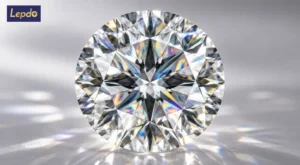
- Look for brilliance and fire in person or via video. Brilliance is the white light returned from the stone. Fire is the dispersion of colored light. Scintillation refers to the sparkle pattern when the diamond or light source moves. A well-cut lab grown diamond should show all three vividly. A poorly proportioned stone will look flat under most lighting.
- Check the pavilion depth percentage. For a round brilliant, pavilion depth between 42.5% and 43.5% is generally optimal. Outside this range, light leaks from the bottom and the stone appears less bright.
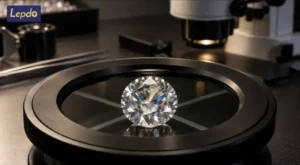
- Examine clarity under 10x magnification. VS1 and better clarity grades are eye-clean and will not distract from the stone’s beauty. SI1 can be fine if inclusions are positioned toward the edge rather than the table.
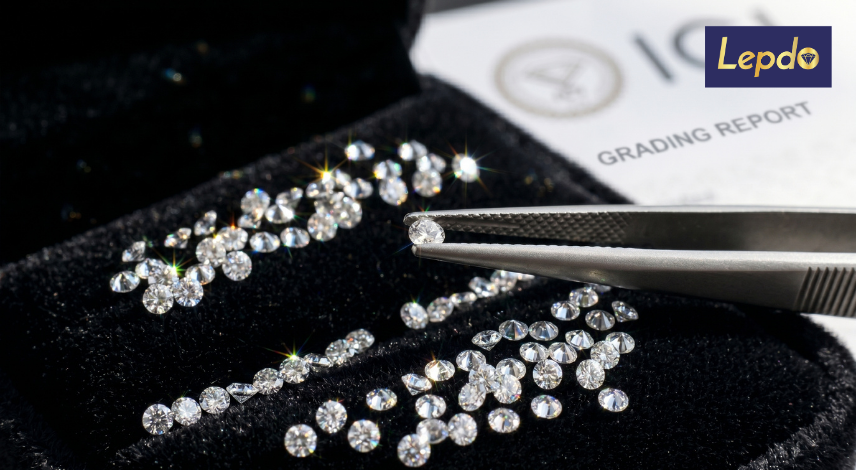
- Confirm the certification source. Always buy Certified Diamonds from recognized labs. IGI and GIA are the industry standards for lab grown diamond grading in 2026. Certificates from lesser-known labs should raise a flag, particularly for commercial buyers purchasing at volume.
Conclusion
Three things are clear about lab grown diamond resale value in 2026. First, the secondary market for these stones is thin, and any buyer or retailer expecting a strong financial return will be disappointed. Second, this reality does not diminish the genuine value proposition of lab grown diamonds for consumers who prioritize size, brilliance, and ethical sourcing over long-term investment returns. Third, the buyers and retailers who thrive in this market are the ones who communicate honestly about what lab grown diamonds are: outstanding gemstones with limited resale potential, not financial assets.
For retailers, the path forward is clear. Stock certified stones, train your team to set accurate expectations, and position lab grown diamonds as a lifestyle purchase rather than an investment. Doing so will reduce returns, build customer trust, and protect your brand long-term.
If you are sourcing lab grown diamonds for your retail collection or evaluating whether to invest in certified stones, explore Lab Grown Diamonds at Lepdo Diamonds to see what certified, graded inventory looks like at the commercial level.
In a market moving as fast as this one, the right source matters as much as the right stone.
Frequently Asked Questions About Lab Grown Diamond Resale Value
1. What is lab grown diamond resale value?
Lab grown diamond resale value is the amount you can realistically expect to receive when selling a lab-created diamond on the secondary market. In 2026, this typically ranges from 10% to 30% of the original retail price. The low resale return is primarily driven by falling production costs and high market supply, which limit secondary buyer demand significantly.
2. Do lab grown diamonds hold value compared to natural diamonds?
Lab grown diamonds do not hold value as well as natural diamonds. Natural stones typically resell for 25% to 50% of retail in strong condition with GIA certification. Lab grown diamonds usually fetch 10% to 30% of retail, and that gap is widening as production costs drop further. Lab diamond depreciation is faster and more predictable than for natural stones.
3. Which lab grown diamond looks biggest or most impressive for the price?
Elongated shapes like ovals, marquise, and pear cuts face up larger than round brilliants of the same carat weight, making them appear more impressive visually. A 1.5-carat oval lab grown diamond looks noticeably bigger than a 1.5-carat round. These cuts are also priced slightly lower per carat in the lab grown market, adding extra value for size-conscious buyers.
4. Do lab grown diamonds receive a GIA cut grade?
GIA does issue cut grades for round brilliant lab grown diamonds, just as they do for natural stones. Fancy shapes from GIA receive polish and symmetry grades but not an overall cut grade. IGI also issues cut grades for lab grown rounds. Always request a GIA or IGI certificate to confirm cut quality when evaluating lab diamond resale value or making a purchase for retail inventory.
5. What is the biggest quality risk with lab grown diamonds?
The biggest quality risk is poor cut execution combined with weak certification. A lab grown diamond with an SI2 clarity grade, a good cut, and an unknown lab certificate is nearly impossible to resell at any reasonable price. Retailers and consumers should always prioritize cut quality and insist on IGI or GIA certification to protect against both quality disappointment and resale loss.
6. Are lab grown diamonds as good as natural diamonds in quality?
Chemically and optically, lab grown diamonds are identical to natural diamonds. They have the same hardness, brilliance, fire, and scintillation. The difference is origin, not quality. A well-cut lab diamond will outperform a poorly cut natural diamond every time. The distinction that matters for most buyers is resale value and rarity, not physical or optical quality.
7. Which lab grown diamond type is best for an engagement ring?
Round brilliants remain the most popular choice for engagement rings due to their symmetrical sparkle and timeless appeal. To be fair, round diamonds still dominate engagement ring sales across both natural and lab grown categories. For buyers wanting something distinctive, cushion cut and oval lab grown diamonds are the fastest growing alternatives, offering strong light performance and excellent visual size at a lower price per carat.
8. How do I choose a reliable lab grown diamond manufacturer or supplier?
Look for suppliers who offer IGI or GIA certified diamonds, provide transparent pricing, and have verifiable sourcing practices. Ask about their cut consistency standards and whether they offer trade-in or buy-back programs. Working with an established source like Lepdo Diamonds gives B2B buyers access to certified inventory with clear grading documentation and industry-standard pricing benchmarks.