UK Diamond Import Guide for Retailers: Sourcing Lab Grown Diamonds from India
 by lepdogroup@gmail.com
0 comments
by lepdogroup@gmail.com
0 comments
A UK diamond import guide for retailers walks retailers through the legal process of bringing lab-grown diamonds into Britain from India, covering customs duty, VAT, and IGI or GIA certification checks. Getting this wrong causes costly shipment delays. Lepdo Diamonds, a Surat-based manufacturer, works directly with UK buyers who need certified stock delivered without the usual paperwork headaches.
A Hatton Garden dealer I spoke with last autumn had a container of diamonds sit in a Heathrow bonded warehouse for eighteen days. Not because anything was wrong with the stones. His commercial invoice used a different HS classification than his freight forwarder’s declaration, and HMRC flagged it for review. Eighteen days, during the exact weeks he needed inventory for autumn proposal season.
This kind of thing happens more than the industry likes to admit. It’s usually why someone finally goes looking for a proper UK Diamond Import Guide for Retailers instead of just winging it based on what a supplier told them over WhatsApp.
If you’re a retailer, a wholesaler supplying a diamond wholesale UK network, or a manufacturer trying to add lab-grown stock to your lines, the sourcing part is honestly the easy bit. Surat has no shortage of manufacturers who’ll happily sell you diamonds. The part people underestimate is everything that happens after the order is placed: customs, GIA or IGI paperwork matching what’s on the invoice, VAT registration, and the 4Cs actually holding up once the stones land in the UK.
So here’s what we’re going to cover. How import into the UK actually works in practice, which sourcing route fits which kind of business, what separates a supplier worth trusting from one that isn’t, and where retailers most commonly lose money without realizing it.
What UK Diamond Import Actually Means
Put simply, UK diamond import is the process of bringing loose diamonds or finished jewelry into Britain from an overseas source, most often India, then clearing customs, paying whatever duty and VAT applies, and getting the goods registered for resale. For lab-grown stones there’s an added layer: UK trading standards require clear disclosure that a diamond was grown, not mined.
Quick Info Box
- Definition: The legal process of bringing diamonds into the UK from India (or elsewhere) through customs clearance, duty, and VAT.
- Key Types or Varieties: Direct manufacturer import, agent-based sourcing, marketplace drop-ship, consignment stock, trade show buying.
- Best For: Independent retailers, wholesale distributors, manufacturers, and online-first jewelry brands.
- Key Difference or Advantage: Buying direct from India usually runs 25 to 40 percent cheaper per carat than sourcing through a diamond wholesale UK middleman.
A lot of retailers assume the gemological side is where all the risk lives. It isn’t, really. A stone with a flawless GIA report is still just sitting in customs limbo if the paperwork doesn’t line up, and that’s the part nobody teaches you at a trade show. Companies like Lepdo Diamonds have built entire workflows around getting both sides right at once.
Sourcing Routes UK Retailers Actually Use
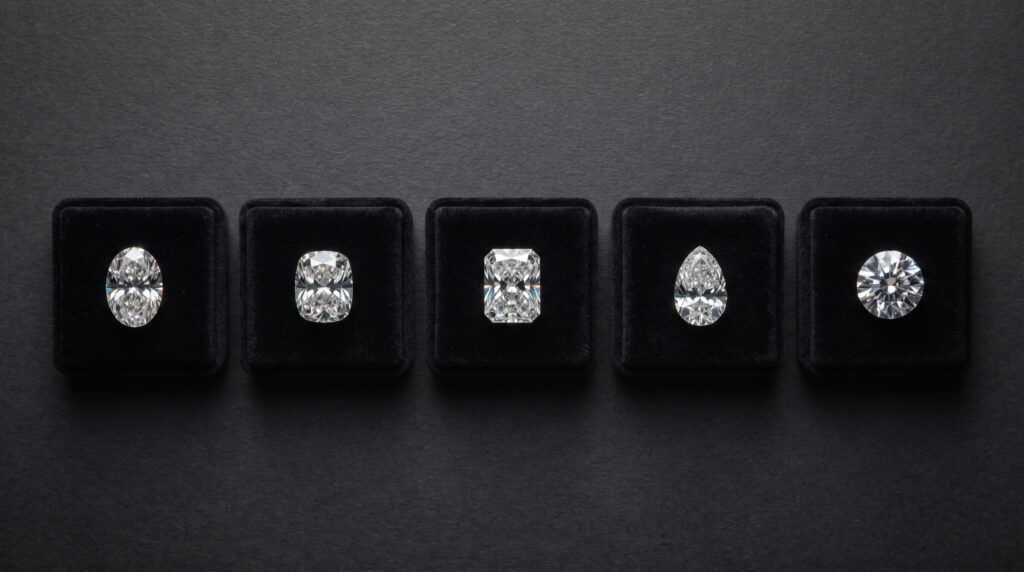
Not every retailer imports the same way, and honestly, the “right” route has less to do with what’s cheapest and more to do with how much hassle you’re willing to manage yourself.
Going Straight to a Surat Manufacturer
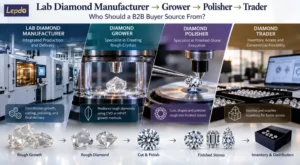
This is where most wholesalers end up eventually. You negotiate pricing directly, arrange your own freight forwarder and customs broker, and keep full control over which certification lab you use. It makes the most sense if you’re ordering 50+ carats consistently. Our earlier piece on how to Import Lab Grown Diamond From India goes deep into the actual documents this route needs, so I won’t repeat all of it here.
Working Through an Agent or Broker
Agents, whether based in the UK or in India, handle sourcing and shipping for a commission. Good option for smaller retailers who want India-level pricing without learning customs codes themselves. Margins are thinner, obviously, since someone else is doing the work. This route suits a smaller Diamond Retailer that isn’t ready to manage freight logistics in-house.
Buying at Trade Shows
Events like IJL London, or the various GJEPC-organized shows, let you actually hold the stone before you commit. Slower for building real volume, but there’s something to be said for eyeballing a parcel in person rather than trusting a spreadsheet.
Beyond these three, plenty of retailers also run marketplace drop-ship arrangements, keep consignment stock from an established Diamond Wholesaler, or set up private-label manufacturing deals. Most growing businesses I’ve worked with don’t pick just one. They’ll run a Surat direct-import channel for core inventory and lean on a domestic contact for anything urgent or custom.
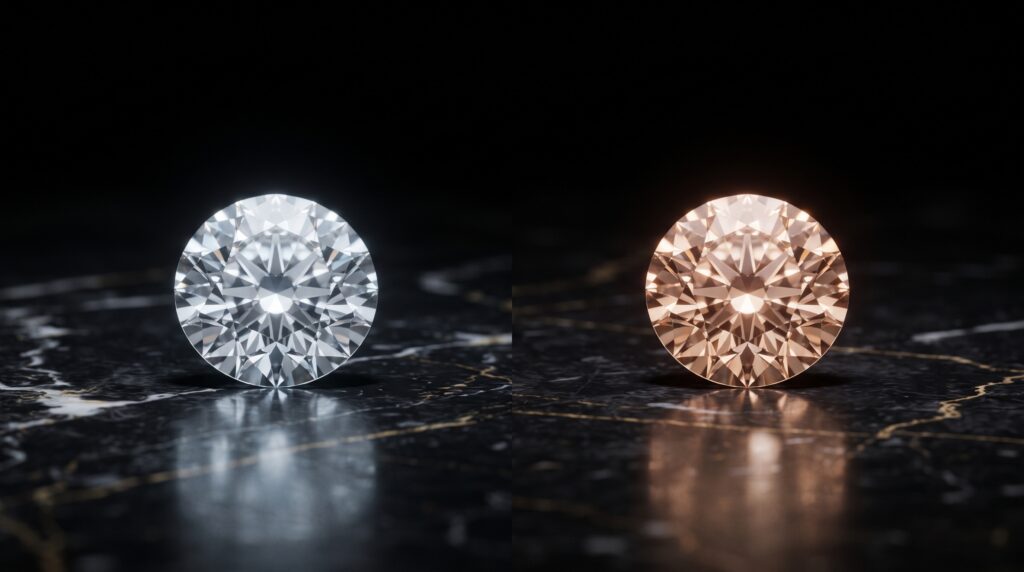
Importing from India vs Buying UK Wholesale Stock
| Factor | Direct Import from India | UK Wholesale Stock |
|---|---|---|
| Per-carat cost | 25 to 40% lower on average | Higher, includes middleman margin |
| Lead time | 7 to 14 days plus customs clearance | Same day to 3 days |
| Certification control | Choose IGI or GIA at source | Fixed by existing stock |
| Minimum order size | Often higher, 5+ carats typical | Flexible, single stone possible |
| Customs and VAT handling | Falls on the retailer | Already cleared |
Neither one wins outright, and I’d be suspicious of anyone who tells you otherwise. Direct import rewards businesses that can commit to volume and actually manage a customs process. UK wholesale stock suits people who need speed, or who just want to buy one stone without dealing in bulk. That said, a lot of the more established retailers I know run a blended setup: bulk direct import for the bread-and-butter inventory, plus a domestic diamond wholesale UK contact on speed dial for last-minute custom orders. To be fair, that domestic backup costs more per carat, but it saves you during Q4 or proposal season when a stockout is worse than a slightly thinner margin.
Choosing the Right Import Approach for Your Business
There isn’t one correct answer here. Walk through these before you commit any real money.
- Order volume and cash flow. Direct India sourcing pays off when you can place consistent 5 to 20 carat orders, since freight and customs costs get spread thinner across bigger shipments.
- Storage and insurance capacity. No secure storage for bulk stock? A consignment or agent model takes that burden off your plate.
- What certification your customers expect. Bridal buyers usually want GIA on the report. Fashion and commercial jewelry customers are often fine with IGI, at a noticeably lower cost.
- Real cost vs your current domestic pricing. Actually run the numbers, duty, VAT, freight, all of it, before assuming direct import automatically saves money. Sometimes it doesn’t, especially on smaller orders.
- What the stock is actually for. Engagement ring inventory needs tighter cut consistency than a fashion jewelry parcel, and that changes which manufacturer tier in Surat you should even be talking to.
- Lab-grown vs natural strategy. Most retailers coming into this market right now are prioritizing Lab Grown Diamonds specifically. CVD and HPHT stones out of India simply offer a far better price-to-carat ratio at comparable clarity than natural stones do.
Before you finalize your choice, sketch out twelve months of expected orders. A route that looks cheap on paper can turn expensive fast once you count the hours you’ll spend managing customs paperwork yourself.
What B2B Buyers and Manufacturers Should Actually Know
Retailers and wholesalers operating at real scale deal with a different set of headaches than someone placing the occasional single-stone order. Bulk sourcing from India still gets priced against Rapaport benchmarks, even though lab-grown stones trade at a discount to the natural Rapaport list. That reference point doesn’t disappear just because the diamond was grown instead of mined.
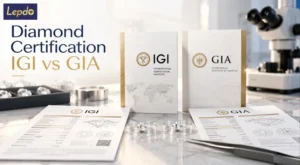
Cut grading consistency is, in my opinion, the single biggest quality risk once you’re buying at volume. A parcel of fifty round brilliants can all carry an “Excellent” grade and still vary noticeably in how they actually sparkle, because cutting standards across manufacturers aren’t identical. This is exactly why GIA and IGI certification standards matter so much to retailers reselling to UK consumers, who already recognize and trust those names.
Here’s a tip from years of chasing down shipment delays: the holdup is almost never customs itself. It’s a commercial invoice that doesn’t match what the freight forwarder declared. Fix that alignment before the stones leave India, not after they’ve landed at Heathrow, because by then you’re just waiting.
Manufacturers like Lepdo Diamonds, working out of Surat’s manufacturing hub, supply IGI and GIA certified lab-grown stock directly to retailers and wholesalers across several export markets, and that reflects a broader shift toward traceable sourcing across the Diamond Supply Chain. Retailers building long-term supplier relationships tend to favor partners who understand both cutting quality and UK-side compliance, rather than treating export paperwork as an afterthought tacked on at the end.
UK Lab-Grown Diamond Jewelry Trends, 2026 to 2027
UK demand for lab-grown engagement rings has shifted noticeably over the past two years. Industry estimates now put lab-grown stones at a substantial and still-growing share of UK engagement ring sales, driven mostly by price transparency and sustainability messaging that resonates with younger buyers in particular.
Fancy shapes are eating into round brilliant’s dominance, especially oval, cushion, and elongated radiant cuts, usually paired with slimmer pave settings or hidden halos rather than heavy traditional mountings. Vintage styling with milgrain detail is coming back too, and it’s often requested by name at independent Hatton Garden diamond sourcing counters, which tells you something about how informed today’s buyers already are before they walk in.
To be fair, round diamonds still dominate overall volume across the UK market, and that isn’t changing anytime soon. But retailers keep reporting a rise in fancy cut diamond jewellery inquiries, mostly because customers do their shape research online before ever stepping into a store. Retailers stocking a wider range of imported shapes are simply capturing buyers that a round-only inventory used to lose entirely.
UK Diamond Import Guide for Retailers: How to Evaluate Quality in Imported Lab-Grown Diamonds
When I assess a parcel of imported lab-grown stones, the first thing I check isn’t the headline grade on the certificate. It’s whether cut proportions actually stay consistent across the whole batch. This practical evaluation process is something every buyer should understand, especially when following a UK Diamond Import Guide for Retailers to source high-quality inventory from international suppliers.
Poor light performance almost always traces back to pavilion angle problems, and it kills brilliance even when color and clarity look great on paper. Table percentage and depth percentage, read together, tell you far more about real-world sparkle than any single summary grade ever will.
A few things I always check on an incoming shipment:
- Confirm the pavilion angle and table percentage sit within GIA’s ideal range for that specific shape.
- Look for bowtie effect under normal lighting, which shows up often in oval, marquise, and pear cuts that weren’t cut carefully.
- Check the length-to-width ratio actually matches what was quoted. Fancy shapes vary a lot between manufacturers.
- Cross-check the clarity grade description against the actual inclusion map, not just the letter grade sitting at the top.
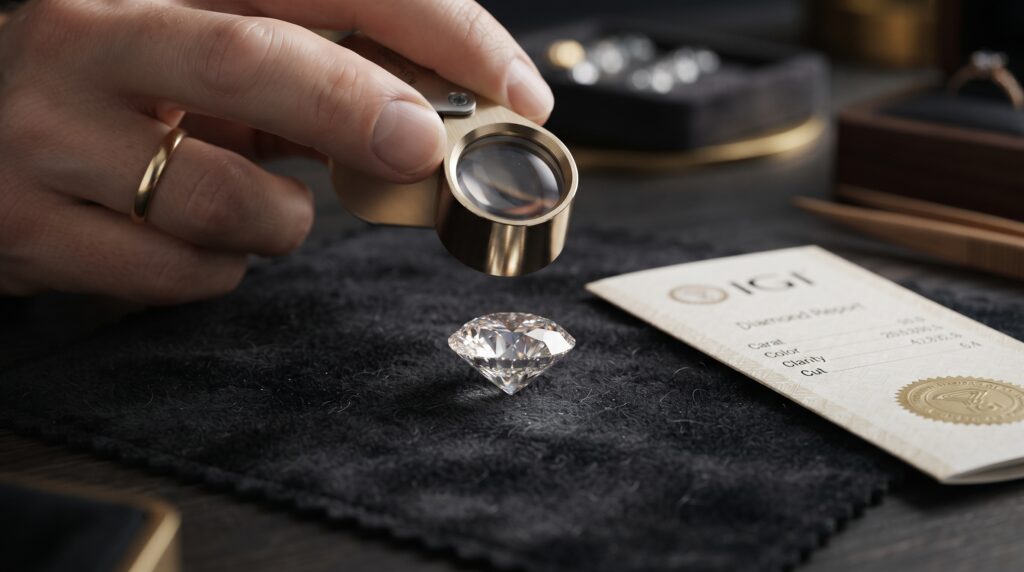
- Match the physical stone against its certified paperwork using the report number laser-inscribed on the girdle. Skip this step and you’re just trusting someone’s word.
Fire and scintillation are harder to fake than brilliance alone. That’s exactly why physical inspection under controlled lighting still matters, even when every certificate in the stack looks perfect. Whether you’re an independent jeweler or sourcing inventory based on a UK Diamond Import Guide for Retailers, combining certificate verification with hands-on inspection is the most reliable way to evaluate imported lab-grown diamonds.
Conclusion
Sourcing diamonds out of India rewards retailers who take customs compliance and supplier vetting as seriously as they take clarity grade and carat weight. The real value in a proper UK Diamond Import Guide for Retailers isn’t just the cost savings, it’s avoiding the shipment delays and paperwork mismatches that quietly chip away at margin, one held-up parcel at a time. Retailers who build direct relationships with Surat’s Diamond Jewelry Manufacturing Surat suppliers, who understand the actual difference between IGI and GIA certification, and who sort out VAT treatment before the stones ship, consistently come out ahead of the ones figuring it out shipment by shipment.
Retailers sourcing certified lab-grown diamonds can explore Lepdo Diamonds’ current stock and talk directly with a team that understands Surat manufacturing and UK import requirements in equal measure. Whether you’re comparing options through a Diamond Marketplace or negotiating one-on-one with a manufacturer, the same principles from this guide apply, whether you’re ordering one carat or a thousand.
The retailers who really win at this aren’t the ones quoting the lowest price. They’re the ones whose shipments actually show up on time, certified, and ready to sell.
Frequently Asked Questions About UK Diamond Import
1. What is a UK diamond import guide?
A UK Diamond Import Guide for Retailers is a resource explaining how retailers legally bring diamonds into Britain from overseas manufacturers, covering customs classification, duty rates, VAT obligations, and certification requirements. It helps buyers avoid clearance delays and unexpected costs when sourcing lab-grown or natural stones from countries like India.
2. Is importing diamonds from India cheaper than buying UK wholesale?
Yes, direct import from India usually runs 25 to 40 percent cheaper per carat than buying already-imported UK wholesale stock. The savings come from skipping the domestic middleman margin, though retailers still need to calculate freight, duty, and VAT to know the true landed price.
3. Which diamond shapes look biggest or most impressive per carat?
Elongated shapes like oval, marquise, and pear tend to look larger than their carat weight suggests, since more surface area shows face-up compared to rounder shapes. Radiant and cushion cuts also read bigger thanks to their wider table percentage and how light spreads across the crown.
4. Does an imported lab-grown diamond have a GIA cut grade?
Round brilliant lab-grown diamonds can carry a full GIA cut grade, while fancy shapes like oval or cushion typically get detailed proportion data instead of one summary grade. IGI also issues cut assessments, and reputable Surat manufacturers can provide either depending on what your market expects.
5. What is the biggest quality risk with imported diamonds?
Cut proportion inconsistency across a bulk parcel is the most common risk with imported lab-grown diamonds. A whole batch can share identical clarity and color grades and still vary a lot in brilliance if pavilion angles and depth percentages weren’t tightly controlled during cutting.
6. Are lab-grown diamonds as good as natural for UK retail sale?
Lab-grown diamonds are chemically, optically, and structurally identical to natural diamonds. They differ only in origin, and typically cost 60 to 85 percent less per carat. UK consumers are increasingly comfortable buying lab-grown for engagement rings once a retailer explains the certification and value difference clearly.
7. Which diamond shape works best for a UK engagement ring?
Oval and cushion cuts currently perform best among UK engagement ring buyers, striking a balance between brilliance and a larger visual footprint per carat. Round brilliant still holds the largest overall share, but fancy shape demand keeps climbing among buyers who research shapes before ever visiting a retailer.
8. How do I choose a reliable diamond manufacturer or supplier in India?
Check that the supplier issues IGI or GIA certification as standard practice, request a sample parcel before any bulk commitment, and ask about their export history with UK clients specifically. A reputable Surat manufacturer should have no problem sharing compliance references and past shipment records with a verified B2B account.