Italy’s Jewelry Market: A Sourcing Guide for Lab Grown Diamonds from India
 by lepdogroup@gmail.com
0 comments
by lepdogroup@gmail.com
0 comments
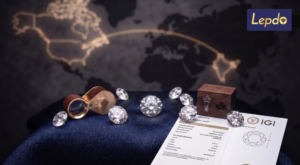
The italy jewelry market diamonds from india trade refers to Italy’s network of manufacturers, wholesalers, and Vicenza-based trade fairs that source loose diamonds, largely lab grown, from Indian suppliers for EU distribution. Buyers benefit from lower costs and consistent IGI certification. Lepdo Diamonds supplies IGI and GIA certified CVD stones directly from Surat to Italian importers.
Vicenza’s jewelry district ships an estimated 80% of its diamond jewelry production outside Italy, yet most of the loose stones that feed those workshops never touched Italian soil until months before setting. That single fact tells you almost everything about the Italy Jewelry Market: Lab Grown Diamond From India supply chain today. Italian goldsmiths are famous for design, while India, and specifically Surat, has quietly become the preferred source for high-quality lab-grown and natural diamonds that power Italy’s world-renowned jewelry manufacturing industry.
If you manufacture jewelry in Vicenza, Valenza, or Arezzo, or you buy loose stones as a US retailer with European clients, this guide breaks down exactly how Italian buyers source lab grown diamonds from India, what the import rules require, and where the real cost advantages sit. You will get a practical look at 4Cs grading standards, GIA and IGI certification norms, and the logistics that determine whether a shipment clears customs in three days or three weeks.
This is not a theoretical overview. It reflects how the trade moves stones on the ground, from Surat cutting houses to Italian showrooms, and what buyers on both sides of that route need to know before they sign a purchase order.
What the Italy Jewelry Market for Diamonds Actually Is
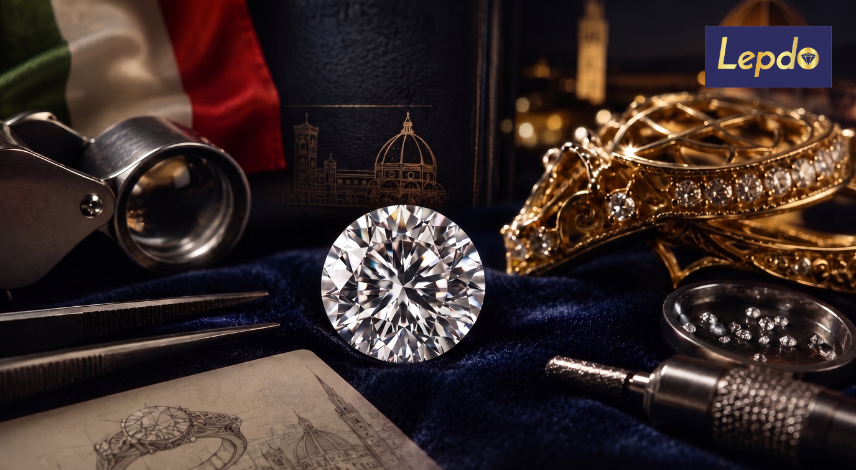
The italy jewelry market diamonds sector covers the full chain of loose diamond import, jewelry manufacturing, and wholesale distribution centered around Italy’s traditional gold and jewelry districts. It is one of Europe’s oldest fine jewelry hubs, built on generations of goldsmith craft now increasingly paired with Indian-sourced diamonds.
Quick Info Box
Definition: A trade ecosystem where Italian manufacturers import loose diamonds, mainly from India, for local setting and EU-wide jewelry distribution.
Key Types or Varieties: Lab grown diamonds, natural diamonds, melee stones, fancy shapes, certified loose diamonds.
Best For: Jewelry manufacturers, wholesale buyers, private label brands, engagement ring retailers.
Key Difference or Advantage: Italian craftsmanship combined with Indian manufacturing cost efficiency.
Vicenza remains the anchor of this trade, hosting trade fairs that draw buyers from across the EU. For sourcing context and how this fits into the wider diamond trade, see Diamond Supply Chain, which explains how stones move from rough to retail across borders.
Most Popular Sourcing Routes and Buyer Types
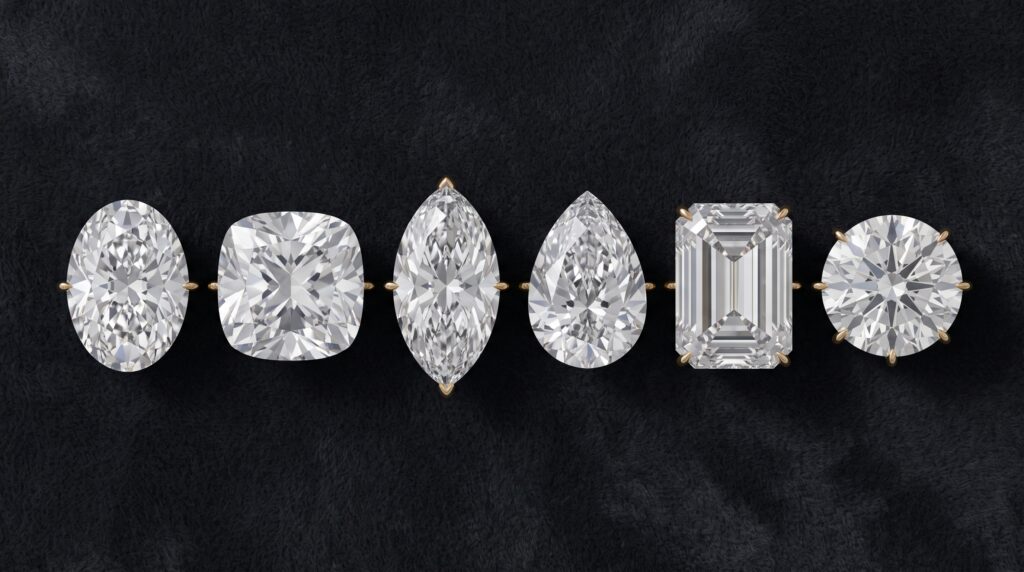
Italian buyers do not all source diamonds the same way. Here is what the landscape actually looks like, broken down by who is buying and why.
Vicenza Trade Fair Buyers
These are established manufacturers who attend VicenzaOro twice a year and negotiate directly with Indian exhibitors. They tend to buy in volume, often container-sized parcels of melee or matched pairs, and prioritize long-term supplier relationships over one-off deals.
Independent Jewelry Manufacturers
Smaller Italian workshops, often family-run, that import loose stones in smaller batches. They care more about certification consistency and cut quality than raw price, since their margins depend on repeat retail customers who ask questions.
Private Label and Retail Brand Buyers
These buyers source finished jewelry rather than loose stones, often working through Indian manufacturing partners who handle both cutting and setting. This route appeals to brands that want speed without managing customs paperwork themselves.
Beyond these three, you will find online wholesale platforms connecting Italian buyers to Surat suppliers directly, boutique gemstone importers focused on fancy colored lab grown stones, engagement ring specialists sourcing centerpiece diamonds above one carat, and commercial jewelry chains buying melee in bulk for mass production lines. Most buyers in this space now split their sourcing between natural and lab grown stones, with lab grown diamonds import italy volume climbing steadily each year as EU consumer demand shifts.
Italy Sourcing vs Direct India Import – The Real Difference
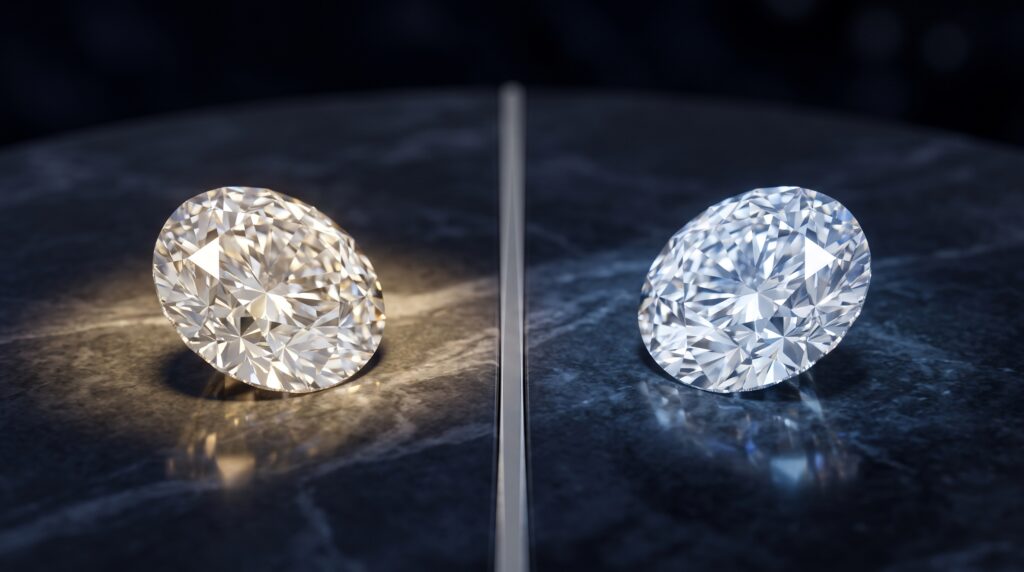
American buyers often ask whether it makes more sense to source through an Italian intermediary or import directly from India. The answer depends on your volume and your tolerance for logistics work.
| Factor | Italy-Based Sourcing | Direct India Import |
|---|---|---|
| Lead time | Faster, stones already in EU | Longer, includes shipping and customs |
| Price | Higher, includes distributor margin | Lower, direct manufacturer pricing |
| Certification consistency | Variable across resellers | Direct control at source |
| Minimum order size | Often flexible, smaller batches | Usually higher volume required |
| Relationship depth | Transactional | Direct manufacturer relationship |
Buying through Vicenza-based distributors saves time and reduces paperwork, but it adds a markup that shrinks over repeated orders. Direct india diamond wholesale suppliers relationships cost more effort upfront, yet they typically pay off for buyers moving more than a few hundred pieces per quarter. To be fair, smaller Italian workshops still prefer the fair-based route simply because it removes the customs burden entirely.
How to Choose the Right Sourcing Route for Your Business
Picking a sourcing strategy is not a one-size decision. Consider these six factors before committing to a supplier relationship.
- Your production volume. High-volume manufacturers benefit from direct import diamonds to italy from india arrangements, while smaller studios often do better through established distributors.
- Your certification requirements. If your retail customers ask about grading reports, prioritize suppliers who issue IGI or GIA paperwork as standard, not as an upgrade.
- Your setting and design workflow. Manufacturers doing intricate pave or micro-setting need melee with tight size consistency, which matters more than sourcing origin.
- Your budget structure. Direct import saves on unit cost but adds customs duty, VAT, and shipping insurance that must be factored into your margin calculations.
- Your end market. Engagement ring retailers need larger, well-cut center stones, while fashion jewelry brands prioritize melee uniformity and price.
- Natural versus lab grown allocation. Most Italian manufacturers now stock both, but the cost gap has pushed many toward lab grown diamonds italy import as the default for commercial lines, reserving natural stones for premium collections. You can read more about this shift at Lab Grown Diamonds.
Before you finalize your choice, map out your actual order frequency for the next twelve months. A supplier that works for quarterly orders of fifty pieces will not serve you well if you scale to weekly containers, and the reverse is just as true.
What B2B Buyers and Diamond Manufacturers Should Know
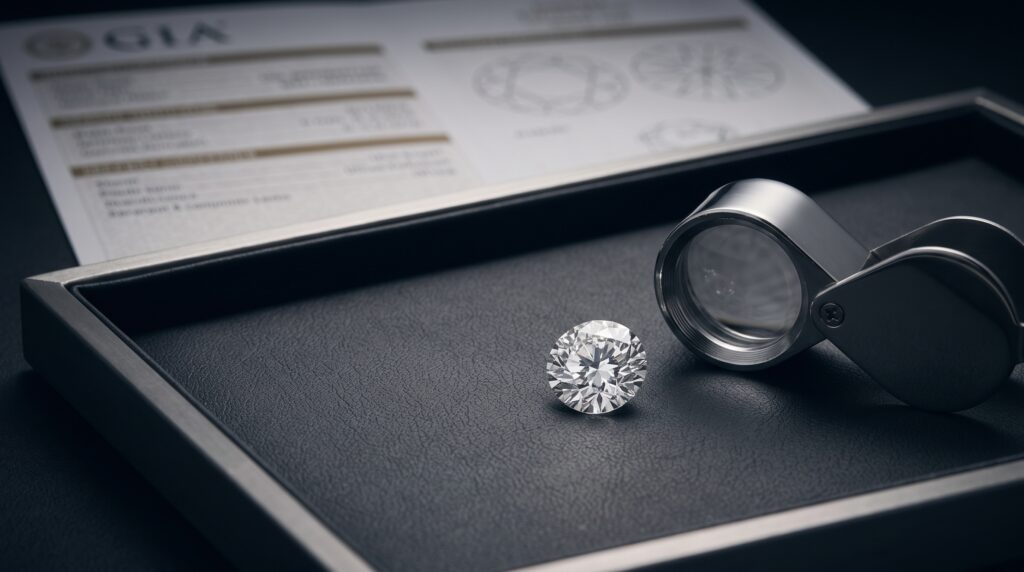
For wholesalers and manufacturers, the italy diamond wholesale suppliers landscape rewards buyers who understand certification and pricing benchmarks, not just unit cost. Rapaport pricing remains the reference point for natural diamonds, though lab grown pricing has largely decoupled from it and now tracks manufacturer production capacity instead. Buyers who still price lab grown parcels off Rapaport sheets alone often overpay, since production cost and cutting capacity now drive lab grown pricing more than any external index.
Cut grading consistency is where most disputes happen. A parcel graded “Excellent” by one lab may not match another lab’s standard, so serious buyers request IGI certification alongside GIA reports for larger stones, especially fancy shapes where proportions vary more than in round brilliants. Manufacturers like Lepdo Diamonds, based in Surat’s diamond manufacturing hub, typically issue IGI and GIA certified stock as standard practice rather than an add-on service, which matters when an Italian buyer needs paperwork that satisfies both EU customs and end retail customers.
In my experience, the buyers who avoid quality disputes are the ones who request sample parcels before committing to full container orders. This single step catches color and clarity inconsistencies that spreadsheets alone will not reveal. Payment terms deserve the same scrutiny as certification, since suppliers offering net-30 or net-60 arrangements signal financial stability that smaller, cash-only exporters often cannot match.
If you manufacture unique cut diamonds or fancy shapes for the Italian market, you will also want a supplier who can maintain shape consistency across repeat orders, since Vicenza buyers rarely forgive parcel-to-parcel variation. Freight and insurance costs also shift meaningfully depending on whether you import loose parcels or finished jewelry, and this is worth mapping out before your first order rather than after a shipment gets held at customs. For background on production hubs feeding this trade, see Diamond Jewelry Manufacturers Surat.
Italy Jewelry Trends in the USA (2026 to 2027)
American consumers are paying closer attention to where their jewelry actually comes from, and Italian-made pieces set with lab grown centerstones are gaining traction in this exact gap. Within the growing Italy Jewelry Market: Lab Grown Diamond From India segment, Italian goldsmith craftsmanship combined with ethically sourced lab grown diamonds from India is creating new opportunities for global jewelry brands targeting modern US buyers.
Minimalist Italian gold design, paired with high-quality Indian lab grown diamonds, is increasingly appearing in bridal collections marketed to younger US shoppers who want luxury craftsmanship without the natural diamond price tag. Instagram and Pinterest search trends around Italian-made bridal jewelry have climbed steadily among US consumers aged 25 to 35, a demographic that often researches origin, sustainability, and sourcing transparency before making a purchase.
Industry reporting from recent Vicenza trade events points to lab grown diamond melee now representing a meaningful share of exhibited inventory, a shift that would have been difficult to imagine a decade ago. As India strengthens its position as a leading hub for lab grown diamond manufacturing, the connection between Indian diamond technology and Italian jewelry artistry is becoming more visible in the global luxury market. Cultural visibility around lab grown diamonds in red carpet jewelry and celebrity engagement announcements has further accelerated US buyer interest in Italian-crafted pieces featuring these innovative stones.
For style direction, thin band settings and stackable designs remain dominant, while bezel settings are gaining ground for their modern, low-profile look. Layered necklace sets and asymmetrical earring pairs are also picking up momentum, reflecting a broader US shift toward jewelry that feels personal rather than matched. If you are tracking broader style shifts, Diamond Jewelry Trends covers where American buyer preferences are heading this cycle, and Diamond Minimal Jewelry breaks down why understated settings keep gaining market share.
How to Evaluate Quality in Italy-Sourced Diamonds
When I assess a parcel destined for the Italian market, the first thing I check is cut consistency across the batch, not just the grading report of a single stone. Paper grades tell you part of the story, but physical inspection tells you the rest. A single diamond can carry an excellent certificate and still disappoint once it sits under a jeweler’s light, which is exactly why professional evaluation matters as much as documentation. This level of quality control has become increasingly important as the Italy Jewelry Market: Lab Grown Diamond From India supply chain expands, with Italian manufacturers and jewelry brands relying on precision-cut diamonds from Surat for luxury and commercial jewelry production.
In the Italy Jewelry Market: Lab Grown Diamond From India, buyers are not only evaluating price advantages but also focusing on consistency, craftsmanship, and repeatable quality across large diamond parcels. Indian manufacturers that maintain strict cutting standards, advanced quality checks, and reliable certification processes are becoming valuable partners for Italian workshops that require dependable supply for their collections.
Brilliance, fire, and scintillation depend heavily on pavilion angle, table percentage, symmetry, and overall cut precision. Even a well-graded diamond can underperform if these proportions fall outside the ideal range. Color grading nuances become even more important in fancy shapes, where face-up color can appear slightly darker than the certificate suggests because of how facets interact with light. Elongated shapes like oval and pear diamonds are particularly sensitive, as color can concentrate near the pointed ends where light travels through a longer path inside the stone.
For businesses participating in the Italy Jewelry Market: Lab Grown Diamond From India, understanding these technical factors helps buyers select diamonds that perform beautifully in finished jewelry. Italian designers value stones that deliver visual impact, consistency, and craftsmanship, making proper inspection and supplier expertise essential parts of successful diamond sourcing.
Here are five checks I run on every parcel before approving it for shipment:
- Compare table percentage and depth percentage against the certificate, not just the color and clarity grade.
- Check for a visible bowtie effect in fancy shapes like oval and marquise, which signals poor light return.
- Verify the length-to-width ratio matches what was quoted, since even small deviations affect how a stone faces up.
- Confirm the clarity grade under 10× magnification rather than trusting the report alone.
- Cross-check certification numbers against the issuing lab’s database to rule out mismatched paperwork.
Polish quality deserves its own check as well, since poorly polished facets scatter light unevenly even when every other proportion sits within range. I also recommend viewing stones under both daylight-equivalent and warm incandescent lighting, since a diamond that looks lively under one light source can appear noticeably flatter under the other. Reputable suppliers issue certified diamonds with verifiable lab reports, and this single habit separates buyers who avoid disputes from those who discover problems after setting.
Conclusion
Italy’s jewelry market has quietly rebuilt itself around Indian diamond manufacturing, and buyers who understand this shift are the ones capturing the best margins. The Vicenza jewelry trade sourcing model still rewards relationship-based buying, but direct manufacturer partnerships in Surat increasingly offer better pricing and certification consistency for anyone moving real volume. This evolution highlights the growing importance of the Italy Jewelry Market: Lab Grown Diamond From India, where Indian manufacturers are becoming a key supply source for certified diamonds used by Italy’s renowned jewelry industry.
With changing consumer preferences and increased demand for sustainable diamond alternatives, the Italy Jewelry Market: Lab Grown Diamond From India supply chain has created new opportunities for Italian jewelry manufacturers, wholesalers, and retailers. EU diamond import regulations in Italy are manageable once buyers understand certification requirements, customs documentation, and compliance standards. Today, lab-grown diamonds have become a practical choice for many commercial jewelry collections produced by Italian workshops seeking quality, consistency, and competitive pricing.
The buyers who win in this market are rarely the ones chasing the lowest quoted price. They are the ones who build supplier relationships around consistent certification, predictable lead times, and shape accuracy that holds up across repeat orders. In the Italy Jewelry Market: Lab Grown Diamond From India, long-term reliability often creates stronger business value than a small discount on a single shipment.
Retailers and jewelry manufacturers sourcing certified lab-grown diamonds can explore Lepdo Diamonds current inventory of IGI and GIA-certified stones, including popular fancy shapes preferred by Italian designers. Whether producing engagement rings, sourcing melee diamonds for high-volume production, or requiring matched diamond pairs for luxury statement jewelry, understanding the Italy Jewelry Market: Lab Grown Diamond From India ecosystem provides a competitive advantage over buyers still uncertain about certification, pricing, and supplier selection.
Italy’s goldsmith heritage is not disappearing; it is evolving with a modern global supply chain. Indian diamond manufacturers are now playing an increasingly important role in supporting Italian craftsmanship with precision-cut, certified lab-grown diamonds. Businesses that understand the Italy Jewelry Market: Lab Grown Diamond From India opportunity today will be better positioned to influence tomorrow’s jewelry trends, improve margins, and build stronger international sourcing partnerships.
Frequently Asked Questions About Italy’s Jewelry Market for Diamonds
1. What is the italy jewelry market diamonds trade?
It is the network of Italian manufacturers, distributors, and trade fairs, mainly centered in Vicenza, that import loose diamonds for local jewelry production. Most volume today comes from Indian suppliers offering both natural and lab grown stones at competitive manufacturing prices.
2. Is lab grown diamond import from India cheaper than natural diamond sourcing?
Yes, lab grown diamonds typically cost 60 to 80% less than comparable natural stones at the same carat weight and clarity grade. This price gap is a major reason Italian manufacturers have shifted commercial jewelry lines toward lab grown inventory.
3. Which diamond shape looks biggest for Italian jewelry design?
Oval and cushion cuts tend to face up larger than round brilliants of the same carat weight due to their elongated proportions. This makes them popular choices for Italian designers creating statement engagement rings for the US market.
4. Does a lab grown diamond have a GIA cut grade?
Yes, GIA grades lab grown diamonds using the same cut grading scale applied to natural stones, from Excellent to Poor. IGI also grades lab grown stones and remains the more commonly used lab for this category in the India-to-Italy trade.
5. What is the biggest quality risk when importing diamonds to Italy from India?
Parcel inconsistency is the most common risk, where individual stones vary in cut quality despite matching certificate grades. Requesting sample parcels before full orders and verifying certification numbers against the issuing lab reduces this risk significantly.
6. Are lab grown diamonds as good as natural diamonds for Italian-made jewelry?
Yes, lab grown diamonds share identical optical, chemical, and physical properties with natural diamonds. The only meaningful difference for Italian manufacturers is cost and, for some buyers, resale value perception in secondary markets.
7. Which diamond shape is best for engagement rings made in Italy?
Round brilliant remains the top seller for engagement rings, followed closely by oval and cushion shapes. Italian goldsmiths favor these shapes for their versatility across classic and minimalist ring settings popular with US buyers.
8. How do I choose a reliable diamond manufacturer or supplier in India?
Look for suppliers offering IGI and GIA certification as standard, transparent pricing without hidden markups, and a track record supplying international markets including the EU. Requesting a sample parcel before committing to bulk orders is the most reliable way to test consistency.