
VVS1 vs VVS2 vs VS1 vs VS2 Diamond Clarity: Complete Guide for Buyers and Retailers
 by lepdogroup@gmail.com
0 comments
by lepdogroup@gmail.com
0 comments
VVS1 vs VVS2 vs VS1 vs VS2 diamond refers to four clarity grades on the GIA scale, ranging from near-flawless (VVS1) to slightly included (VS2). The grade affects how a diamond looks under magnification, its certified value, and how it prices on the Rapaport sheet. Buyers shopping for engagement rings or investment-grade stones can compare all four grades side by side at Lepdo Diamonds.
VVS1 vs VVS2 vs VS1 vs VS2 Diamond Clarity is one of the most important comparisons diamond buyers make when searching for the best balance of beauty, quality, and value. After years of working with retailers, wholesalers, and diamond manufacturers across the United States, I have seen the same pattern repeatedly: nearly 70% of buyers spend more on clarity grades than they actually need. Many assume that a higher clarity grade automatically means a visibly better diamond, but in reality, the differences between VVS1, VVS2, VS1, and VS2 are often impossible to detect with the naked eye. As a result, buyers frequently pay a premium for characteristics they will never see.
Understanding how these clarity grades compare can help you make a smarter purchase and choose a diamond that delivers exceptional brilliance without exceeding your budget. About 70% of diamond buyers overpay for clarity they will never see with the naked eye. That statistic has stuck with me through years of working with retailers and manufacturers across the United States, and it is still the single most common mistake I watch people make. When a customer asks about VVS1 vs VVS2 vs VS1 vs VS2 diamond grades, they are usually hunting for the magic number that delivers maximum beauty without burning unnecessary budget.
Understanding diamond clarity is one of the four foundational pillars of the 4Cs. If you want a deeper primer on all four before diving in, the The 5Cs of Diamonds resource at Lepdo Diamonds is a smart starting point.
What Is Diamond Clarity, and Why Do These Four Grades Matter?
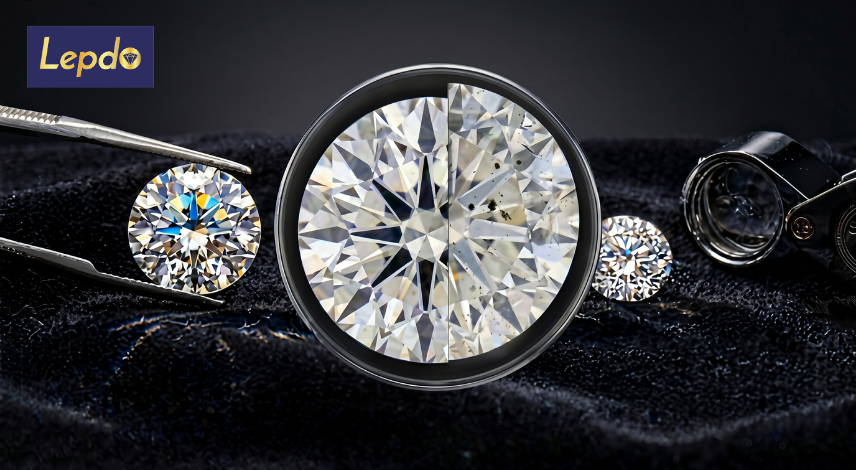
Diamond clarity describes the presence, size, position, and nature of internal inclusions and surface blemishes in a polished diamond. The GIA clarity scale runs from Flawless (FL) down through Internally Flawless (IF), Very Very Slightly Included (VVS1 and VVS2), Very Slightly Included (VS1 and VS2), Slightly Included (SI1 and SI2), and finally Included (I1, I2, I3). The four grades that most buyers and retailers focus on, VVS1, VVS2, VS1, and VS2, represent the practical sweet spot between exceptional quality and accessible price points.
Quick Info Box
- Definition: Clarity grades that describe near-microscopic to very minor inclusions in a polished diamond, evaluated under 10x magnification by a trained gemologist.
- Key Grades: VVS1, VVS2, VS1, VS2
- Best For: Engagement rings, investment-grade diamonds, high-end retail, wholesale sourcing, and discerning collectors
- Key Difference: VVS1 has the fewest and hardest-to-find inclusions; VS2 has slightly more visible ones but is typically eye-clean in stones under 2 carats
For reference, grades above this range include the FL Diamond and IF Diamond, which are exceptionally rare and priced accordingly. Grades below VS2 include SI1 Diamond and SI2 Diamond, which require more careful evaluation before purchase.
The Four Clarity Grades, and Who Each One Is Really For
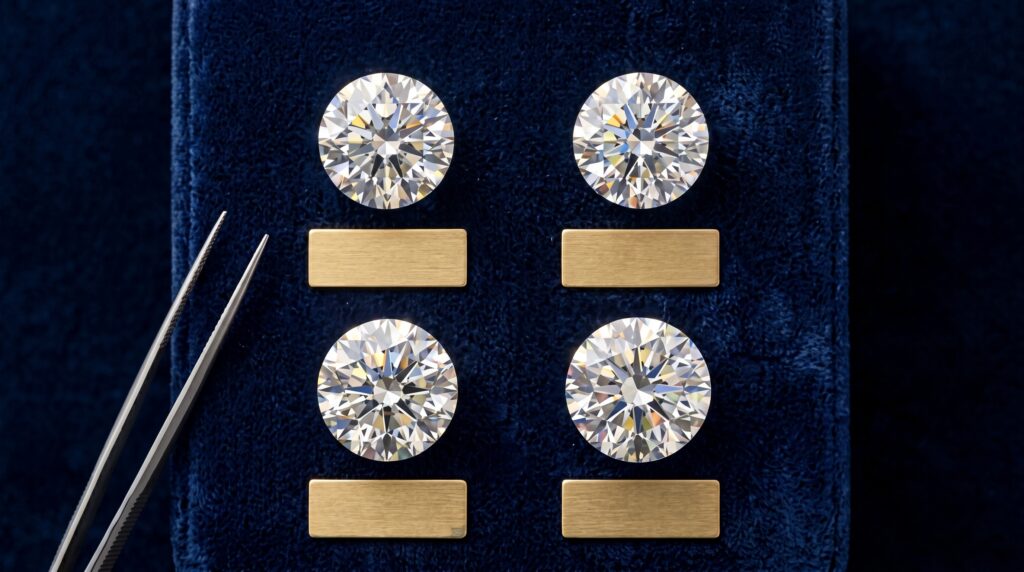
Most buyers walk in knowing the grade names. Very few understand what each one actually means for day-to-day wearability, investment value, and visual impact. Here is an honest breakdown.
VVS1 Diamond
A VVS1 Diamond carries inclusions so small and so well-positioned that even a trained gemologist struggles to locate them under 10x magnification. Pinpoints or tiny feathers typically sit near the girdle or deep in the pavilion, well away from the table. Think of it this way: you are paying for a level of perfection that the human eye cannot detect and that only the GIA grading report fully documents.
VVS1 diamonds are ideal for buyers who want near-flawless stones for investment purposes, collectors, and luxury retail jewelers who position their brand around top-tier quality. From a pricing standpoint, expect a meaningful premium over VS grades, typically 15 to 30 percent depending on carat weight and shape.
VVS2 Diamond
A VVS2 Diamond contains inclusions that are still extremely difficult to find under 10x magnification, but they may be slightly larger or more centrally positioned than in VVS1. The practical difference between VVS1 and VVS2 is almost impossible to detect without specialized equipment. Most gemologists would agree that VVS2 represents outstanding value for buyers who want near-perfect clarity without the steepest VVS1 price tag.
Retailers who stock VVS2 diamonds consistently report strong sell-through on bridal collections, especially in round brilliant and oval shapes above 1 carat.
VS1 Diamond
A VS1 Diamond has minor inclusions that a skilled grader can locate under 10x magnification, but they require effort. Small crystals, feathers, or clouds may appear, but they never affect the stone’s brilliance or structural integrity. VS1 is the clarity sweet spot for most American buyers. It delivers the look of a flawless diamond at a fraction of FL or VVS pricing.
For fancy shapes like cushion cuts, ovals, and pear shapes, VS1 is particularly valuable because the facet patterns in these cuts can make inclusions harder to hide than in round brilliants.
VS2 Diamond
A VS2 Diamond steps down slightly, with inclusions that a trained eye can find under magnification with less effort. In stones under 1.5 to 2 carats, VS2 is almost universally eye-clean. Above that threshold, position and inclusion type matter. A VS2 with a small cloud near the girdle is very different from a VS2 with a feather under the table.
VS2 is the most popular clarity grade in the American mid-market segment. It offers excellent visual quality at the most competitive price point among the four grades covered here.
Other Grades Worth Knowing:
- SI1 and SI2: Inclusions are more easily visible under magnification and may be eye-visible in larger stones or step-cut shapes. Useful for commercial-tier jewelry. See SI1 Diamond and SI2 Diamond.
- FL and IF: Statistically rare, commanding the highest clarity premiums. Best for collector-grade and ultra-premium retail. See FL Diamond and IF Diamond.
VVS vs VS Diamonds: The Real Difference
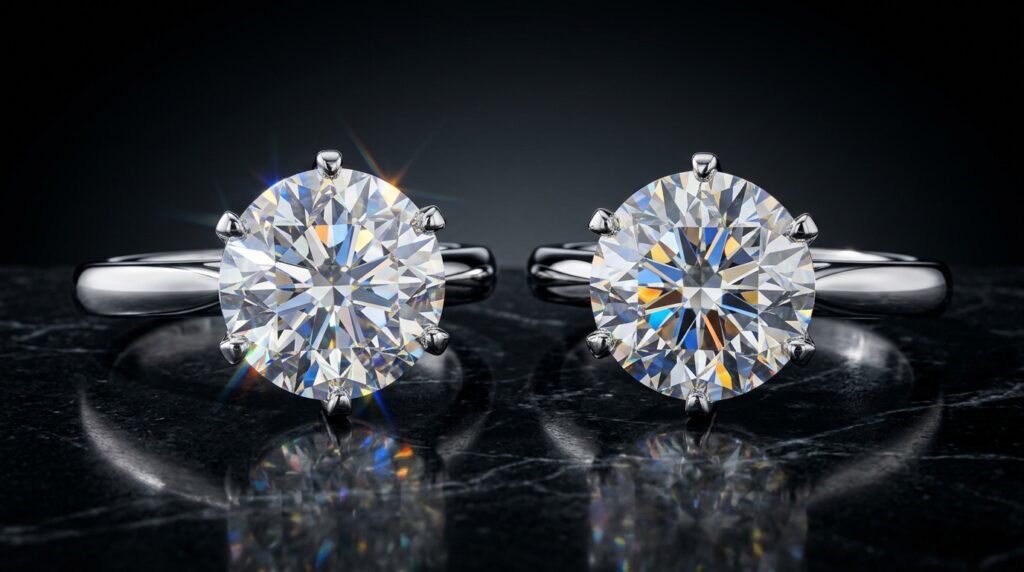
Is the jump from VS to VVS actually worth the price? That depends entirely on your purpose. Here is a side-by-side breakdown across the five factors that matter most.
| Factor | VVS1 / VVS2 | VS1 / VS2 |
|---|---|---|
| Inclusion visibility (naked eye) | Completely invisible | Invisible to near-invisible |
| Visibility under 10x magnification | Extremely difficult to find | Findable with effort (VS1) or easily (VS2) |
| Price premium vs SI1 | 35 to 55 percent higher | 15 to 30 percent higher |
| Best use case | Investment, collector, ultra-premium retail | Bridal, fashion, mid-luxury retail |
| Resale value retention | Higher, especially in certified stones | Good, especially VS1 in larger carat weights |
The truth is that for most engagement ring buyers shopping in the 1 to 2 carat range, VS1 and VS2 deliver eye-clean diamonds at meaningfully lower cost than VVS grades. That said, if your buyer is specifically looking for investment-grade or collector-tier stones, or if you are building a luxury brand identity around exceptional quality, VVS1 and VVS2 clarity grades signal prestige in a way that VS grades simply cannot match on a grading report.
The vvs diamond clarity explained question comes down to this: the difference lives almost entirely under magnification. Above it, the diamonds can look identical.
How to Choose the Right Clarity Grade for Your Needs
- Start with the shape. Step-cut diamonds like emerald and Asscher cuts are clarity-sensitive because their large flat facets act like windows into the stone. For these shapes, VS1 or higher is strongly recommended. Round brilliants and fancy cuts with complex facet patterns are more forgiving, making VS2 and even SI1 viable in many cases.
- Match the carat weight. Inclusions become more visible as carat weight increases, simply because the stone is larger. In stones above 2 carats, moving up from VS2 to VS1 or VVS2 makes a noticeable difference in the way a grader, retailer, or discerning consumer perceives the diamond.
- Think about the setting. A bezel setting partially masks the girdle area, while a prong setting in a solitaire leaves nearly every facet exposed. For a cathedral solitaire in platinum, VS1 clarity gives you clean results without over-spending. A halo setting with smaller side stones draws the eye toward the center stone’s sparkle more than its microscopic inclusions.
- Evaluate the budget reality. Moving from VS2 to VVS2 on a 1.50 carat round brilliant can add $1,200 to $2,500 to the price, with no visible difference to the naked eye. That budget can fund a better cut grade, which actually does affect what the buyer sees every day.
- Consider the occasion and end use. For engagement rings and heirloom pieces, VS1 and above provide confidence and future resale clarity. For fashion jewelry or commercial volume pieces, VS2 and SI1 are sensible choices that keep margin healthy.
- Decide between lab-grown and natural diamonds. The best clarity for lab grown diamond purchases is a question more buyers are asking. Lab-grown diamonds follow the same GIA and IGI clarity grading standards as natural stones. In the lab-grown category, VS1 and VS2 are typically the most cost-efficient choices because the premium for VVS clarity is smaller in absolute dollar terms but still proportionally significant. Explore the full picture at Lab Grown Diamond to understand how clarity pricing differs between natural and grown stones.
Before you finalize your choice, ask one straightforward question: will the person wearing this diamond ever look at it under a loupe? If the answer is no, which it almost always is, then VS1 or VS2 clarity gives you every bit of visual beauty you need.
What B2B Buyers and Diamond Manufacturers Should Know
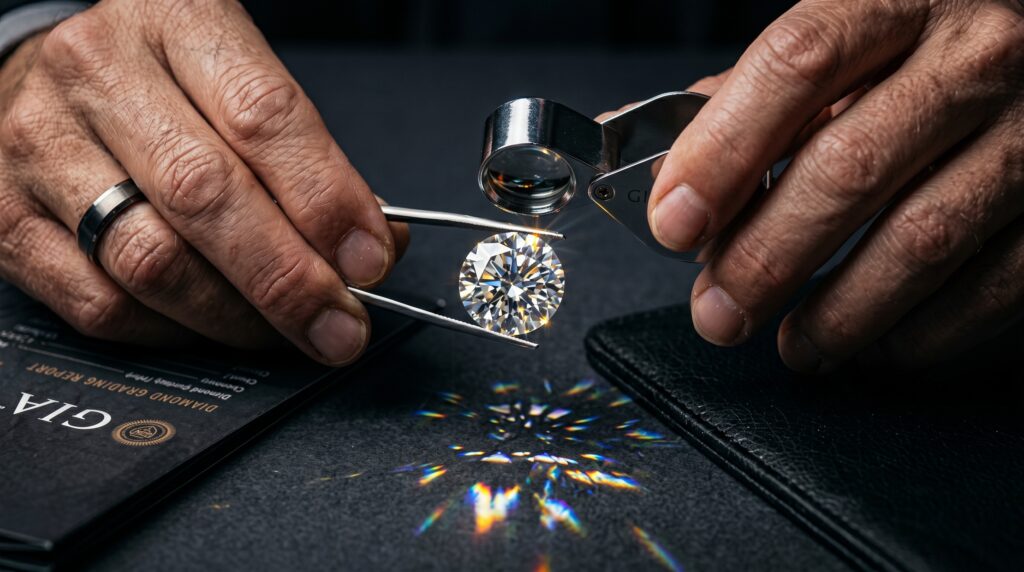
For wholesalers, retailers, and manufacturers sourcing in volume, clarity grades carry weight far beyond visual quality. They directly affect how you price inventory, negotiate with suppliers, and position product on the Rapaport sheet.
GIA-certified VVS1 and VVS2 diamonds command measurable premiums above Rapaport list prices, particularly in round brilliants above 1 carat. IGI certification, which has become increasingly standard for lab-grown diamonds, uses the same clarity scale and is widely accepted by major U.S. retail chains. When you are sourcing certified diamonds for retail, consistency in grading laboratory matters. A VS1 on a GIA report and a VS1 on an IGI report are comparable, but mixing laboratories within a single collection can create pricing confusion at point of sale.
Here is what I have seen firsthand when reviewing parcel lots for wholesale clients: a clarity grade alone is never enough. Two VS2 diamonds at the same carat weight can look completely different depending on inclusion type and position. A cloud near the girdle barely affects face-up appearance, while a feather under the table can reduce the stone’s transparency noticeably. Always request inclusion mapping, not just the grade.
For manufacturers building high-end fine jewelry collections, stocking a range from VVS2 through VS2 gives you flexibility across price points without dropping into clarity territory that requires individual stone vetting. Pair that inventory strategy with reliable certification from GIA or IGI, and your retail buyers will trust the consistency of what you bring them.
You can explore certified diamond inventory and B2B sourcing options directly through Lepdo Diamonds.
Diamond Clarity Trends in the USA (2026 to 2027)
The American bridal market has shifted noticeably over the past 18 months. VS1 remains the most commonly requested clarity grade in engagement ring consultations, but VS2 has gained ground as buyers become more educated about eye-clean diamonds and more price-conscious in a higher interest rate environment. According to recent trade data from the IDEX Online diamond market index, VS2 round brilliants in the 1.00 to 1.49 carat range saw the strongest volume growth in U.S. retail through 2025.
On the luxury end, demand for VVS1 and VVS2 clarity diamonds is being driven by a growing interest in investment-grade certified stones. Buyers in major metropolitan markets, particularly New York, Los Angeles, and Miami, are increasingly asking for VVS graded stones with full GIA reports as part of wealth diversification strategies. Diamond clarity chart VVS vs VS comparisons are now among the most searched diamond education terms on retail jewelry websites.
Lab-grown diamond clarity trends are following natural stone patterns closely. VVS clarity in lab-grown ovals and cushions is popular in the influencer-driven fashion jewelry segment, where visual perfection and large carat weight combine at prices that were unimaginable five years ago. Retailers who carry lab-grown fancy shapes with VVS2 clarity are reporting strong conversion with millennial and Gen Z buyers who prioritize both ethics and aesthetics.
How to Evaluate Clarity Quality in VVS and VS Diamonds
When I assess a diamond’s clarity grade, the first thing I check is not the grade on the certificate but the inclusion plot. The position and nature of inclusions tell me far more than the letter grade alone.
Here are five expert evaluation steps every buyer and retailer should follow:
- Request the GIA or IGI grading report and read the inclusion plot carefully. Inclusions near the girdle are less critical than those under the table. A cloud or crystal centrally positioned in the table facet is far more problematic in a step cut than in a round brilliant, even if both stones carry the same VS1 grade.
- Examine the stone face-up under a jewelry store loupe, not just the certificate. A VS2 with a transparent feather near the culet may look cleaner face-up than a VS1 with a reflective crystal positioned under the table.
- Evaluate light performance, not just inclusion absence. Brilliance, fire, and scintillation depend on cut quality, pavilion angle, and table percentage. A perfectly cut VS2 will outperform a poorly cut VVS1 in any lighting condition.
- Check for clouds. Clouds are groups of micro-inclusions that can reduce transparency and affect a diamond’s ability to return light. A stone graded VS2 with a notation of “clouds not shown” on the GIA report deserves extra scrutiny.
- Assess depth percentage and table percentage alongside clarity. A diamond with a 63% depth and a 60% table may trap light internally, making inclusions more visible than they would be in a well-proportioned stone with the same clarity grade. Cut and clarity work together, not in isolation.
Conclusion
Three things should follow you out of this guide. First, the difference between VVS1 vs VVS2 vs VS1 vs VS2 diamond clarity is real and measurable under magnification, but virtually undetectable to the naked eye in most purchase scenarios. That knowledge alone can save a buyer thousands of dollars or help a retailer have more honest, confidence-building conversations at the showcase.
Second, clarity grade is only one part of the picture. Cut quality, inclusion position, and the specific shape of the diamond all influence how a stone actually looks and performs in light. A well-cut VS2 will routinely outshine a poorly cut VVS1, and that truth matters whether you are buying for emotion or for investment.
Third, whether you are sourcing for a bridal collection, building a fine jewelry line, or choosing a single stone for a life-changing moment, getting this decision right starts with working with a supplier who knows the difference between a grade on paper and a diamond worth buying. Explore certified diamonds across all clarity grades at Lepdo Diamonds, where every stone is sourced with the same expertise and transparency that serious buyers in the VVS1 vs VVS2 vs VS1 vs VS2 diamond conversation deserve.
Clarity is not just a grade. It is a standard.
Frequently Asked Questions About VVS1 vs VVS2 vs VS1 vs VS2 Diamonds
1. What is VVS1 vs VVS2 vs VS1 vs VS2 diamond clarity?
These are four adjacent clarity grades on the GIA diamond grading scale. VVS1 has the fewest and smallest inclusions, nearly impossible to find even under 10x magnification. VVS2 is similar but slightly more visible under magnification. VS1 has minor inclusions findable with effort under magnification, and VS2 has slightly more noticeable inclusions, though all four grades are virtually always eye-clean in standard carat weights.
2. Is VVS1 clarity more expensive than VS1 or VS2?
Yes, VVS1 commands a significant premium over VS1 and VS2. The price difference on a GIA-certified 1-carat round brilliant can range from 20 to 40 percent between VVS1 and VS1, and up to 50 percent between VVS1 and VS2. For most buyers, this premium buys clarity that is only visible under laboratory equipment, which is why VS1 and VS2 are considered the best value clarity grades for engagement rings.
3. Which clarity grade looks the most impressive to the naked eye?
All four grades, VVS1, VVS2, VS1, and VS2, look identical to the naked eye in diamonds under 2 carats. What truly determines visual impact is cut quality. A VS2 diamond with an Excellent or Ideal cut grade will produce more brilliance, fire, and scintillation than a VVS1 with a Good cut. Most buyers and retailers find that cut is the single biggest driver of how impressive a diamond looks in person.
4. Does VVS1 diamond clarity have a GIA cut grade?
Clarity and cut are graded separately by GIA. A diamond’s clarity grade (VVS1, VS1, etc.) describes internal and surface characteristics, while the cut grade (Excellent, Very Good, Good, etc.) evaluates proportions, symmetry, and polish. A VVS1 diamond can receive any cut grade from Excellent down to Poor. For round brilliants, GIA provides a cut grade. For fancy shapes like ovals and pear cuts, GIA does not assign an official cut grade, so proportion specifications matter more.
5. What is the biggest quality risk with VS2 clarity diamonds?
The main risk with VS2 is inclusion position and type. A VS2 stone with a feather or crystal directly under the table of a step-cut diamond can look less clean face-up than its grade suggests. Always request the GIA or IGI grading report inclusion plot, not just the grade letter. Clouds noted as “not shown” on a grading report should prompt closer physical inspection before purchasing or selling.
6. Are lab-grown VVS and VS diamonds as good as natural ones?
Yes, lab-grown diamonds are graded on the same GIA and IGI clarity scales as natural diamonds, and a VVS1 lab-grown diamond has inclusions that are just as rare and small as a natural VVS1. The key difference is price and long-term resale value. Lab-grown diamonds at VVS and VS clarity are available at substantially lower price points than natural equivalents, making them highly attractive for buyers who prioritize visual perfection and carat size over investment value. Quality is identical; market dynamics differ.
7. Which clarity grade is best for an engagement ring?
VS1 is widely considered the ideal engagement ring clarity grade. It delivers a visibly clean diamond at a price point that leaves room in the budget for a larger carat weight or better cut grade. VS2 is an excellent choice for buyers who have verified eye-cleanliness in person or through a trusted retailer. VVS2 is a smart choice for larger stones above 2 carats, where inclusions become more visible. VVS1 is best reserved for buyers with investment or collector motivations, or those who simply want the very best.
8. How do I choose a reliable VVS or VS diamond supplier?
Work with a supplier who provides GIA or IGI certificates for every stone and who can show you the inclusion plot alongside the physical diamond or high-resolution imaging. Ask about grading laboratory consistency within their inventory. A trustworthy supplier will offer transparent pricing relative to Rapaport list prices and will not resist letting you compare stones side by side. Lepdo Diamonds sources certified diamonds across all clarity grades with full documentation available for every stone.