The Future of Diamond Industry in India: Trends, Growth and Opportunities in 2026 and Beyond
 by lepdogroup@gmail.com
0 comments
by lepdogroup@gmail.com
0 comments
The diamond industry India future centers on Surat and Mumbai expanding lab-grown diamond production while natural diamond exports stabilize after years of volatility. For US buyers, this means more certified options, sharper pricing, and stronger supply chains. Lepdo Diamonds connects you directly with verified Indian manufacturers across both categories.
A few years ago, a Texas jewelry retailer told me she was nervous about sourcing from India. Today, her entire lab-grown case comes from Surat, and her margins have never looked better. That shift captures exactly what’s happening with the diamond industry India future right now.
India has quietly become the control center for both natural diamond cutting and lab-grown diamond production worldwide. Roughly 90 percent of the world’s diamonds, by piece count, pass through Indian cutting houses before reaching a GIA lab or a retail counter.
For American manufacturers, wholesalers, and consumers, understanding where this industry is headed isn’t optional anymore. It shapes pricing, certification standards, carat availability, and even which diamond shapes show up in bridal cases nationwide. This post breaks down the growth drivers, the lab-grown surge, export trends, investment angles, and what buyers should watch through 2026 and beyond.
What Is the Diamond Industry in India?
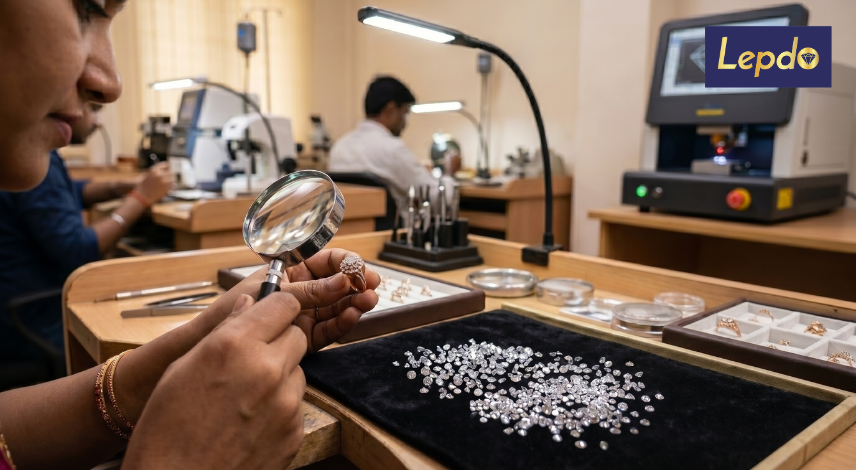
The diamond industry in India refers to the country’s role in cutting, polishing, manufacturing, and exporting both natural and lab-grown diamonds, centered primarily in Gujarat and Mumbai. It’s the backbone of global diamond supply, touching nearly every stone that ends up in a US jewelry store.
Definition: A network of manufacturing hubs, primarily in Surat and Mumbai, that cut, polish, grow, and export diamonds to global markets, especially the US.
Key Segments: Natural diamond cutting and polishing, CVD and HPHT lab-grown production, jewelry manufacturing, certification services
Best For: B2B buyers, manufacturers, retailers, and investors seeking certified stones at competitive prices
Key Advantage: Unmatched scale, cutting expertise, and increasingly diversified product categories
Anyone wanting a deeper foundation should check the Diamond Industry glossary page at Lepdo Diamonds, which breaks down how the manufacturing and export ecosystem actually functions.
Key Segments Driving the Diamond Industry India Future
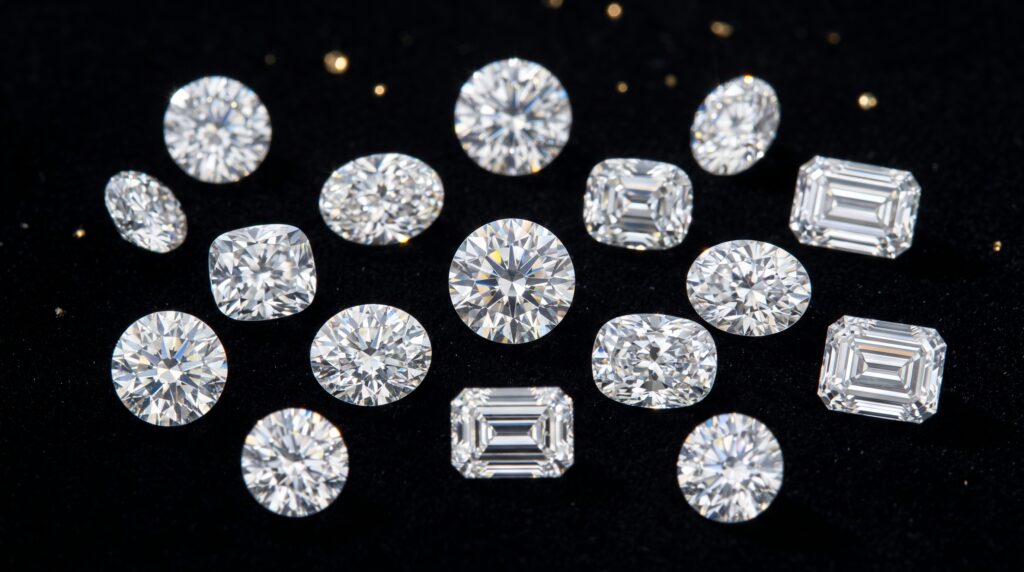
India’s diamond economy isn’t one monolithic market. It’s made up of distinct segments, each with different growth trajectories and buyer relevance.
1. Lab-Grown Diamond Manufacturing
This is the fastest-growing segment by far. CVD and HPHT production in Surat has scaled dramatically, and the lab grown diamond market india now supplies a large share of US retail inventory. Retailers expanding lab-grown cases should watch this segment closely.
2. Natural Diamond Cutting and Polishing
Still the traditional backbone. India processes the overwhelming majority of natural rough globally, though volumes have fluctuated with rough supply constraints from major mining countries over the past two years.
3. Diamond Jewelry Manufacturing and Export
Finished jewelry exports have grown steadily as Indian manufacturers move up the value chain, producing complete pieces rather than just loose stones for US brands.
4. Melee and Commercial Goods:
High-volume small stones for pave and accent settings, where India’s cost advantage is most pronounced.
5. Fancy Shapes and Custom Cuts:
Growing demand for ovals, cushions, and elongated radiants has pushed manufacturers to upgrade cutting technology significantly.
6. Certification and Grading Services:
IGI’s strong presence in India has streamlined certification timelines, a major factor for B2B buyers managing inventory turnover.
7. Diamond Trade Finance and Banking Support:
Improved access to working capital has let smaller manufacturers scale production and take on larger export orders.
8. Technology and Reactor Innovation:
Indian CVD reactor manufacturing itself is emerging as an export category, not just the diamonds it produces.
Lab-Grown vs Natural Diamonds: The Real Difference in India’s Market
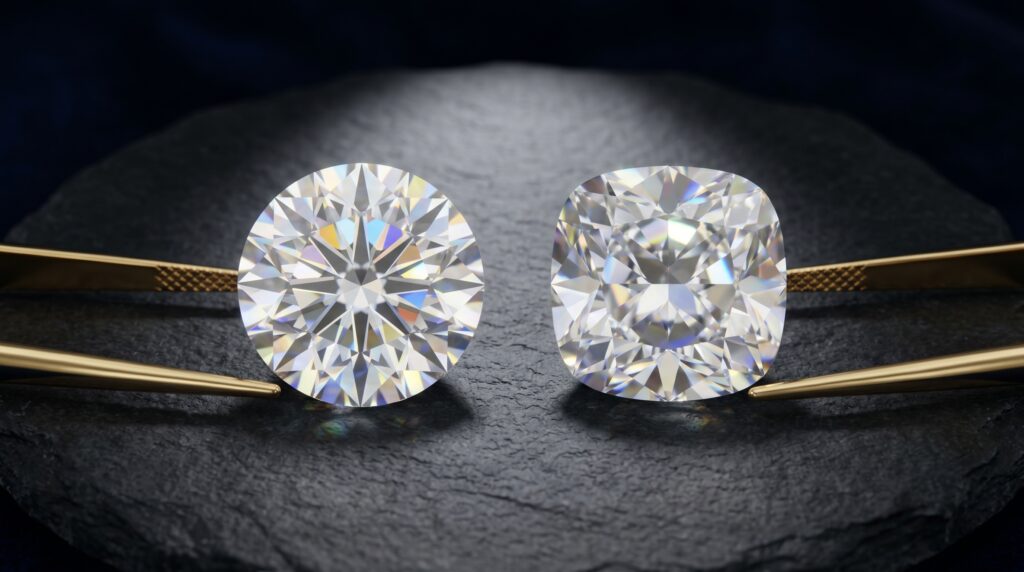
Most buyers entering the Indian sourcing market want clarity on one thing: how do lab-grown and natural diamonds actually compare from a sourcing standpoint. The differences go beyond just origin.
| Factor | Lab-Grown (India) | Natural (India-Cut) |
|---|---|---|
| Production Volume | Rapidly scaling, India is the global leader | Stable but dependent on rough imports |
| Price Per Carat | Significantly lower, gap widening yearly | Higher, more stable long-term value |
| Certification | GIA and IGI both grade, IGI dominant | GIA and IGI, GIA often preferred for natural |
| Export Growth (2026) | Strong double-digit growth trajectory | Modest growth, recovering from rough shortages |
| Investment Positioning | Functional value, depreciates like a commodity | Holds value better for rare, larger stones |
In practice, both categories matter to a healthy US inventory strategy. Lab-grown drives volume and accessibility, while Natural Diamonds still anchor the high-value and investment-grade segments that serious collectors want.
How to Choose the Right Diamond Sourcing Strategy for Your Business
Building a sourcing strategy around India’s diamond economy means thinking through several factors at once, and getting the mix wrong can quietly drain margin for months before anyone notices.
- Business model fit: Retailers focused on volume and margin should weight lab-grown heavily. Boutiques targeting heirloom or investment buyers need stronger natural diamond relationships, since their customers are often paying for provenance as much as appearance.
- Inventory space and category mix: A balanced case typically includes both categories, since customer expectations now span both worlds depending on budget. Stores that lean too hard into one category often find themselves turning away customers who simply walked in expecting the other.
- Setting and product line compatibility: Bridal lines need consistent cut grading across parcels, while fashion jewelry tolerates more variance in commercial-grade goods. Mixing these standards within the same line tends to create inconsistent customer experiences across a collection.
- Budget advantage: Lab-grown sourcing from India offers substantial cost savings, often 60 to 80 percent versus natural equivalents, freeing up budget for larger stones or better settings. That savings can be reinvested into upgraded metal work or added detail that customers notice immediately.
- Occasion and customer intent: Engagement and bridal customers increasingly accept lab-grown center stones, while investment-focused customers still lean natural. Understanding which customer is standing in front of you changes the entire conversation.
- Lab-grown vs natural allocation: Most successful US retailers now treat Lab Grown Diamonds as a distinct category with its own marketing, rather than positioning it as a discount alternative. This positioning shift alone has changed how customers perceive value across an entire case.
Before you finalize your sourcing strategy, talk directly with suppliers about certification consistency across repeat orders, not just price on a single parcel. The first order is rarely where problems show up. It’s the fifth or sixth, once a supplier assumes the relationship is locked in, that consistency tends to slip.
What B2B Buyers and Diamond Manufacturers Should Know
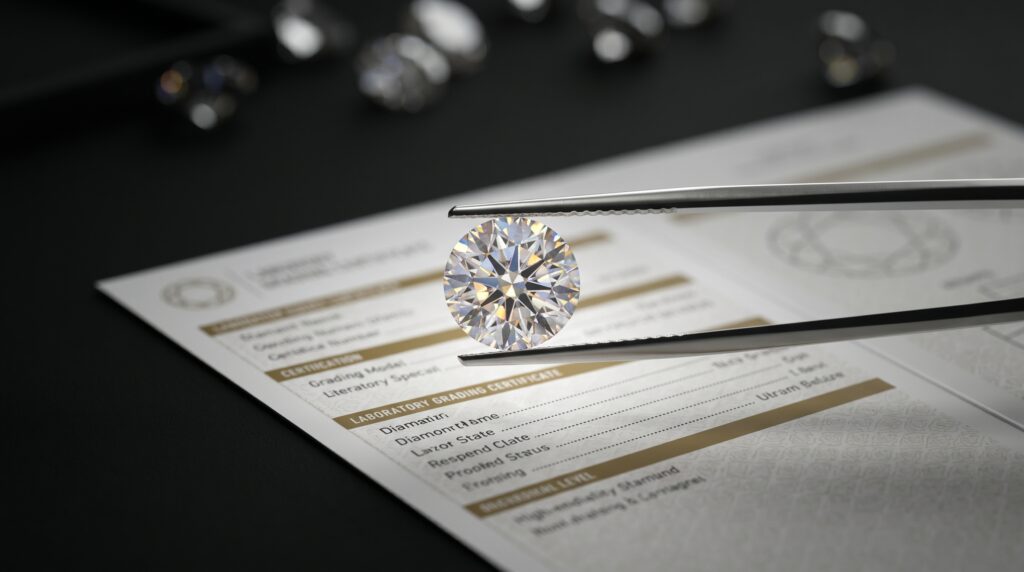
Sourcing from India at scale requires a different mindset than one-off purchases. Bulk orders, especially for melee and commercial goods, depend heavily on cut grading consistency across the full lot, not just sample stones.
Here is what separates reliable suppliers from risky ones: individual IGI or GIA certification for every stone in a parcel, transparent disclosure of treatment status for any HPHT-enhanced goods, and pricing that’s benchmarked against current Rapaport sheets rather than arbitrary discounts. Rapaport pricing remains the standard reference point for negotiating both natural and lab-grown parcels in the US market, and understanding how Indian wholesale prices track against Rapaport benchmarks is essential for protecting margins.
For manufacturers working with a fancy cut diamond manufacturer in India, due diligence on reactor type, cutting equipment, and grading lab affiliations matters more than ever. The Diamond Marketplace at Lepdo Diamonds connects B2B buyers with vetted suppliers across both natural and lab-grown categories.
In my experience, the suppliers who survive long-term partnerships are the ones who proactively flag grading inconsistencies before a buyer finds them. That kind of transparency is rare, and it’s worth paying for.
Diamond Jewelry Trends in the USA (2026 to 2027)
The diamond industry growth india story is increasingly visible on US retail floors. Lab-grown center stones in oval and cushion shapes continue gaining ground in engagement rings, while yellow gold settings have surged as a counterpoint to years of white metal dominance. Walk into almost any bridal department right now and you’ll notice the shift immediately: cases that were once dominated by platinum and white gold now feature warm yellow and rose gold prominently, often paired with near-colorless lab-grown stones that pop against the warmer metal tone.
Celebrity engagement announcements continue shaping shape preferences, with elongated and fancy cuts seeing renewed interest following high-profile reveals covered widely in fashion media. Eternity bands featuring Indian-sourced melee, both lab-grown and natural, are outperforming at multiple price points. What’s interesting is how quickly these trends move from red carpet to retail floor now. A shape that gets attention in a celebrity announcement can show up in mainstream bridal collections within a single season, and Indian manufacturers have gotten faster at responding to that demand curve than almost anyone else in the supply chain.
Demand for a fancy cut diamond jewellery aesthetic, think asymmetric settings and East-West orientations, shows no sign of slowing as 2026 progresses. Retailers report that customers are arriving with reference images already in hand, often pulled directly from social media, and asking specifically for these less traditional layouts. That shift in customer behavior, from passive browsing to arriving with a defined vision, is pushing manufacturers to keep more fancy shape inventory on hand rather than cutting to order, which has its own ripple effects on pricing and lead times across the supply chain.
How to Evaluate Quality from Indian Diamond Manufacturers
When I assess stones coming out of Indian manufacturing pipelines, the first thing I check is cut consistency across the parcel, not just the certificate. A single stunning stone in a 50-piece parcel doesn’t tell you anything useful. What matters is whether stone number 35 looks as good as stone number 2, and that’s something no certificate, individually or in batch, will ever fully capture.
You will want to pay attention to these evaluation points before signing off on any purchase, whether it’s one stone or a thousand:
- Cut grade and proportions: Table percentage and pavilion depth determine whether a stone delivers strong brilliance and fire or sacrifices light return for weight. A stone with a table percentage pushing 65 percent might look impressively large from above, but it’s often hiding a shallow pavilion that lets light leak out the bottom instead of bouncing back to the eye. I’ve seen parcels where every certificate technically passed, yet half the stones looked noticeably lifeless next to the other half.
- Symmetry and length-to-width ratio: For fancy shapes especially, an inconsistent length-to-width ratio across a parcel signals cutting variability. This matters enormously for ovals and emerald cuts, where even a small ratio shift changes the entire visual character of the stone. A buyer expecting a sleek, elongated oval can end up with something closer to a rounded oval if the ratios aren’t held tight across the lot.
- Clarity grade nuances: Inclusion types differ between lab-grown and natural stones, so don’t assume identical clarity grades mean identical appearances. CVD stones tend toward pinpoint inclusions and small clouds, while natural stones more often show feathers or crystals. Two VS2 stones, one lab-grown and one natural, can look quite different under magnification even though the grade on paper is identical.
- Bowtie effect: For oval and pear shapes, check for an excessive bowtie effect that dulls scintillation across the table. A mild bowtie is normal and even adds character, but a heavy, dark bowtie that dominates the center of the stone is a cutting issue, not a feature.
- Certification verification: Always cross-reference certified diamonds against the issuing lab’s online database before finalizing any purchase. This single step catches more problems than people expect, including mismatched measurements and outdated treatment disclosures.
Conclusion
Three things stand out when you look honestly at where India’s diamond economy is headed. First, lab-grown production has moved from niche to mainstream, reshaping pricing and inventory strategy for retailers nationwide. Second, natural diamond cutting remains essential, particularly for investment-grade and larger stones where value retention matters most. Third, the diamond industry India future depends on certification transparency and export infrastructure that’s only getting stronger heading into 2026.
To be fair, sourcing decisions still come down to individual stone quality and supplier reliability, not just category trends. Whether you’re building a wholesale relationship or sourcing a single engagement ring center stone, the fundamentals haven’t changed: verify certification, understand pricing benchmarks, and work with suppliers who disclose everything upfront.
For B2B buyers exploring diamond trade finance options or looking to understand export logistics, the Diamond Trade Finance and Diamond Export glossary pages at Lepdo Diamonds offer practical starting points. Investors curious about long-term positioning can also review the Diamond Investment glossary for context on how diamonds fit into a broader portfolio.
Ready to explore what India’s manufacturers have to offer? Visit Lepdo Diamonds to connect directly with verified suppliers across both lab-grown and natural categories. The diamond industry India future isn’t a distant forecast. It’s already reshaping what’s on US retail counters today, and Lepdo Diamonds is positioned to help you navigate it with confidence.
Frequently Asked Questions About the Diamond Industry India Future
1. What is the diamond industry India future built around?
The diamond industry India future is built around expanding lab-grown diamond production, modernizing natural diamond cutting infrastructure, and growing finished jewelry exports. Surat and Mumbai remain the core hubs, with India positioned to maintain its dominant role in global diamond manufacturing through 2026 and beyond.
2. Is lab-grown diamond sourcing from India cheaper than natural?
Generally, yes. Lab-grown diamonds from India carry significantly lower wholesale prices per carat than natural equivalents, often 60 to 80 percent less. That said, natural diamonds tend to hold long-term value better, so the right choice depends on whether you’re prioritizing margin or investment positioning.
3. Which diamond category looks biggest or most impressive for the price?
Lab-grown CVD diamonds from India typically offer the most size for the budget. A buyer can often afford a noticeably larger lab-grown stone than a natural one at the same price point, while maintaining strong cut quality and certification.
4. Do Indian-manufactured diamonds receive GIA cut grades?
Yes. GIA assigns cut grades to round brilliants for both natural and lab-grown diamonds manufactured in India, including Excellent, Very Good, Good, Fair, and Poor. IGI also assigns cut grades to rounds and popular fancy shapes, which is common for Indian-cut lab-grown stones.
5. What is the biggest risk when sourcing from the Indian diamond industry?
The biggest risk is inconsistent grading across bulk parcels, especially for melee and commercial goods. Always insist on individual certification per stone rather than batch reports, and verify certificates directly through GIA or IGI databases before finalizing orders.
6. Are lab-grown diamonds from India as good as natural diamonds?
Chemically and physically, yes. Lab-grown diamonds share identical hardness, brilliance, and the same 4Cs grading standards as natural stones. The difference is origin and long-term value retention, not visual quality or durability.
7. Which diamond type from India is best for an engagement ring?
Round brilliant and oval cuts remain the most popular for engagement rings, whether lab-grown or natural. Indian manufacturers now produce both at scale with strong cut grades, making certification and proportions more important than origin for most buyers.
8. How do I choose a reliable diamond manufacturer or supplier in India?
Look for suppliers offering individual GIA or IGI certification, transparent Rapaport-based pricing, and a documented history with US B2B clients. Avoid sources unwilling to provide third-party lab reports for every stone in a shipment.