How to Import Diamonds from India to the USA: A Step-by-Step Guide for B2B Buyers
 by lepdogroup@gmail.com
1 comment
by lepdogroup@gmail.com
1 comment
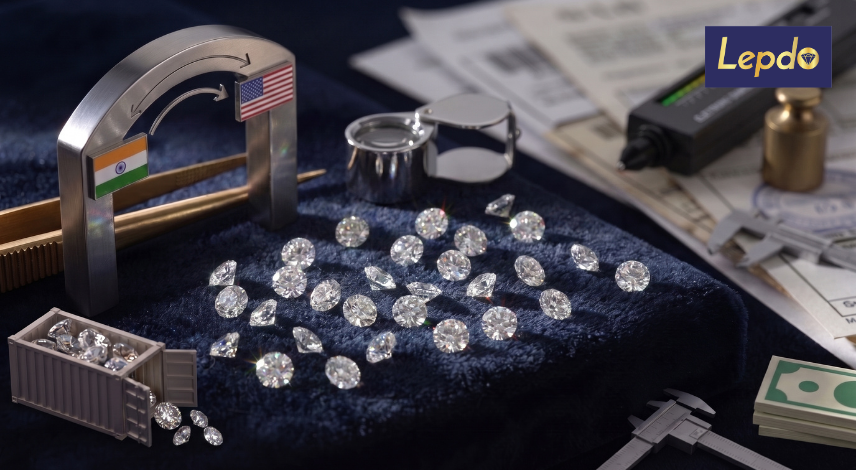
Importing diamonds from India to USA means legally purchasing loose or polished stones from Indian manufacturers and moving them through customs clearance, HS code classification, and duty payment into the American market. Buyers need this process to avoid shipment delays, fraud, or compliance penalties. Lepdo Diamonds works with verified Surat manufacturers who understand US-bound documentation requirements firsthand.
A single misfiled customs form can hold a diamond shipment at JFK for three weeks. That happened to a mid-sized jewelry wholesaler in New Jersey last year, and it cost him two major holiday season orders. Anyone researching how to import diamonds from India to USA needs to understand something upfront: this process is less about the diamonds themselves and more about paperwork, timing, and trust.
India cuts and polishes a large share of the world’s diamonds, and most of that supply eventually reaches American retailers, manufacturers, and jewelry brands. Buyers who get the import process right save money on duties, avoid GIA certification disputes, and build supply chains that do not collapse during peak season.
Here is what most buyers never get told before their first shipment: the actual sourcing decision is usually the easy part. The hard part is everything that happens after the purchase order is signed, when carat weight, HS codes, and customs valuation all have to line up perfectly on paper.
This guide walks through what actually happens between placing an order in Surat and receiving certified, carat-accurate stones in a US warehouse. You will come away knowing what documents matter, what a broker actually does, and where most first-time importers lose money.
What Does It Mean to Import Diamonds from India to the USA?
Importing diamonds from India to USA refers to the legal process of purchasing loose or polished diamonds from an Indian source and transporting them across international borders into American commercial channels, subject to customs law, HS code classification, and duty regulations.
Most buyers assume this is a shipping question. It is actually a compliance question wearing a shipping costume. The physical movement of stones from Surat to a US warehouse is the simplest part of the entire chain.
Quick Info Box
- Definition: The regulated process of buying diamonds in India and bringing them into the USA for resale or manufacturing.
- Key Types or Varieties: Natural loose diamonds, lab-grown diamonds, certified polished stones, melee parcels, fancy shape diamonds.
- Best For: Wholesalers, jewelry manufacturers, retail chains, and independent jewelers sourcing directly.
- Key Difference or Advantage: Direct India sourcing typically costs 15 to 30 percent less than buying through a US middleman.
Most of this trade falls under what the industry calls Diamond Import, and it works in tandem with India’s Diamond Export infrastructure, which is heavily concentrated around Surat and Mumbai. Understanding both sides of that trade relationship matters, because export documentation issued in India directly affects what clears US customs without a hitch.
Most Popular Import Routes and Who They Are For
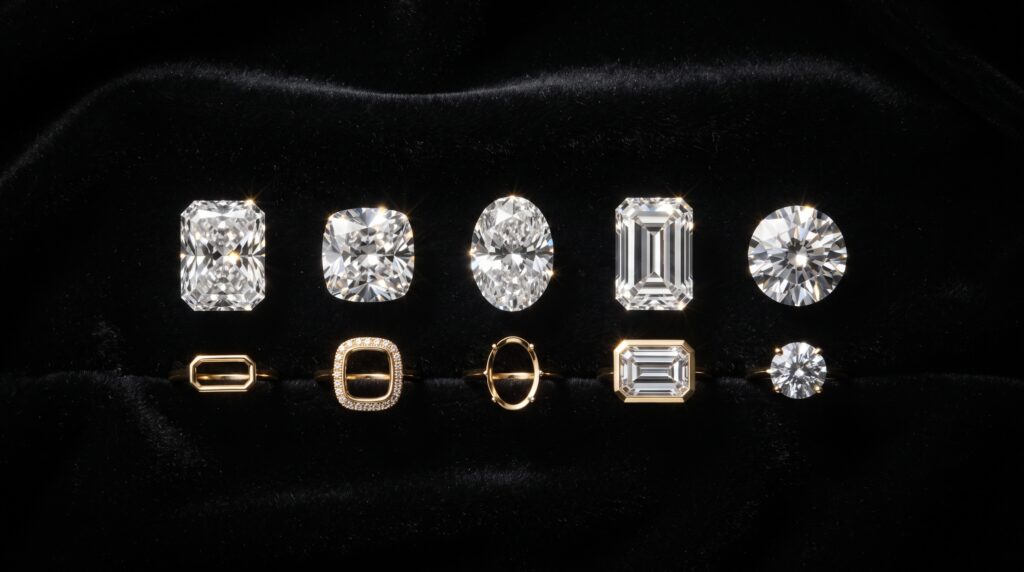
Not every buyer imports diamonds the same way. Here is what the actual landscape looks like for USA-based buyers sourcing from India, based on how different business sizes and risk tolerances actually operate in practice.
Direct Manufacturer Sourcing
This means buying straight from a Surat-based cutting and polishing house, cutting out the layers of resale markup that pile up in between. It suits established wholesalers and jewelry manufacturers who order in volume and want consistent cut grading across large parcels, since a direct relationship gives you far more control over reorders and quality feedback.
Import Broker or Agent Model
A diamond import broker usa India relationship involves a licensed intermediary who handles customs filings, duty calculations, and carrier coordination on your behalf. This route suits first-time importers or retailers without an in-house compliance team, and honestly, it suits a lot of experienced buyers too, since the fee is usually smaller than the cost of a single customs delay. Working with reliable Diamond Brokers can be the difference between a smooth clearance and a shipment stuck in inspection.
Diamond Bourse and Trade Show Sourcing
Buyers attend events like the India International Jewellery Show or source through recognized diamond bourses in Mumbai and Surat. This works well for buyers who want to physically inspect stones before committing, particularly for fancy shapes where photographs rarely capture true light performance.
Beyond these three primary paths, buyers also use consolidator shipping services for smaller regular orders, courier-based small parcel imports for sample requests, third-party inspection agencies that verify parcels before they leave India, and escrow-based B2B marketplaces designed to reduce payment risk between unfamiliar trading partners. Retailers ordering under 50 carats per shipment often start with courier or sample-parcel routes before graduating to full container or bonded shipments once trust is established with a supplier. Most buyers underestimate how much this early trust-building phase matters, and it usually takes two or three small orders before either side commits to larger volume.
Importing Directly vs Using a Diamond Import Broker: The Real Difference
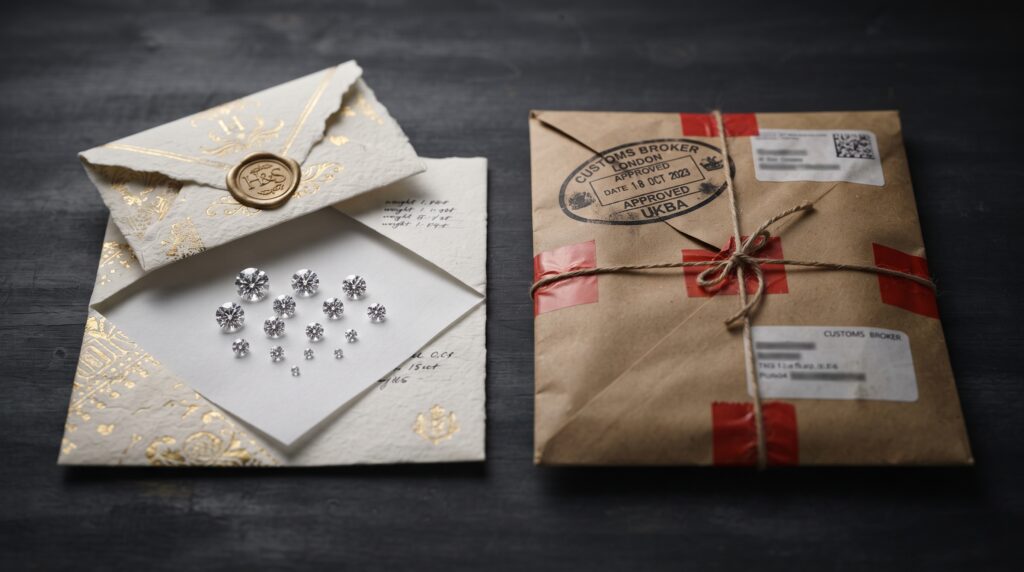
| Factor | Direct Import | Using an Import Broker |
|---|---|---|
| Documentation handling | Buyer manages all paperwork | Broker files customs forms |
| Cost | Lower per-carat cost | Broker fee, usually 2 to 5 percent |
| Speed at customs | Slower for first-timers | Faster, broker knows HS codes |
| Risk exposure | Higher without experience | Reduced, broker carries compliance knowledge |
| Best suited for | Experienced wholesalers | New importers, smaller retailers |
The truth is that most first-time buyers underestimate how technical US customs clearance for diamonds actually is. A misclassified HS code alone can trigger a full shipment inspection, which adds days and sometimes storage fees that eat straight into margin. Diamond brokers exist precisely to prevent that kind of costly delay, and many established importers keep using one even after they gain experience, simply because the fee is smaller than the risk of a held container sitting at port. To be fair, some very high-volume manufacturers eventually bring this expertise in-house, but that only makes sense once shipment frequency justifies a dedicated compliance hire.
How to Choose the Right Import Method for Your Business
- Assess your order volume. Small, occasional orders favor courier shipping. Regular bulk orders justify setting up a bonded import relationship with a customs broker on retainer.
- Check your compliance capacity. If nobody on your team understands customs codes or duty schedules, a broker is not optional, it is necessary from day one.
- Match sourcing to your business model. Retailers selling finished jewelry need polished, certified stones, best browsed through a catalog of Loose Diamonds. Manufacturers may want rough or semi-finished parcels they can shape to their own specifications.
- Compare total landed cost. Factor in duty, insurance, and broker fees, not just the India purchase price, since the sticker price rarely tells the full story.
- Consider your sales calendar. Engagement ring season and holiday retail both demand earlier ordering windows to avoid shipping bottlenecks that pile up every October and November.
- Decide between lab-grown and natural sourcing. Many US retailers are shifting toward CVD and HPHT stones for margin reasons, and understanding How to Import Lab Grown Diamond shows the HS classification differs slightly from natural stones, which affects your duty calculation.
Before you finalize your choice, map out your full annual order calendar first, because import timing mistakes are far more expensive to fix after the fact than sourcing mistakes ever are.
What B2B Buyers and Diamond Manufacturers Should Know
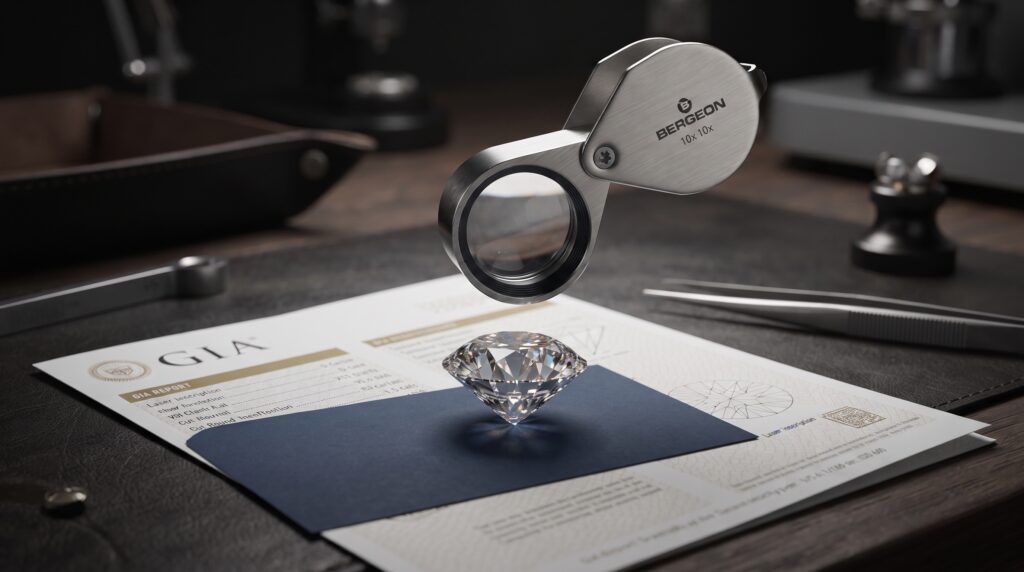
Bulk sourcing from India requires more than picking a supplier with a nice catalog. You need consistent cut grading across parcels, and that means insisting on stone-by-stone GIA or IGI certification rather than blanket parcel grading that hides variance between individual stones.
Rapaport pricing remains the industry benchmark for wholesale negotiation, and any serious diamond import broker usa India relationship should reference Rapaport sheets when quoting rather than pulling numbers out of thin air. Most buyers who get shortchanged on price never actually checked the Rapaport list against their invoice.
Diamond Manufacturers like Lepdo Diamonds, based in Surat’s diamond manufacturing hub, typically issue IGI and GIA certified stock as standard practice rather than an upsell, which matters when a buyer is trying to move fast through US customs without certification disputes slowing everything down. If you are researching the broader Diamond Wholesale Market Usa-2026 landscape, sourcing relationships with vetted Surat manufacturers tend to outperform spot-market purchases on consistency, especially across repeat orders.
In my experience, the single biggest mistake bulk buyers make is skipping pre-shipment inspection reports to save a few hundred dollars, then losing thousands when a parcel arrives with inconsistent clarity grading across the batch. A fancy cut diamond manufacturer with a documented quality control process will always provide this without hesitation, and if a supplier resists a reasonable inspection request, that alone tells you something worth paying attention to.
Payment terms also deserve more scrutiny than most buyers give them, especially on a first order with a new manufacturer. A supplier willing to work with staged payments tied to inspection milestones is usually signaling more confidence in their own quality control than one demanding full payment upfront.
Diamond Import Trends in the USA (2026 to 2027)
Fancy cut diamond jewellery demand is climbing steadily in the US retail market, driven partly by younger buyers seeking non-round engagement ring styles that feel more personal and less traditional. Oval, cushion, and radiant cuts continue gaining share against traditional round brilliants, and that shift is showing up in wholesale order patterns coming out of Surat.
Cultural visibility around unconventional engagement ring choices has pushed more independent jewelers to request fancy shapes directly from Indian manufacturers rather than relying on domestic wholesalers who often mark up fancy shapes more aggressively than round stones. Industry data from trade bodies tracking US polished diamond imports shows lab-grown categories now represent a meaningful and growing percentage of total import volume compared to five years ago, and that trend shows no sign of reversing.
Retailers are also leaning into transparency-driven marketing, showcasing certification documents alongside product listings rather than burying them in fine print. That shift makes sourcing from certified, traceable Indian manufacturers more valuable than ever, since buyers increasingly expect documentation proof before purchase, not after the sale is already made.
Social media has played a quiet but real role here too, with more couples posting ring shopping journeys that normalize shapes outside the traditional round brilliant. Manufacturers who can turn around fancy shape orders quickly are the ones best positioned to capture this shift before domestic wholesalers catch up on inventory.
How to Evaluate Quality in Imported Diamonds
When I assess an imported parcel, the first thing I check is whether the certification matches the physical stone, carat weight, and measurements exactly. Mismatches happen more often than buyers expect, especially with older certificates or parcels that have changed hands several times.
You will want to pay attention to light performance next, because a certificate alone will not tell you the whole story. Brilliance, fire, and scintillation depend heavily on pavilion angle and table percentage, and two stones with identical grading can still look noticeably different under normal room lighting.
- Verify the certified diamonds documentation against the physical stone using a loupe and micrometer before accepting delivery.
- Check depth percentage and table percentage against ideal ranges for the specific shape you ordered.
- Inspect for a bowtie effect in elongated shapes like oval or marquise cuts, since this is where inconsistency shows up fastest.
- Confirm length-to-width ratio matches what was advertised in the original order specification.
- Review clarity grade under 10x magnification rather than trusting the certificate blindly, particularly on older stock.
To be fair, round diamonds still dominate US engagement ring sales, and that is not likely to change soon. But fancy shapes are where inconsistent cut quality shows up most often, so extra scrutiny during import inspection pays off far more on these cuts than on standard rounds.
Conclusion
Importing diamonds from India to USA rewards buyers who treat documentation as seriously as they treat stone selection. Getting HS codes, certification, and duty calculations right the first time saves far more money than chasing the lowest per-carat price, and it protects your business from the kind of customs delay that can wreck a seasonal order. Whether you choose direct manufacturer sourcing or work through a broker, the businesses that succeed long-term are the ones that build repeatable, transparent supply relationships rather than one-off purchases based purely on price.
Retailers and manufacturers evaluating suppliers for their next shipment can explore our Loose Diamonds collection to see current IGI and GIA certified inventory available for US-bound orders. For wholesale inquiries on fancy shapes and certified stones, Lepdo Diamonds offers direct manufacturer pricing from Surat to verified B2B accounts.
None of this needs to feel complicated once you have the right partner on the ground in Surat handling quality control before the shipment ever leaves India. Most import headaches disappear entirely when sourcing and documentation are treated as one process, not two separate problems handled by two separate people.
Diamonds may travel from Surat’s workshops to American showcases, but the businesses that thrive are the ones that master the paperwork in between.
Frequently Asked Questions About Importing Diamonds from India to USA
1. What is importing diamonds from India to USA?
It is the legal process of purchasing diamonds from Indian manufacturers and bringing them into the United States through customs clearance. This includes HS code classification, duty payment, and compliance with FTC and customs documentation requirements for polished or rough stones.
2. Is importing diamonds from India cheaper than sourcing domestically?
Yes, direct India sourcing is usually 15 to 30 percent cheaper than buying through a US-based middleman. Savings come from India’s cutting and polishing labor costs, though buyers must factor in duty, shipping, and broker fees to calculate true landed cost.
3. Which import route looks most reliable for new buyers?
Working with a licensed diamond import broker usa India typically proves most reliable for first-time importers. Brokers handle customs filings and HS code accuracy, reducing the risk of shipment holds that commonly affect inexperienced direct importers.
4. Does the diamond import process require GIA certification?
GIA certification is not legally required for customs clearance, but it is strongly recommended. US retailers and consumers expect GIA or IGI paperwork, and uncertified stones face resale and buyer trust challenges regardless of clearance status.
5. What is the biggest quality risk with diamond imports?
Certificate mismatch is the most common risk, where a certificate does not accurately reflect the physical stone’s carat weight, clarity, or measurements. Pre-shipment inspection reports significantly reduce this risk before the parcel ever leaves India.
6. Are lab-grown diamonds from India as good as natural imports?
Lab-grown diamonds carry the same 4Cs grading standards as natural stones under GIA and IGI systems. Quality depends on the individual manufacturer’s cutting precision, not on whether the stone is lab-grown or mined.
7. Which imported diamond shapes are best for engagement rings?
Oval, cushion, and round brilliant shapes remain the strongest engagement ring performers among US buyers. Fancy shapes require closer inspection of length-to-width ratio and bowtie effect before committing to a purchase.
8. How do I choose a reliable diamond import supplier?
Look for manufacturers offering stone-by-stone GIA or IGI certification, transparent Rapaport-based pricing, and a documented pre-shipment inspection process. Established Surat-based manufacturers with verifiable US client references tend to reduce import risk significantly.