Fancy Cut Diamonds from India: A Complete Guide to Shapes, Prices and Where to Buy
 by lepdogroup@gmail.com
1 comment
by lepdogroup@gmail.com
1 comment
Fancy cut diamonds from India are non-round certified diamond shapes oval, pear, cushion, marquise, emerald, radiant, and more precision-cut by Surat manufacturers and graded by GIA or IGI. India now dominates global fancy shape output, giving US buyers access to certified diamonds at 20 to 40 percent less than equivalent rounds. Lepdo Diamonds connects you directly with verified Indian suppliers for every shape and size.
Three years ago, a jewelry retailer I work with in Dallas couldn’t keep ovals in stock. Her wholesaler kept running short. Her customers kept asking. She finally flew to Surat herself, walked the factory floors, and came home with a direct supplier relationship that changed her entire business. She now buys fancy cut diamonds India manufacturers produce ovals, cushions, pears at prices her competitors can’t match, all with individual IGI certificates on every stone.
That trip isn’t unusual anymore. What was once a workaround is now standard practice for serious US buyers. India produces more certified fancy shape diamonds than any other country on earth, and the quality coming out of Surat right now is genuinely impressive, not impressive “for the price,” just impressive, full stop.
This guide is for anyone who wants to understand what that market actually looks like. The shapes, the pricing, what makes a good stone versus a weight-chasing cut, what B2B buyers need to know before their first parcel order, and where the US trend lines are pointing heading into 2027.
What Fancy Cut Diamonds Actually Are
A fancy cut diamond is any polished diamond that isn’t round. That sounds simple, but it carries a lot of weight in practice because the round brilliant has a monopoly on one thing no fancy shape can claim: a formal GIA cut grade. Every other shape oval, cushion, pear, marquise, emerald, radiant, Asscher, princess, heart, lives in territory where the buyer has to think harder, because the certificate won’t do all the work for them.
Definition: Any certified diamond shape other than a round brilliant, including oval, pear, cushion, princess, marquise, radiant, emerald, Asscher, and heart
Key Types: Oval, pear, cushion, princess, marquise, radiant, emerald, Asscher, heart
Best For: Engagement rings, fine jewelry, certified wholesale parcels, statement pieces
Key Advantage: Fancy shapes typically run 20 to 40 percent less per carat than equivalent rounds, more stone for the same spend
India built its dominance in this space the same way it built its dominance in cutting and polishing generally: volume, specialization, and a workforce that has been handling rough for generations. Surat alone accounts for the majority of global diamond cutting, and fancy shapes are now a core part of that output, not an afterthought. For a clear baseline on what separates a Round Brilliant Diamond from a fancy shape in terms of light physics and grading standards, Lepdo Diamonds has a detailed glossary entry worth reading before you start comparing stones.
The Most Popular Fancy Shapes from Indian Manufacturers And Who Each One Is Really For
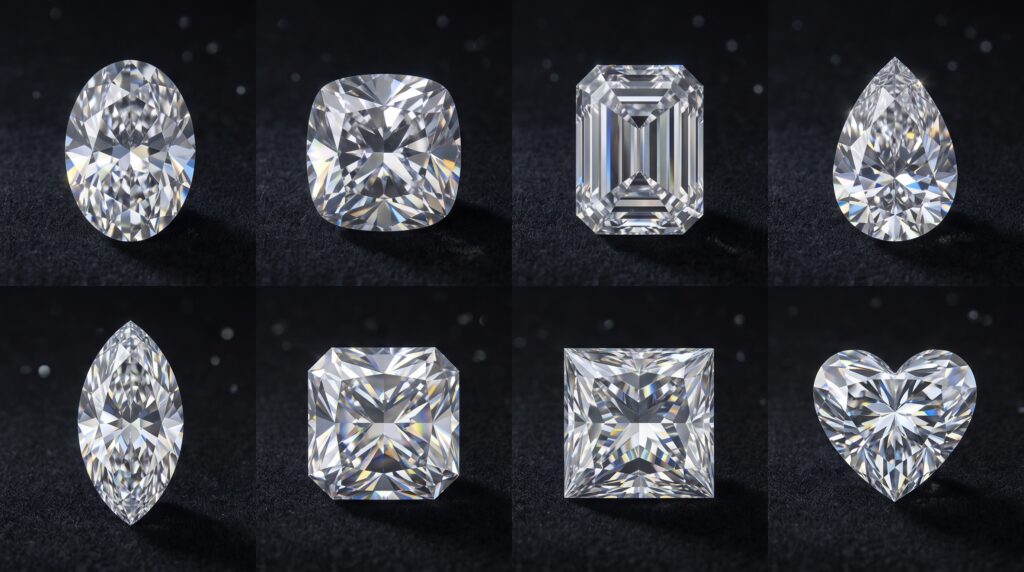
1. Oval Cut Diamond
The oval is having its moment, and unlike a lot of trend cycles in jewelry, this one has legs. It delivers near-round brilliance, it photographs beautifully, and it makes fingers look longer, which is something customers ask about more than most retailers expect. Indian manufacturers have gotten very good at ovals. The best ones coming out of Surat right now sit in the 1.35 to 1.45 length-to-width ratio range, which is the sweet spot for face-up appeal without looking stretched.
The bowtie is the thing to watch. Every oval has one to some degree a shadow across the center caused by the pavilion angles but a well-cut stone keeps it subtle enough that you have to look for it. A poorly cut one announces itself the moment you put it under a light. Always view the stone face-up before committing, not just from a video. The Oval Cut Diamond glossary at Lepdo Diamonds outlines the specific proportions that separate the good ones from the weight chasers.
Best for: Retail consumers wanting a modern engagement ring with strong resale appeal, and B2B buyers who need the most-requested fancy shape in current US inventory.
2. Cushion Cut Diamond
The cushion is the shape that refuses to go out of style, and there’s a reason for that. It has warmth. A round brilliant is precise and a little cold. A cushion glows. Indian manufacturers produce them in two distinct executions: the modified brilliant cushion, which has extra facets and more aggressive sparkle, and the classic cushion, which has broader, softer flashes of light. They look different enough that showing a customer both side by side genuinely changes their decision.
Most buyers don’t know to ask which type they’re looking at, which makes it the retailer’s job to explain it. If your customer wants sharp, contemporary sparkle, go modified. If they want something that looks like it came out of a Victorian estate jewelry collection, go classic. The Cushion Cut Diamond glossary breaks down the ratio and depth differences between the two.
Best for: Bridal retail, vintage-aesthetic buyers, and wholesale buyers stocking 1.00 to 2.50 carat certified center stones.
3. Emerald Cut Diamond
This is the shape that punishes laziness in sourcing. The emerald cut’s step facets create long, mirror-like reflections rather than scintillation, and that means color and clarity have nowhere to hide. An H-color stone that looks perfectly white in a round will show its warmth immediately in an emerald cut. An SI1 inclusion that’s invisible in a cushion can be front and center in an emerald.
Indian manufacturers have invested in precision sawing equipment specifically for step cuts, and the output from the top Surat factories has improved dramatically since 2022. But you still have to know what you’re looking for. Table percentages between 61 and 69 and depth between 61 and 67 are the working ranges. Outside those numbers, you’re usually looking at a stone that was cut to retain weight from the rough, not to perform optically. The full grading criteria are in the Emerald Cut Diamond glossary.
Best for: Luxury retail, fine jewelry designers who want architectural elegance, and B2B buyers sourcing VS1-and-above certified center stones.
4. Pear Shape Diamond
The pear shape has had a serious resurgence, driven partly by the fashion world and partly by buyers who want something distinctive without going as far as a marquise. A well-made pear is harder to produce than most people realize. The point has to be sharp and symmetrical, the shoulders have to curve evenly, and the bowtie has to stay controlled, three things that can each go wrong independently. Check the Pear Shape Diamond glossary for the ratio ranges and shoulder-curve criteria before sourcing.
5. Princess Cut Diamond
Square, brilliant-faceted, pointed corners. The princess cut is the most volume-consistent fancy shape in Indian production factories have been cutting them at scale for decades and the grading consistency across parcels is generally reliable. It works in channel settings, solitaires, and three-stone rings. The main risk is corner chips in transit or setting. Always check prong coverage before finalizing a jewelry order. The Princess Cut Diamond glossary covers the table and pavilion specifications.
6. Marquise Diamond
The marquise gives you the most face-up surface area per carat of any shape on this list. A 0.90-carat marquise looks like a 1.25-carat round face-up, that’s not marketing, that’s geometry. The downside is that symmetry between the two points is critical and difficult to execute consistently in high-volume production. Misaligned wings kill the stone’s elegance. Inspect symmetry under magnification before ordering any parcel. The Marquise Diamond glossary outlines what acceptable wing symmetry actually looks like.
7. Radiant Cut Diamond
Here is what makes the radiant genuinely useful in a way people underestimate: it has the silhouette of an emerald cut but the light performance of a brilliant. Buyers who love the rectangular shape but don’t want the quiet, reflective character of a step cut land on radiant almost every time. Elongated radiants in the 1.25 to 1.45 length-to-width range have been one of the fastest-growing segments in Indian fancy shape production since 2023. See the Radiant Cut Diamond glossary for the depth ranges that optimize light return.
8. Asscher and Heart Shape
Both are specialty territory. The Asscher cut is square with deeply cropped corners, producing an octagonal outline and a windmill-like reflection pattern when viewed face-up. It needs VS1 clarity or better, the step facets are even more unforgiving than the emerald cut. The heart shape is the most technically demanding cut on this entire list: the symmetry between the two lobes and the point is binary, it either looks like a heart or it doesn’t. Both shapes are available from Indian manufacturers but require more careful supplier selection. The Asscher Cut Diamond and Heart Shape Diamond glossaries cover what to inspect before buying.
Fancy Cut vs Round Brilliant: The Real Difference
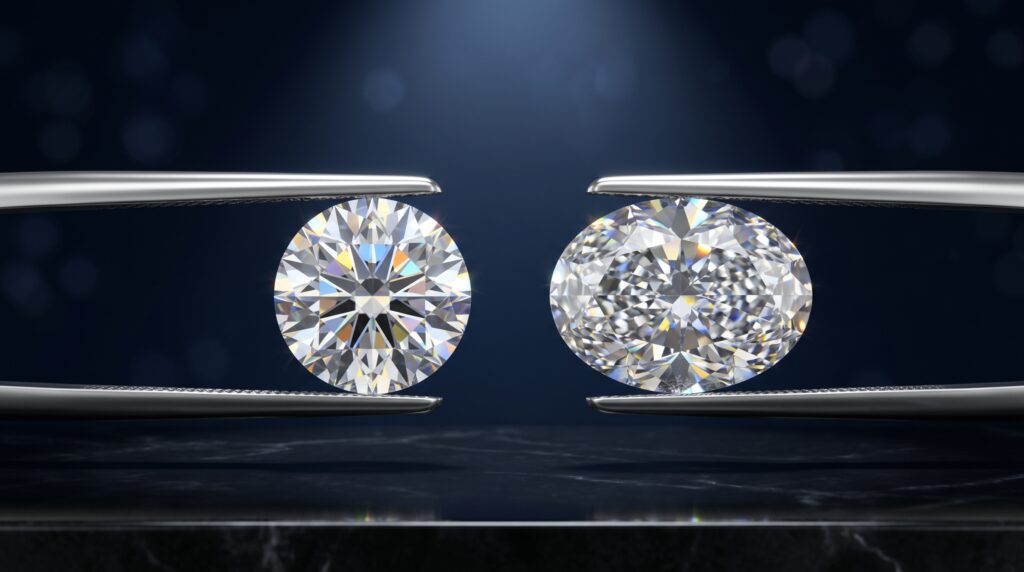
Most buyers considering a fancy shape are really asking one question: what am I trading away by not buying a round? The honest answer is that it depends entirely on which shape you choose and how well it’s cut.
| Factor | Fancy Cut Diamonds | Round Brilliant Diamond |
|---|---|---|
| Light Return | Varies; ovals and radiants come close to round; step cuts are intentionally different | Highest of any cut; every facet angle is mathematically optimized |
| Price Per Carat | 20 to 40 percent lower on average; significantly more on lab-grown fancy shapes | Highest price per carat across all certified shapes |
| Face-Up Visual Size | Marquise, oval, and pear appear larger than equivalent carat rounds | Compact; face-up area is smaller relative to carat weight |
| GIA Cut Grade | Not assigned for fancy shapes; polish and symmetry graded only | Excellent through Poor; the full cut grade system applies |
| Setting Versatility | Highly shape-dependent; most fancy shapes work in solitaire, halo, three-stone | Works with every setting type at any prong configuration |
The practical reality most buyers discover: moving from a 1.00-carat round to a 1.25-carat oval at the same budget leaves them with a stone that looks larger face-up, costs less per carat, and carries equally strong IGI or GIA documentation. The only real trade-off is that they can’t lean on a formal GIA cut grade, they have to actually look at the stone, or trust someone who does.
That said, round diamonds still dominate US engagement ring sales at the top of the luxury bracket. If resale value is the primary concern, rounds hold it better. If personal preference and visual impact are the priority, the case for fancy shapes is strong.
How to Choose the Right Fancy Cut Diamond for Your Situation
- Match the shape to the personality, not the trend. Emerald and Asscher cuts signal quiet confidence and architectural taste. Oval and cushion cuts project romance. Marquise and pear cuts are deliberately dramatic. The best shape for an engagement ring is the one the person wearing it would have pointed to on their own trends cycle, but a ring is supposed to last decades.
- Think about the hand it’s going on. Elongated shapes oval, pear, marquise, visually lengthen shorter or wider fingers. Wider shapes cushion, princess, read bold on the hand, which works beautifully for buyers with longer fingers who want the stone to fill the visual space. This is a conversation most retail customers appreciate having before they make a decision.
- Match the shape to the setting. Step cuts like emerald and Asscher need settings that protect their corners without blocking their facets a bezel or clean four-prong works well, a heavy halo kills the effect. Pointed shapes like pear and marquise require V-prongs at the tips. Forgetting this at the sourcing stage creates a design problem downstream.
- Use the price gap strategically. Fancy cut diamonds from Indian manufacturers run 20 to 40 percent less per carat than equivalent round brilliants. That gap is real, and it’s the most underused negotiating point in the US retail conversation. A customer who came in for a 1.00-carat round can leave with a 1.30-carat oval at the same price point. Most of them prefer that outcome once someone explains it.
- Set the right expectations by occasion. For engagement rings, cut proportions and certification matter above everything else. For fashion jewelry and stackable designs, commercial-grade fancy shapes in SI clarity are completely appropriate and cost-effective. For investment-grade purchases, only buy stones with individual GIA or IGI documentation, verified in real time through the lab’s online portal.
- Lab-grown fancy shapes change the math significantly. Lab-grown fancy cut diamonds India suppliers produce ovals, cushions, elongated radiants, run 60 to 80 percent below natural fancy shape prices with identical 4Cs certification. For buyers who want maximum visual size and certified quality within a real-world budget, this is the most compelling value in the diamond market right now. Browse the full selection at Fancy Shape Diamonds on Lepdo Diamonds to see what’s currently available with IGI documentation.
Before you finalize your choice, pull the certificate number and verify it directly on the IGI or GIA website. Takes two minutes. A certificate that doesn’t exist in the lab’s own database is worthless regardless of how official it looks on paper.
What B2B Buyers and Diamond Manufacturers Should Know
Buying fancy cut diamonds at the wholesale level is a different exercise than buying a single stone. The thing most first-time parcel buyers underestimate is consistency not the quality of the sample stone, but whether that quality holds across 200 or 500 pieces in the actual order.
Indian manufacturers vary significantly on this. The factories that specialize by shape dedicated oval cutting teams, separate emerald cut lines produce more consistent parcels than factories that cut everything on the same floor with the same crew. That’s not a knock on efficiency; it’s a reality of how precision craft works. When you’re qualifying a new supplier for fancy cut diamond wholesale India orders, ask directly whether they have shape-specific production lines. The answer tells you a lot.
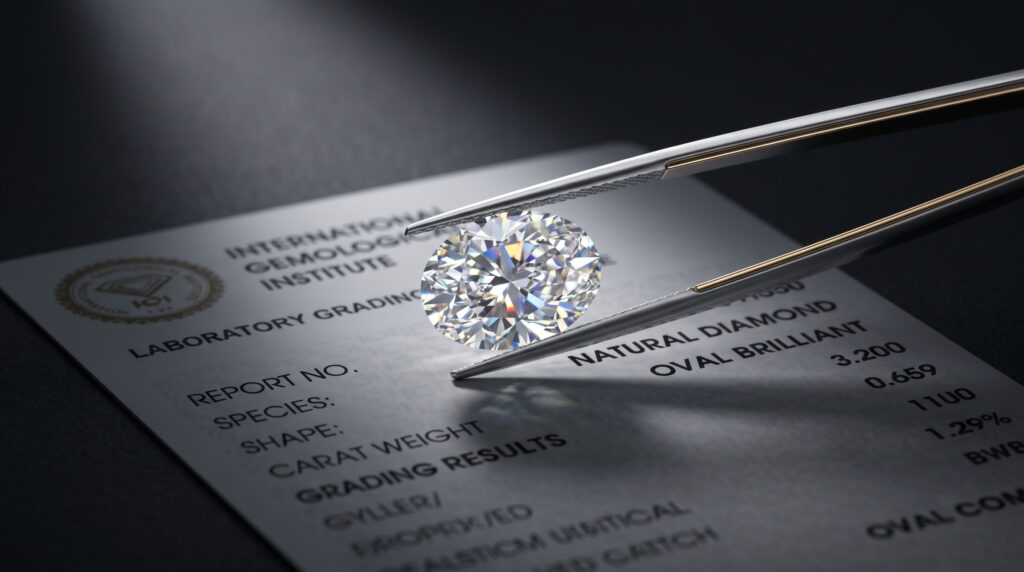
On certification: insist on individual IGI or GIA certificates for every stone, not a batch or parcel report. A single report covering 300 stones protects nobody downstream. If your retail customers are buying certified stones, they need individual documentation. Any supplier who pushes back on this is a supplier to replace.
Rapaport pricing for fancy shapes works on a discount-to-round structure. Ovals currently trade at the smallest discount to round equivalents; marquise and heart shapes trade at the largest. Those discounts have compressed in the 0.50 to 1.00 carat range as lab-grown supply has increased, but the 1.50-carat-plus certified fancy shape market still carries meaningful margin for B2B buyers who source directly from Indian manufacturers.
For specialty shapes custom length-to-width ratios, matched side stone pairs, larger Asschers or elongated cushions above 2 carats the Unique Cut Diamonds collection at Lepdo Diamonds is worth a direct conversation. In my experience working with Indian fancy shape suppliers directly, the most reliable ones are the ones who tell you upfront what they can’t do consistently, not just what they can.
Fancy Cut Diamond Jewelry Trends in the USA (2026 to 2027)
The numbers that came out of the major US jewelry trade shows in late 2025 confirmed what most retailers already felt in their own cases: fancy shape lab-grown diamond sales crossed 15 percent of total lab-grown retail volume, with ovals and elongated cushions leading by a significant margin. The shift away from round brilliants is real, and it’s accelerating at a pace that’s outrunning most wholesaler inventory planning.
Design-wise, the dominant movement heading into 2026 is the east-west horizontal setting. Ovals and marquise stones set perpendicular to the finger appear across every price tier, from fashion jewelry to custom fine jewelry studios. It’s the single fastest-growing setting configuration in the US bridal market right now. Alongside that, bezel settings for emerald cuts have made a strong comeback, driven by buyers who want clean, architectural elegance rather than the aggressive sparkle of a halo.
Three-stone designs with mismatched fancy shapes are also gaining real traction: an oval center with tapered baguette sides, a cushion flanked by pear-shape stones, a radiant paired with half-moon shapes. These combinations are outperforming traditional three-stone round configurations at the $5,000 to $12,000 retail bracket, and Indian manufacturers are now producing matched side-stone pairs with the consistency to support them. Fancy cut diamond jewelry is not a niche category anymore. It’s where the US market is going.
How to Evaluate Quality in Fancy Cut Diamonds
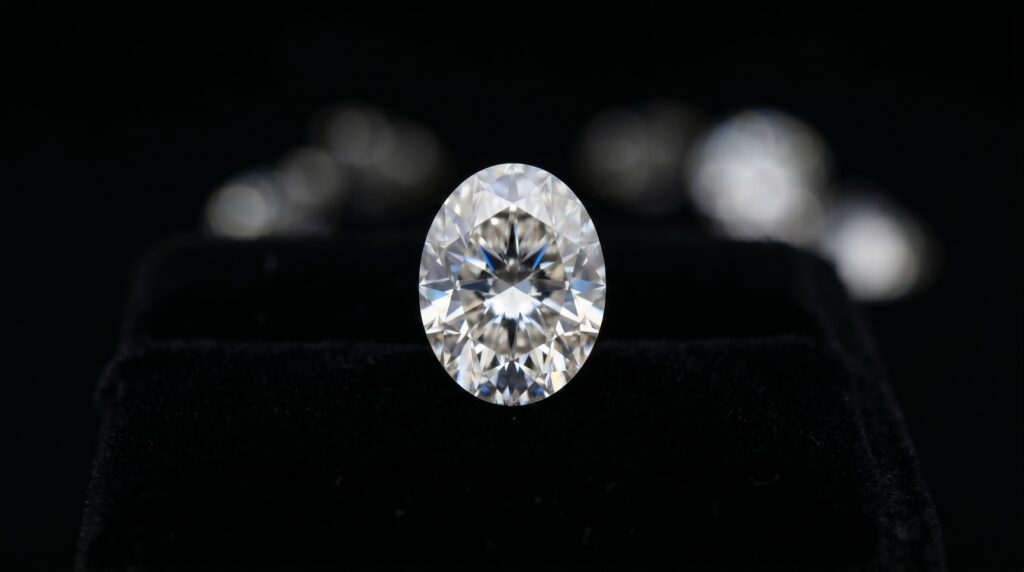
When I assess a fancy shape diamond, the first thing I check is not the certificate. It is the stone itself, face-up, in neutral lighting. Certificates report numbers. They don’t tell you whether the bowtie in that oval is barely visible or staring you in the face. They don’t tell you whether the pear’s point has a slight kink that kills the symmetry. For fancy shapes especially, what you see in the stone matters more than what’s printed on the report.
You will want to pay attention to these points before committing to any significant purchase:
- Bowtie severity in elongated shapes. Oval, pear, and marquise diamonds all carry a bowtie a dark shadow across the center created by pavilion angle geometry. In a well-cut stone, it’s a whisper. In a poorly cut one, it’s the first thing everyone notices. This is not graded on any certificate. View the stone under a light source that replicates real-world conditions, not a dark velvet photography box designed to hide it.
- Length-to-width ratio and whether it actually matches your buyer’s taste. Ratios are personal. For ovals, 1.35 to 1.50 is the current US preference. For cushions, the square-to-slightly-rectangular range of 1.00 to 1.10 is most popular. Know your customer’s preference before you lock in an order.
- Depth percentage and what it’s hiding. High-volume Indian production runs a constant temptation: cut deeper to retain more carat weight from the rough. An oval at 67 percent depth looks heavier on paper but performs worse in a setting. Ovals generally work best at 58 to 62 percent. Cushions between 61 and 67. Anything meaningfully outside those ranges warrants a closer look.
- Color visibility in step cuts. Emerald and Asscher cuts show color about one grade warmer than the certificate indicates when viewed face-up. An H that looks white in a round can look visibly warm in an emerald. For step cuts, target D to G for anything going into a white metal setting.
- Certificate verification before anything else. Pull the report number and check it on the IGI or GIA portal directly. IGI Certified Diamonds verification takes under two minutes and confirms the grade, measurements, and any post-growth treatment disclosures in real time. If the number doesn’t exist in the database, the stone doesn’t have a real certificate.
Conclusion: What the Indian Fancy Cut Diamond Market Actually Offers You
Three things stand out after spending as much time as I have evaluating Indian fancy shape production. First, the quality is real. Oval, cushion, and emerald cut diamonds coming out of the best Surat manufacturers right now are being graded by IGI with Excellent symmetry scores and proportions that compete with any fancy shape produced anywhere in the world. The gap between Indian output and the best producers globally has closed in some shape categories, it’s closed entirely.
Second, the economics genuinely change what’s possible for US buyers. A retail customer who came in looking at a 0.90-carat round can leave with a 1.25-carat certified oval at the same price. A wholesaler who was sourcing natural cushions can switch to lab-grown cushion cut diamonds from India and double their margin without touching their retail price. These are not hypothetical scenarios. They’re happening in jewelry businesses across the country right now.
Third, the US market’s appetite for fancy shapes is not a trend that will reverse. It’s a structural shift, driven by changing aesthetics, growing awareness of the price advantage, and a generation of buyers who actively want something different from what their parents purchased. The fancy cut diamonds India market is positioned to supply all of that demand with better product and more consistent certification than it has ever offered before.
To start exploring certified fancy shape options with full IGI documentation and direct access to India’s best cutting houses, visit the Diamond Cut Trend 2026 guide at Lepdo Diamonds. The inventory is there. The pricing is there. The only question is whether you’re ready to take advantage of it.
Frequently Asked Questions About Fancy Cut Diamonds India
1. What are fancy cut diamonds from India?
Fancy cut diamonds from India are non-round certified diamond shapes oval, pear, cushion, princess, marquise, radiant, emerald, Asscher, heart cut and polished by manufacturers in Surat and the wider Gujarat region. India accounts for the majority of global fancy shape production, combining advanced cutting infrastructure with generations of gemological expertise to supply the US retail and wholesale market with certified fancy shape stones.
2. Are fancy cut diamonds from India cheaper than round brilliants?
Generally yes, by 20 to 40 percent per carat for natural stones, and by 60 to 80 percent for lab-grown fancy shapes compared to natural round brilliants. The discount varies by shape ovals trade closest to round equivalent pricing, while marquise and heart shapes carry the largest discount. Always benchmark comparisons stone to stone against verified IGI or GIA grades, not asking prices alone.
3. Which fancy cut diamond looks the biggest for the carat weight?
The marquise has the largest face-up surface area per carat of any diamond shape, followed by oval and pear. A 1.00-carat marquise can look as large as a 1.25-carat round face-up. That’s pure geometry, not marketing. Elongated cushions and radiant cuts also offer generous visual size. For buyers who want maximum face-up impact per dollar spent, marquise and oval cut diamonds from India offer the strongest value.
4. Does a fancy cut diamond have a GIA cut grade?
No. GIA does not assign formal cut grades to fancy shapes. Polish and symmetry are graded, but there is no Excellent or Very Good cut designation for ovals, cushions, or emerald cuts from GIA. IGI assigns cut grades to some fancy shapes including oval and cushion. For any fancy shape purchase, buyers need to evaluate proportions and light performance independently rather than relying on a cut grade to do that work for them.
5. What is the biggest quality risk with fancy cut diamonds from India?
The bowtie effect in elongated shapes is the most common and most underappreciated risk. It’s a dark shadow across the center of ovals, pears, and marquise stones caused by pavilion angle geometry, and it does not appear on any grading report. A stone can show Excellent polish and symmetry on its certificate and still have a visually distracting bowtie. Always inspect elongated fancy shapes face-up in real lighting before committing to any purchase.
6. Are lab-grown fancy cut diamonds as good as natural?
Physically and chemically, yes. A lab-grown CVD or HPHT fancy cut diamond from India has the same crystal structure, hardness, and optical properties as a mined stone of equivalent grade. GIA and IGI both certify lab-grown fancy shapes using the same 4Cs standards applied to natural diamonds. The difference is origin and price. Lab-grown fancy cuts deliver the same certified quality at a fraction of the cost of natural equivalents.
7. Which fancy cut diamond is best for an engagement ring?
The oval is the most popular fancy shape for US engagement rings right now, and for good reasons high brilliance, finger-flattering proportions, and the widest selection of certified stones from Indian manufacturers. That said, cushion, pear, and elongated radiant cuts all make excellent engagement ring center stones depending on the wearer’s style. For solitaire settings, symmetry and bowtie control matter more than any other single factor.
8. How do I find a reliable fancy cut diamond manufacturer or supplier in India?
Look for a supplier who provides individual IGI or GIA certificates for every stone, can show you consistent grading across repeat parcel orders, and has a verifiable track record with US retail and wholesale accounts. Batch certificates covering multiple stones are a red flag. Any hesitation around treatment disclosure is a reason to walk away. Lepdo Diamonds has direct relationships with Surat’s top certified fancy shape manufacturers and supplies both wholesale and direct retail buyers across the US market.