
Diamond Import Duties in the USA for Lab Grown Diamonds : What B2B Buyers Need to Know
 by lepdogroup@gmail.com
0 comments
by lepdogroup@gmail.com
0 comments
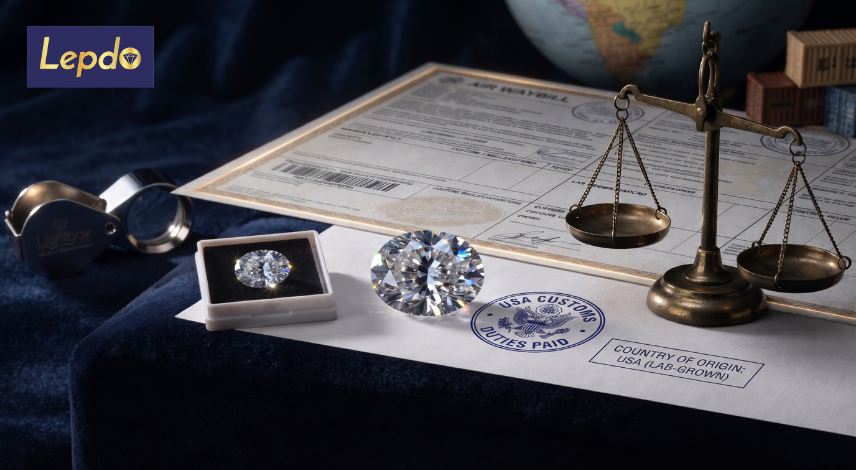
Diamond import duties USA lab grown 2026 refers to the tariffs, HS code classification, and customs clearance rules U.S. importers must follow when bringing loose lab grown diamonds into the country. These duties affect landed cost, pricing, and profit margins. Buyers sourcing certified stones from suppliers like Lepdo Diamonds should confirm current rates before placing bulk orders.
A single misclassified HS code can add thousands of dollars to a shipment before it even reaches your vault. That is not a hypothetical. It happens every month to jewelry importers who assume lab grown stones move through customs the same way natural diamonds do.
Diamond import duties USA lab grown rules are not identical to the rules that govern mined diamonds, and that gap catches manufacturers, wholesalers, and even experienced retailers off guard. If you buy loose stones for engagement rings, fine jewelry lines, or investment portfolios, the way U.S. Customs and Border Protection classifies your parcel affects your landed cost, your GIA or IGI paperwork trail, and your bottom line.
Paragraphs like this one exist because too many buyers learn these rules the expensive way, after a shipment gets held.
Here is what you will walk away with: a clear picture of current tariff treatment, the HS codes that apply to lab grown goods, the paperwork customs brokers expect, and the practical steps that keep your carat weight and 4Cs documentation moving instead of sitting in a bonded warehouse. Whether you are a solo retailer buying a handful of stones a month or a manufacturer running container-level import volume, the fundamentals below apply to you.
What Diamond Import Duties USA Lab Grown Actually Means
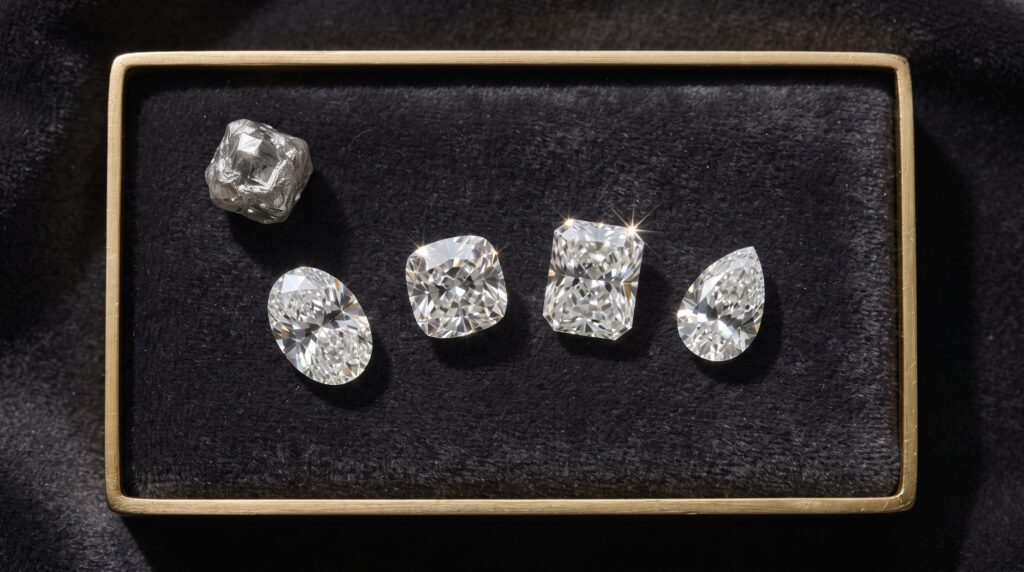
In plain terms, this refers to the taxes and tariff classifications the U.S. government applies to lab grown diamonds crossing the border, whether loose or mounted. It covers the Harmonized Tariff Schedule code assigned to the stone, the duty rate tied to that code, and the customs paperwork that proves origin and value.
Quick Info Box
Definition: The tariff, tax, and classification framework U.S. Customs applies to imported lab grown diamonds. Key Types or Varieties: Loose polished lab grown diamonds, mounted lab grown jewelry, rough lab grown material, CVD stones, HPHT stones. Best For: Manufacturers, wholesalers, retailers, and importers bringing certified stones into the U.S. market. Key Difference or Advantage: Lab grown stones are classified separately from natural diamonds under U.S. tariff schedules, which changes duty exposure.
Understanding this distinction matters before you ever sign a purchase order. If you are new to sourcing overseas, our guide on how to Import Lab Grown Diamond walks through the shipment process from origin to arrival, and our glossary entry on Diamond Import breaks down the terminology customs brokers use day to day.
Most Common Duty Scenarios Buyers Run Into
Not every shipment faces the same tariff exposure. Below are the scenarios that come up most often for USA-based buyers, based on how customs brokers and importers actually structure their paperwork.
Loose Certified Lab Grown Diamonds
This is the most common entry type for B2B buyers. Loose stones with GIA or IGI reports typically move faster through clearance because the certification supports declared value and origin.
Mounted Lab Grown Jewelry
Finished rings, pendants, and earrings face a different tariff line than loose stones. Manufacturers who import both need two separate classification strategies, not one blanket approach.
Rough Lab Grown Material
Rough entering the U.S. for cutting and polishing domestically follows its own HS code path, and volume importers should not assume rough and polished share a rate.
Beyond these three, buyers also deal with parcel goods bought in mixed lots, memo shipments sent on consignment, sample stones sent for evaluation before a bulk order, repair and return shipments, trade show samples carried in personal luggage, and diamonds re-imported after being sent overseas for recutting. Each of these carries slightly different documentation expectations, and a good customs broker will flag which category your shipment falls into before it ships, not after it lands at JFK or LAX.
Most buyers assume a single tariff number covers everything they import. The truth is, treating every shipment as identical is exactly how avoidable duty charges pile up.
Diamond Import Duties USA Lab Grown vs Natural Diamond Import Duties, the Real Difference
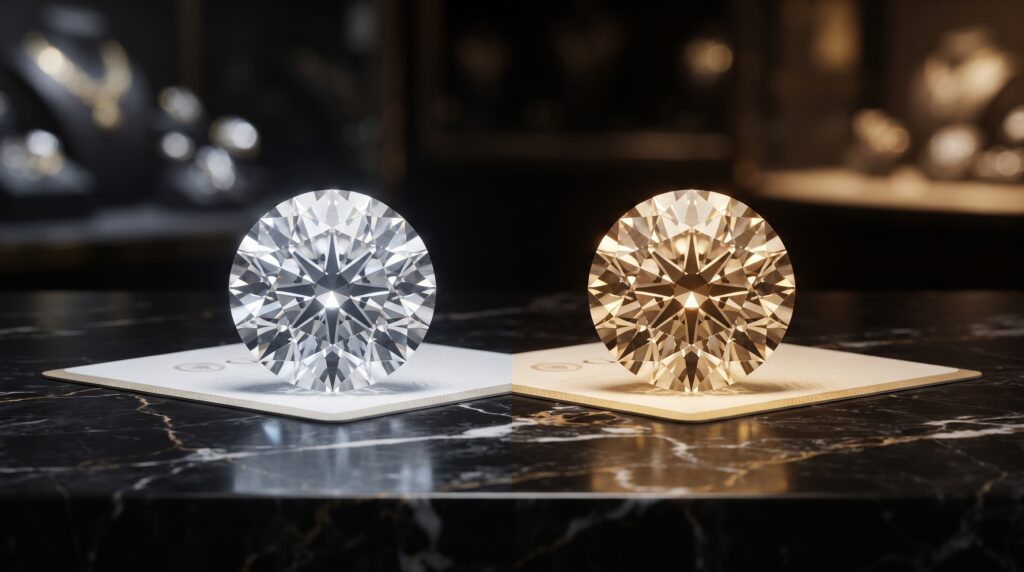
Buyers frequently ask whether lab grown and natural diamonds are taxed the same way at the U.S. border. They are not treated identically, and the differences matter for anyone comparing landed costs across sourcing options.
| Factor | Lab Grown Diamond Import | Natural Diamond Import |
|---|---|---|
| HS Code Classification | Separate subheading under current tariff schedule | Traditional diamond classification, longer-established codes |
| Certification Scrutiny | GIA/IGI reports commonly requested to confirm origin | Kimberley Process documentation required |
| Typical Duty Rate | Frequently duty-free or low-rate on qualifying loose stones | Duty-free on loose diamonds under most current treatment, but conflict-free compliance adds steps |
| Compliance Paperwork | Growth method disclosure increasingly expected | Origin and chain-of-custody paperwork, Kimberley certificate |
| Recent Regulatory Attention | Tariff treatment shifting as trade policy with sourcing countries evolves | More established but still subject to broader diamond trade tariff changes |
To be fair, round diamonds still dominate engagement ring sales regardless of growth method, so the duty conversation applies almost equally across shapes. The bigger takeaway is that lab grown stones move through a newer, still-evolving part of the tariff code, which means rates can shift faster than they do for natural goods. If your sourcing strategy touches both categories, read our breakdown on Natural VS Lab Grown Diamonds before building your import plan around either one.
How to Choose the Right Import Strategy for Your Business
Picking an import approach is not a one-size decision. Here are six factors that should shape how you bring lab grown stones into the U.S.
- Your buying volume. A retailer bringing in a dozen stones a quarter needs a different broker relationship than a manufacturer clearing hundreds of carats monthly.
- Your product mix. If you sell loose stones alongside finished jewelry, you need classification strategies for both, not a single blanket HS code.
- Your setting and use case. Loose diamonds destined for in-house setting face different documentation than finished pieces arriving ready for retail shelves.
- Your budget tolerance for delays. Lab grown stones with clean IGI or GIA paperwork clear faster, and that speed has real financial value when cash is tied up in inventory.
- Your sales occasion. Bridal and engagement ring inventory often needs faster turnaround than fashion jewelry, so your import schedule should match your selling calendar.
- Your lab grown vs natural sourcing mix. Since diamond import duties usa lab grown treatment can differ from natural stone treatment, buyers stocking both categories should track them as separate cost lines. For loose stone sourcing specifically, our Loose Diamonds collection page shows how certified inventory is typically presented for B2B review.
If you are building a repeat sourcing relationship rather than a one-off order, working with an established loose diamond wholesale supplier USA buyers already trust tends to smooth out the import process considerably, since experienced suppliers already know which paperwork U.S. brokers expect.
Before you finalize your choice of broker, supplier, and shipping method, run a test shipment first. A small trial parcel exposes documentation gaps long before a full container is on the water.
What B2B Buyers and Diamond Manufacturers Should Know
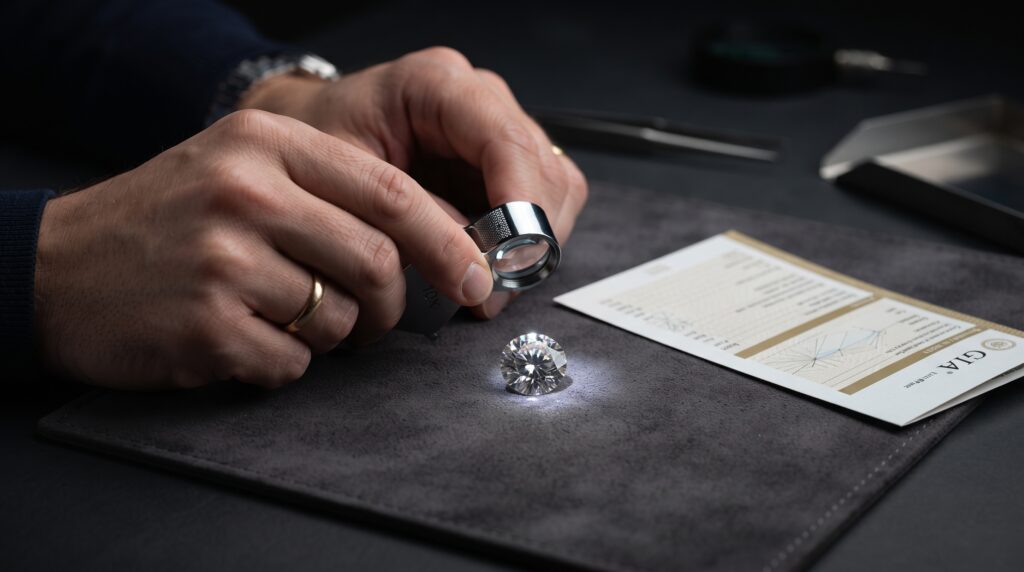
Bulk sourcing changes the calculus entirely. When you are importing at container or parcel-lot volume, small classification errors multiply fast, and a single miscoded HS entry across a thousand-stone shipment can cost far more than the same error on a five-stone parcel.
Cut grading consistency also becomes a customs issue, not just a quality issue. IGI and GIA certification standards for lab grown stones increasingly require growth method disclosure directly on the report, and customs officers reviewing high-value shipments will cross-check that language against your import declaration. Rapaport pricing benchmarks matter here too, since declared value that drifts far from Rapaport-adjacent market pricing can trigger a valuation review that stalls clearance.
In my experience working with fancy cut diamond manufacturer partners across Surat and the broader trade, the shipments that clear fastest are the ones where the invoice, the certification, and the HS code tell exactly the same story. Manufacturers like Lepdo Diamonds, based in Surat’s diamond manufacturing hub, typically prepare CVD and HPHT stones with IGI and GIA documentation that anticipates this kind of scrutiny before the shipment ever leaves origin.
If you work with unusual shapes or proprietary cuts, review your paperwork against our Diamond Tariff 2026 update, since tariff treatment for India-origin lab grown stones has been actively discussed in current trade policy conversations. It also helps to understand the process from the other side of the transaction, since knowing how a Diamond Export is documented at origin makes it much easier to spot a complete, accurate import file when it lands on your desk.
Lab Grown Diamond Jewelry Trends in the USA (2026 to 2027)
American buyers are moving further into fancy shapes and lower-profile settings, a pattern that shows up clearly in bridal collections launching this year. Oval, cushion, and elongated radiant cuts continue gaining share against the traditional round brilliant, and lab grown stones make that shift financially easier since buyers get more carat weight per dollar.
Cultural visibility around lab grown engagement rings has pushed the category from niche to mainstream in a few short years, and industry trade reporting has repeatedly noted lab grown diamonds now represent a substantial share of U.S. engagement ring unit sales, a shift almost nobody predicted a decade ago. Retailers are responding with hidden halo settings, East-West stone orientation, and mixed metal bands that let the fancy cut diamond jewellery take visual priority over the setting itself.
That said, classic solitaire styles have not disappeared, they have simply moved to secondary bestseller status behind fancier silhouettes. Expect this trend to hold steady through 2027 as more consumers actively search for lab grown options by name rather than discovering them by accident in-store.
How to Evaluate Quality in Imported Lab Grown Diamonds
When I assess a parcel of imported lab grown stones, the first thing I check is light performance, because a diamond can carry a strong paper grade and still underperform on the hand. Brilliance, fire, and scintillation tell you more about real-world appearance than a report number alone.
You will want to pay attention to pavilion angle and table percentage together, since one without the other rarely tells the full story. A shallow pavilion paired with an oversized table often produces a washed-out center, no matter how clean the clarity grade reads on paper.
Here is what I check in order on every evaluation:
- Overall light return under a standard viewing light, not showroom spotlighting.
- Pavilion depth and table percentage against ideal ranges for the shape.
- Bowtie effect visibility on elongated cuts like oval, marquise, and pear.
- Length-to-width ratio against current buyer preference for that shape.
- Cross-reference against the certified diamonds report to confirm the physical stone matches the paperwork.
Clarity grade matters, but I have seen VS2 stones outperform VVS1 stones simply because of superior cutting. Certification protects you on paper. Physical inspection protects you in practice.
Conclusion
Duty treatment for lab grown stones is still a moving target, and that is exactly why buyers cannot afford to treat every shipment the same way. Getting the HS code right, matching certification to the physical parcel, and choosing a supplier who already understands U.S. clearance requirements will save you more money than chasing the lowest per-carat price ever will.
If you are shopping as a consumer rather than a trade buyer, the same paperwork discipline applies at a smaller scale, and our guide on How to buy loose diamond walks through what to check before you commit to a purchase.
Retailers and wholesalers sourcing certified lab grown diamonds can explore Lepdo Diamonds current stock directly with the manufacturer. Diamond import duties usa lab grown rules will keep evolving as trade policy shifts, but buyers who document carefully and partner with transparent suppliers will always clear customs faster than those who guess. None of this needs to feel complicated once you know which questions to ask your broker before the shipment leaves origin. Lepdo Diamonds continues to watch these changes closely, because a shipment that clears on time is worth more than a shipment that merely clears cheap.
Let me know if you’d like me to update the saved file with this version, or adjust the two added lines further.
Frequently Asked Questions About Diamond Import Duties USA Lab Grown
1.What is diamond import duties usa lab grown?
It refers to the tariff classification, HS code assignment, and duty rate applied when lab grown diamonds enter the United States. Rates and documentation requirements depend on whether the stone is loose, mounted, rough, or polished, and whether IGI or GIA certification accompanies the shipment.
2.Is lab grown diamond import tax usa cheaper than natural diamond import tax?
In many current scenarios, yes, loose lab grown stones often see lower or comparable duty treatment compared with natural diamonds. However, natural diamond imports carry additional Kimberley Process compliance steps that lab grown stones do not require, which changes total landed cost calculations beyond the tariff rate alone.
3.Which fancy shape looks biggest or most impressive after import for retail display?
Elongated shapes like oval, marquise, and radiant typically appear larger than round diamonds of the same carat weight. This has nothing to do with import duties directly, but it affects which shapes retailers prioritize when planning bulk lab grown orders for showroom inventory.
4.Does diamond import duties usa lab grown treatment depend on a GIA cut grade?
No, HS code classification depends on the diamond’s growth method, form, and whether it is loose or mounted, not on the cut grade itself. That said, a GIA or IGI report supports the customs valuation process and helps confirm the stone matches its declared description.
5.What is the biggest quality risk with imported lab grown diamonds?
The biggest risk is receiving stones where the physical parcel does not match the certification numbers exactly. Reputable suppliers issue matched certificates and use tamper-evident sealing, but buyers should always verify report numbers against the physical stone upon arrival before accepting the shipment.
6.Are lab grown diamonds imported into the USA as good as natural diamonds?
Yes, lab grown diamonds share identical optical, chemical, and physical properties with natural diamonds under standard grading. GIA and IGI grade both categories using the same 4Cs framework, and quality within each category depends on the individual stone, not the growth method.
7.Which shape is best for an engagement ring when import costs matter?
Round and cushion shapes generally offer the most consistent supply chain pricing since they are produced at higher volume. This tends to give more predictable landed costs for retailers planning bridal inventory around specific budget targets.
8.How do I choose a reliable lab grown diamond supplier or manufacturer?
Look for suppliers offering IGI or GIA certification as standard, transparent Rapaport-linked pricing, and a track record of clean customs clearance on past shipments. Ask for references from other U.S. importers and request a small sample parcel before committing to bulk volume.