Surat Diamond Bourse: Why It’s the World’s Largest Diamond Trading Hub
 by lepdogroup@gmail.com
2 comments
by lepdogroup@gmail.com
2 comments
The Surat Diamond Bourse India is the world’s largest diamond trading complex, a single campus in Surat, Gujarat, where manufacturers, wholesalers, and exporters trade certified rough and polished diamonds, including the bulk of the world’s CVD lab-grown production. For US buyers, it means factory-direct prices without Antwerp or New York middlemen. Lepdo Diamonds connects you to verified SDB suppliers with full IGI documentation and proven US export records.
There is a building in Surat, India, that is larger than the Pentagon. It has more than 4,200 offices, its own IGI grading branch, customs clearance on-site, and diamond dealers from every corner of the trade working floor by floor. When the Surat Diamond Bourse opened in late 2023, it did not just become another exchange. It became the address that every serious diamond buyer, whether based in New York, Los Angeles, or Chicago, eventually needs to understand.
The Surat Diamond Bourse India did not appear from nowhere. Surat has been the world’s cutting and polishing capital for decades, processing an estimated 90 percent of the world’s rough diamonds at its peak. What changed is that the city stopped being a back-office operation for international dealers and built its own front door. That front door is now the largest diamond trading center on earth, and it is reshaping how US buyers source everything from engagement ring solitaires to commercial melee parcels.
This piece covers what the bourse actually is, who trades there, how it stacks up against Antwerp and New York, and what B2B buyers need to do differently once they decide to engage with it directly.
What Is the Surat Diamond Bourse?
The Surat Diamond Bourse, known in the industry as SDB, is a purpose-built diamond trading campus in the Khajod area of Surat, Gujarat. It covers over 6.7 million square feet across multiple towers, housing manufacturers, rough traders, polished wholesalers, exporters, and gemological services in one integrated complex. Think of it as a city-within-a-city built exclusively for the diamond trade.
What separates SDB from earlier trading centers is the vertical integration. A buyer can walk in, meet a CVD manufacturer on one floor, have the stones sent to the IGI branch on another floor for certification, and coordinate the export documentation in the same building before the end of the day. That efficiency does not exist anywhere else in the world at this scale.
| Definition: | The world’s largest single-complex diamond trading center, located in Surat, Gujarat, India, opened in late 2023. |
| Key Types: | CVD and HPHT lab-grown manufacturing, natural rough trading, polished wholesale, IGI certification, export facilitation, diamond finance |
| Best For: | US retailers, wholesalers, and B2B buyers sourcing certified lab-grown or natural diamonds at manufacturing-country pricing |
| Key Advantage: | Full supply chain under one roof: manufacturer, certification, customs, and export handled without leaving the building |
For a clear explanation of how diamond bourses work globally and what separates a genuine exchange from a general trading market, the Diamond Bourse glossary page at Lepdo Diamonds lays it out in plain terms.
What Trades at the Surat Diamond Bourse, and Who Is Actually There
Most buyers approaching SDB for the first time assume it is primarily a lab-grown market. That is not wrong, but it is incomplete. The tenant mix reflects the full depth of India’s diamond industry, and knowing who is in the building helps you figure out who you should be talking to.
1. CVD and HPHT Lab-Grown Diamond Manufacturers
This is where the US buyer attention is concentrated right now, and the reason is simple: India produces the majority of the world’s CVD lab-grown diamonds, and most of those manufacturers have offices at SDB. You can walk from one CVD supplier to the next, compare IGI-certified inventory in person, and negotiate directly without an importer in between. For retailers building a lab-grown inventory, there is no faster way to compress sourcing time and improve margins simultaneously.
2. Natural Rough Diamond Traders
Surat built its reputation on cutting and polishing natural rough, and that trade is very much alive at SDB. Rough traders operating there have sourcing relationships across Botswana, Russia, Canada, and Australia. For buyers who need natural diamonds with GIA documentation for high-end fine jewelry or bespoke commissions, the bourse provides direct access at prices that reflect actual manufacturing costs, not the added layers of a New York or Antwerp distribution chain.
3. Polished Natural Diamond Wholesalers
These are companies that receive rough, cut and polish in-house or through contractor networks, and sell certified finished goods. They are the traditional engine of the Surat trade. For US buyers who still want natural diamonds but want them without the inflated margin structure of domestic importers, this segment at SDB is worth the sourcing effort.
4. Diamond Cutting and Polishing Units:
Surat employs over half a million workers in cutting and polishing. Several active cutting operations work within or adjacent to the SDB campus. Buyers who want to inspect goods in-progress, not just finished inventory, can arrange factory visits through the bourse administration.
5. IGI Grading Branch:
IGI has a full-service grading branch operating inside SDB. That is not a convenience feature. For US buyers who need certified goods quickly, having the lab on-site cuts the standard turnaround time significantly. Stones can go from manufacturer to IGI to export documentation within the same building.
6. Diamond Finance Services:
Several banks and specialized diamond finance firms operate within the complex. For B2B buyers managing cash flow across large orders, this opens the door to trade finance instruments, consignment structures, and credit lines that are difficult to access through standard banking channels in the US.
7. Export and Customs Infrastructure:
SDB has dedicated customs clearance facilities. For US importers, this translates to faster and more predictable shipping timelines compared to using standard Indian freight channels for diamond exports.
8. Fancy Color and Specialty Dealers:
A growing number of SDB tenants focus exclusively on fancy color CVD diamonds: vivid yellow, blue, and pink stones grown using trace element introduction during the CVD reactor phase. US demand for these stones in fashion jewelry is expanding quickly, and SDB is where most of that production originates.
Surat Diamond Bourse vs Other Global Trading Centers: The Real Difference
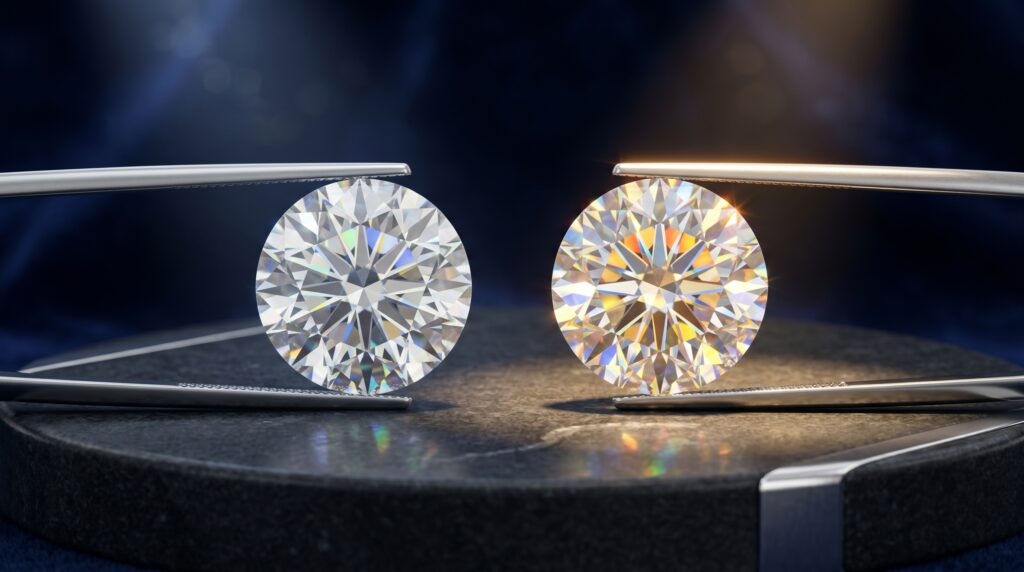
The comparison that matters most for US buyers is not size. It is structure. Antwerp, New York, and Dubai each built their diamond economies around brokerage and re-export. Surat built its position on manufacturing. That single structural difference explains why diamond trading in Surat consistently delivers better wholesale pricing for buyers who engage directly with the supply chain.
| Factor | Surat Diamond Bourse | Antwerp / New York / Dubai |
| Physical Scale | 6.7M+ sq ft, 4,200+ offices in one complex | Distributed across city districts; no equivalent single building |
| Primary Focus | Manufacturing, cutting, polishing, CVD/HPHT production | Trading, brokerage, retail, and re-export depending on city |
| Lab-Grown Volume | World’s dominant CVD and HPHT source and export hub | Secondary role; most inventory originates in Surat anyway |
| Pricing Layer | Factory-direct pricing, fewer intermediaries | One to two margin layers added before US buyer sees goods |
| On-Site Certification | IGI branch inside the bourse; faster turnaround for Indian goods | GIA and IGI present but physically separate from trading floors |
That said, Antwerp and New York still serve real functions. For buyers who need access to very specific natural rough categories, established grading archives, or credit relationships built over decades, those centers retain advantages. The surat diamond exchange model does not replace every sourcing need. What it does is change the economics for the majority of certified polished diamonds, especially lab-grown, where the manufacturing chain starts and ends in India.
For a broader view of how SDB fits within the global ecosystem of trading centers, the Diamond Trading Centers glossary at Lepdo Diamonds maps the major exchanges and what each one actually offers today’s buyers.
How to Choose the Right Diamond Supplier at the Surat Bourse for Your Needs
Walking into a complex with 4,200 offices without a clear sourcing plan is how buyers waste trips and money. Here is what actually matters when you are evaluating SDB suppliers, whether you are buying in person or engaging remotely through a verified exporter.
1. Know your product category before you start.
SDB suppliers specialize. A manufacturer producing high-volume CVD rounds for solitaire settings is a completely different operation from a dealer in fancy color stones or natural rough. Generalist buyers who treat the bourse as a single market tend to get average pricing and average quality because they are not negotiating from a position of category expertise.
2. Check volume compatibility early.
Most SDB manufacturers have minimum order requirements, particularly for specific certifications or custom cutting. If you are a smaller retailer buying fewer than 20 pieces per order, discuss that upfront. Some manufacturers will work with smaller quantities; others will not. Knowing this before you invest time in the relationship saves everyone frustration.
3. Match your supplier to your setting type.
Melee parcels for pave, certified solitaires for engagement rings, and fancy shapes for fashion jewelry each come from different supply chains within the bourse. Identify which category you are sourcing before you start conversations, not after.
4. Bring Rapaport data into every price conversation.
The Rapaport Lab-Grown Price List is the standard pricing reference for lab-grown diamonds in the US market. Indian CVD manufacturers at SDB price relative to it, and the current discount to Rapaport for Indian CVD stones is significant. If a supplier cannot or will not explain their pricing relative to Rapaport, that is information.
5. Treat certification as a non-negotiable, not a preference.
For engagement ring center stones, insist on individual IGI or GIA certificates, not batch reports covering a full parcel. For commercial melee, batch pricing is standard but spot-check the grading against the specifications before accepting a full lot.
6. Decide on lab-grown vs natural before you arrive.
The diamond market surat address ecosystem serves both categories well, but they require different supplier relationships and different evaluation criteria. The Diamond Marketplace at Lepdo Diamonds is a practical starting point for US buyers who want verified SDB-affiliated suppliers before committing to a trip or a direct order.
Before you finalize any SDB supplier relationship, ask for at least two US buyer references you can contact independently, not just a country list on their website. Any established manufacturer with genuine US export history will have those references ready.
What B2B Buyers and Diamond Manufacturers Should Know About the SDB
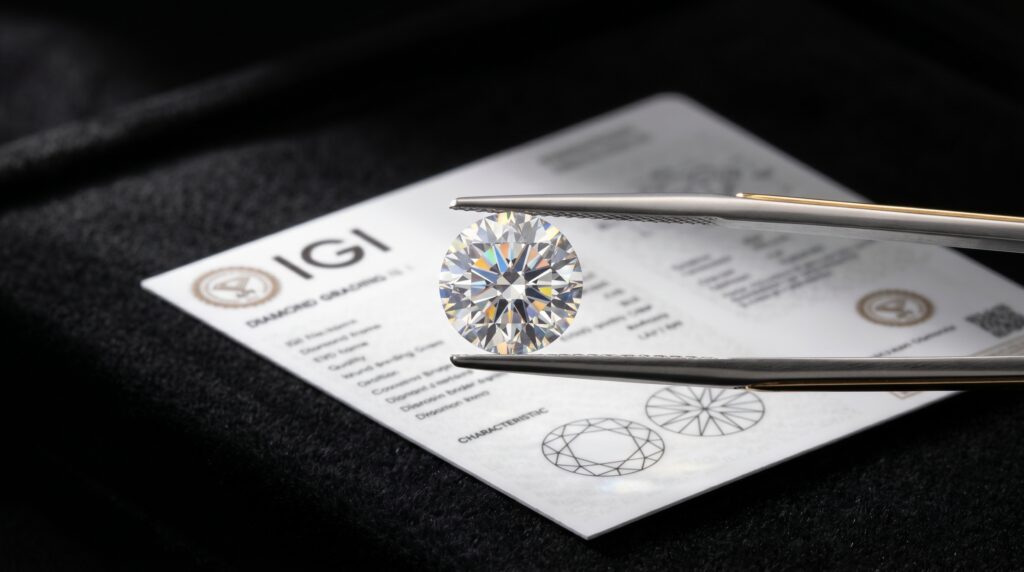
Here is what most trade articles about SDB get wrong: they treat it as a discovery story rather than a buying guide. The bourse has been open long enough now that the real question is not whether to engage with it, but how to do it without the rookie mistakes that cost buyers money.
The most common problem I see with US buyers working with SDB manufacturers for the first time is the absence of a written specification sheet. When you order 200 pieces of 0.50-carat round CVD diamonds from a new supplier, you need a document that the manufacturer signs confirming the color floor, clarity floor, cut grade minimum, treatment disclosure requirements, and acceptable tolerance ranges. Without that, grade creep on the second and third orders is almost inevitable.
Second issue: understanding how the Rapaport Lab-Grown Price List works in practice. The list is updated regularly, and Indian CVD manufacturers price relative to it. Buyers who do not track it closely tend to overpay on reorders when market prices have shifted downward, because they are negotiating from the last quoted price rather than the current market reference.
For US retailers building a sourcing pipeline from SDB, the Diamond Manufacturer directory at Lepdo Diamonds lists verified Surat manufacturers with active US export credentials, which cuts the qualification process down considerably.
In my experience evaluating SDB suppliers directly, the most reliable quality signal is not the size of their operation or the volume they claim to move. It is documentation completeness. A manufacturer who can produce, on demand, the IGI certificate number, the full treatment history, and the export invoice for a prior US order is a manufacturer whose quality control runs on systems, not relationships. That is who you want on your approved vendor list.
Diamond Trading Surat and SDB Trends Shaping the US Market in 2026 and 2027
Three years ago, a mid-size US jewelry retailer buying directly from a Surat manufacturer was unusual enough to be a talking point at trade shows. Today it is becoming standard practice. The US lab-grown diamond market crossed 10 percent of total diamond jewelry retail value in 2024, and the SDB is producing the majority of that volume. The economics of working through domestic importers are harder to justify with every passing quarter.
The trend that is accelerating fastest heading into 2027 is direct SDB sourcing by US retailers in the $1 million to $5 million annual purchase range. This tier previously relied on domestic importers because the compliance complexity of international direct sourcing felt prohibitive. That perception is changing as SDB’s export infrastructure has improved and verified exporters like Lepdo Diamonds have built the bridge between US buyer requirements and Indian manufacturer capabilities.
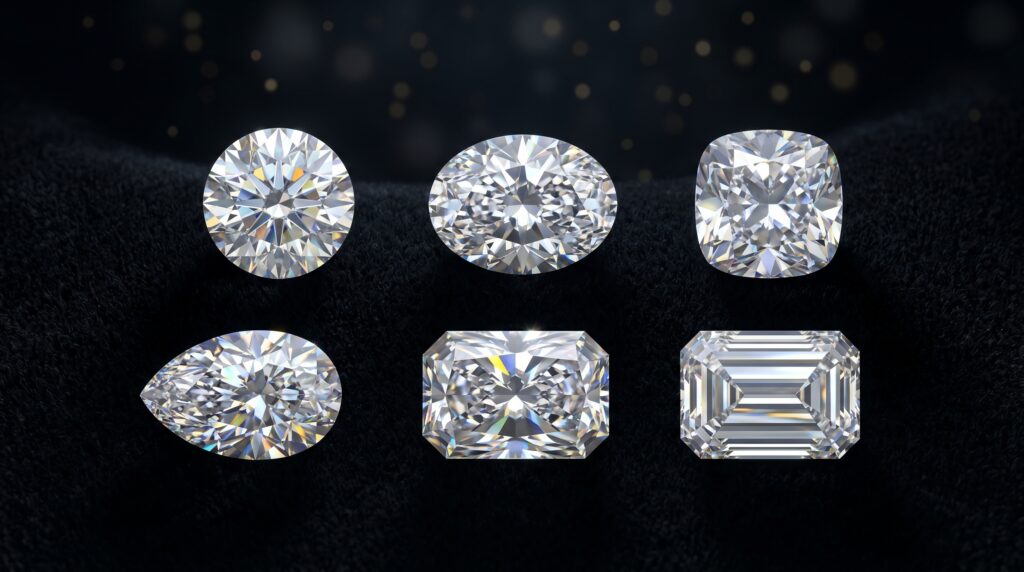
On the design side, sdb diamond trading output is increasingly shaped by US consumer preferences for fancy shapes and larger center stones. Oval, elongated cushion, and pear CVD diamonds from Surat manufacturers are seeing demand increases driven by cultural moments and the growing consumer literacy around lab-grown diamonds. Yellow gold settings paired with D to F colorless CVD center stones are the dominant engagement ring combination entering the second half of 2026, and SDB manufacturers have adjusted their cutting priorities accordingly.
How to Evaluate Quality in Diamonds Sourced from the Surat Diamond Bourse
When I assess a parcel sourced from an SDB manufacturer, the first thing I check is not the certificate. It is the actual stone proportions. I pull a random sample from the lot, put them under magnification, and check the table percentage and pavilion depth. High-volume Surat cutting operations are under constant pressure to maximize yield from rough, and yield optimization means cutting for carat weight, not ideal light performance. That trade-off shows up in the proportions before it shows up anywhere else.
You will want to pay attention to these points before committing to any significant SDB purchase:
- Cut proportions first: For round brilliants, the table percentage should sit between 54 and 58 percent and depth between 61 and 62.5 percent. Stones outside those ranges may carry an Excellent paper grade but deliver noticeably weaker brilliance and scintillation in a finished piece.
- Bowtie and length-to-width on fancy shapes: Oval and pear CVD stones from SDB vary significantly in how aggressively the bowtie effect presents. Always view fancy shapes face-up in a light source before accepting a lot. An oval with a strong bowtie looks dead in a ring regardless of its clarity grade.
- Color modifiers beyond the certificate letter: Some CVD diamonds carry a faint gray or brown modifier that the single certificate letter grade does not capture. View stones face-up in neutral daylight, not showroom lighting. The difference between a clean G and a gray-modified G is invisible on paper and obvious in person.
- CVD-specific clarity characteristics: Point inclusions and pinpoint clouds are the most common clarity features in CVD rough. Feathers are rare. Strain patterns under cross-polarized light indicate fast growth and sometimes correlate with slightly uneven optical performance across the stone.
- Verify every certificate number independently: The IGI online portal confirms grade, shape, measurements, and treatment status in real time. A certificate that cannot be verified on the portal is not a valid certificate, regardless of how official the paper looks.
The Top Diamond Manufacturer in surat page at Lepdo Diamonds identifies manufacturers whose certification records have been independently reviewed and whose export documentation has been verified through completed US transactions.
Conclusion: Why the Surat Diamond Bourse India Has Changed the Rules for US Buyers
Three things are clear after covering the full picture of what SDB actually is and what it offers. The first is that the infrastructure is genuinely without precedent. No other trading center in the world puts manufacturing, certification, and export under one roof at this scale. For US buyers who have been working through intermediaries, engaging directly with SDB manufacturers is not just a margin improvement. It is a fundamentally different sourcing relationship.
The second is that the timing is right. US consumer acceptance of lab-grown diamonds is growing, the IGI certification standards coming out of SDB have matured, and the cutting quality at the top tier of Surat manufacturers is better today than it has ever been. The buyers who build direct SDB relationships in 2026 will have structural pricing advantages over competitors who wait another two years to engage.
The third is that access has never been easier. Platforms like Lepdo Diamonds exist specifically to connect US buyers with verified SDB manufacturers who have already cleared the documentation and compliance bar that international sourcing requires. Whether you are a retailer building your first lab-grown case, a wholesaler renegotiating your supply chain, or a consumer sourcing a certified engagement ring directly from a manufacturer, the Surat Diamond Bourse India is no longer a story about what is coming. It is the market that is already here.
Frequently Asked Questions About the Surat Diamond Bourse India
1. What is the Surat Diamond Bourse India?
The Surat Diamond Bourse India is the world’s largest diamond trading complex, a campus in Surat, Gujarat, covering over 6.7 million square feet with more than 4,200 offices. It houses manufacturers, wholesalers, exporters, an IGI grading branch, and export infrastructure under one roof. It opened in late 2023 and has since become the primary sourcing address for certified rough and polished diamonds, including the bulk of the world’s CVD lab-grown production.
2. Is sourcing from the Surat Diamond Bourse cheaper than buying through US or European intermediaries?
Yes, in most cases. Buying direct from SDB manufacturers removes one or two margin layers that US and European importers add between the Surat factory and your purchase order. Indian CVD lab-grown diamonds from SDB currently trade at 60 to 80 percent below equivalent natural diamond prices, and buyers who negotiate using current Rapaport Lab-Grown Price List benchmarks consistently get better pricing than they would through a domestic importer working from older reference points.
3. Which diamond type from SDB looks most impressive for a center stone?
A round brilliant CVD diamond graded D to F in color and VS1 to VS2 in clarity, cut to IGI Excellent standards, delivers the strongest visual performance for an engagement ring. Oval and elongated cushion CVD stones from SDB are a close second for buyers who want more face-up size and a distinctive silhouette. Either way, cut quality is the variable that separates a diamond that genuinely sparkles from one that just grades well on paper.
4. Does a diamond from the Surat Diamond Bourse carry a GIA cut grade?
It depends on which lab certifies the stone. GIA assigns cut grades to round brilliants and evaluates polish and symmetry on fancy shapes without a formal cut grade. IGI, which has an on-site branch at SDB, assigns cut grades to both rounds and popular fancy shapes including oval and cushion. Most SDB lab-grown manufacturers use IGI as their primary certification lab because of proximity and faster turnaround. GIA certification is available but requires submission to a GIA lab separately.
5. What is the biggest quality risk when buying from the Surat Diamond Bourse?
The most consistent risk is cut quality. High-volume Surat manufacturers face constant pressure to maximize yield from rough, which means cutting for carat weight rather than ideal proportions. A stone can carry an Excellent IGI grade and still deliver below-average brilliance and scintillation if the table and depth percentages are outside the ideal range. Always evaluate sample stones under proper lighting before committing to a full parcel, and check proportions directly, not just the grade on the certificate.
6. Are CVD lab-grown diamonds from SDB as good as mined diamonds?
Physically and chemically, yes. CVD diamonds from SDB manufacturers are 100 percent carbon, register a 10 on the Mohs scale, and produce the same brilliance, fire, and scintillation as a mined stone. GIA and IGI certify lab-grown diamonds on the identical 4Cs scale used for natural diamonds. In a finished ring, no gemologist can distinguish a well-cut IGI-certified CVD diamond from a natural stone without spectroscopic equipment. The only difference is origin and price.
7. Which SDB diamond type is best for an engagement ring?
A round brilliant CVD diamond from an SDB manufacturer, certified by IGI or GIA with an Excellent cut grade, is the most proven choice for engagement rings because it maximizes light return and consumer confidence. Oval and elongated cushion CVD stones are gaining ground quickly for buyers who want a distinctive look at a better price per carat than round. For any shape, prioritize cut grade above all other factors, and verify the certificate on the IGI or GIA portal before purchase.
8. How do I find a reliable diamond supplier at the Surat Diamond Bourse?
Look for a supplier with individual IGI or GIA certificates on every stone, full treatment disclosure, transparent Rapaport-based pricing, and a documented export history with US buyers. Ask for two US buyer references you can contact directly. Any established SDB manufacturer with genuine US export history will have them. Lepdo Diamonds operates within the SDB ecosystem with verified US buyer relationships and a track record of supplying certified lab-grown and natural diamonds across wholesale and retail channels.