Lab Grown Diamond Quality Grades for B2B Buyers: A Practical Grading Guide for Retailers
 by lepdogroup@gmail.com
3 comments
by lepdogroup@gmail.com
3 comments
Lab grown diamond quality grades B2B buyers guide use follow the same 4Cs framework as natural stones: cut, color, clarity, and carat weight, certified by labs like GIA or IGI. For retailers, these grades determine markup potential, resale confidence, and customer trust. Lepdo Diamonds supplies pre-graded, certified parcels that remove much of that guesswork for wholesale buyers.
A retailer in Dallas once told me he lost nearly four thousand dollars on a single parcel because he trusted a supplier’s color call instead of the lab report. He didn’t check the certificate against the actual stone until a customer’s independent appraiser flagged the mismatch. By then the sale was already made, and the refund conversation was ugly.
That mistake is more common than most jewelry buyers admit out loud.
Understanding lab grown diamond quality grades B2B professionals depend on isn’t optional anymore. It’s the difference between a profitable season and a warehouse full of stones nobody wants at the price you paid for them. As carat weight, cut, and clarity grade increasingly determine margin, guessing simply isn’t a viable strategy.
This guide breaks down how grading actually works for lab-grown stones, what separates a resale-ready diamond from a liability, and how retailers, wholesalers, and manufacturers can build a sourcing checklist around real standards like GIA and IGI, not just a seller’s word. You’ll also see where carat weight interacts with cut and clarity in ways that matter more for lab-grown material than most buyers realize, especially once fancy shapes enter the conversation.
Whether you’re stocking a retail case or filling a wholesale order of several hundred carats, the grading fundamentals stay the same. What changes is how you apply them under commercial pressure, tight margins, and customer expectations shaped by decades of natural diamond marketing. Most buyers walk into this category assuming lab-grown grading is somehow softer or less rigorous. It isn’t, and that misconception costs money.
What Are Lab Grown Diamond Quality Grades B2B Buyers Guide?
Lab grown diamond quality grades are the standardized ratings assigned to a diamond’s cut, color, clarity, and carat weight after independent lab evaluation. These grades tell a buyer exactly what they’re purchasing before money changes hands, which matters enormously once you’re ordering inventory sight unseen from overseas.
Here is what most new buyers don’t realize: the grading criteria themselves were never redesigned for lab-grown material. GIA and IGI simply applied their existing natural diamond framework to CVD and HPHT stones, then added a mandatory disclosure noting the growth method on the certificate.
Quick Info Box
- Definition: A grading system covering the 4Cs, applied to CVD and HPHT diamonds using the same criteria as natural stones.
- Key Types or Varieties: Colorless (D-F), Near Colorless (G-H), Faint (I-J), Flawless (FL/IF), Very Very Slightly Included (VVS), Very Slightly Included (VS), Slightly Included (SI).
- Best For: Retailers, wholesalers, and manufacturers building resale-ready inventory.
- Key Difference or Advantage: Lab grown diamonds often deliver higher clarity grades at accessible price points, since growth conditions produce fewer natural inclusions.
Buyers researching this topic should understand it sits alongside broader questions about Lab Grown VS Natural Diamond sourcing decisions, since grading logic overlaps significantly but pricing behavior does not. A stone graded VS1 in a lab-grown parcel and a stone graded VS1 in a natural parcel will look identical under a loupe. Their cost basis, however, tells a completely different story.
Most Popular Grade Tiers, and Who They’re For
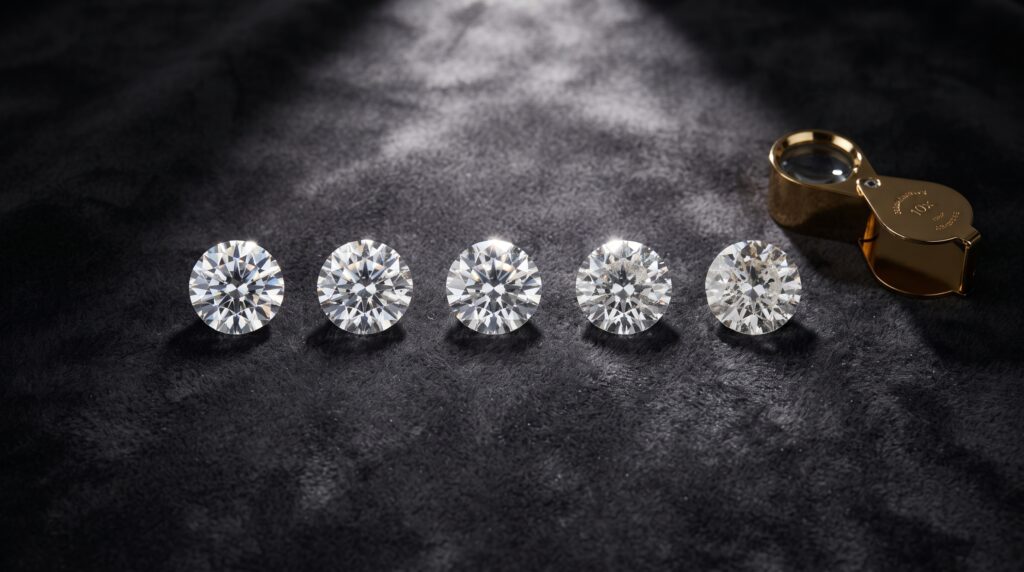
Not every grade tier makes sense for every business model. Here’s what actually moves through the trade, based on what retailers and wholesalers actually reorder month after month.
FL to IF (Flawless / Internally Flawless)
These stones show no inclusions visible under 10x magnification, or in the case of Internally Flawless, no internal inclusions at all. They’re rare even in lab-grown production, and they typically serve investment buyers or high-end bridal lines where margin isn’t the primary driver. A retailer stocking this tier is usually selling a story as much as a stone.
VVS1 to VVS2
Inclusions exist but require a trained eye and strong lighting to spot, and even then only under magnification. This tier is the sweet spot for premium retail, offering near-flawless appearance without FL/IF pricing. Most fine jewelry brands quietly build their signature collections around this range because the margin math works.
VS1 to VS2
The most commercially popular tier in the American market, and by a wide margin. Eye-clean, affordable, and ideal for engagement ring counters serving budget-conscious couples who still want a stone that looks flawless across a dinner table. If you’re only going to stock one clarity tier deeply, this is it.
Beyond these three, several other tiers still earn shelf space. SI1-SI2 stones work well for fashion jewelry and larger carat pieces, where clarity matters less than raw size and sparkle under everyday lighting. D-F color grades suit colorless-obsessed buyers who notice tint immediately, while G-H color serves the mainstream bridal market that genuinely can’t tell the difference without a loupe pressed to their eye. I-J color still has a place too, particularly in yellow gold settings that mask warmth naturally. And Excellent or Ideal cut grades matter across every color and clarity tier, since cut controls brilliance more than any other single factor, regardless of what the certificate says elsewhere.
Retailers sourcing across these tiers need a supplier who documents grading consistently from one order to the next. A Diamond Wholesaler that mixes grading standards between parcels, even subtly, creates inventory headaches nobody wants during a busy sales quarter, especially around engagement season when timing matters most.
Lab Grown Diamond Grades vs Natural Diamond Grades: The Real Difference
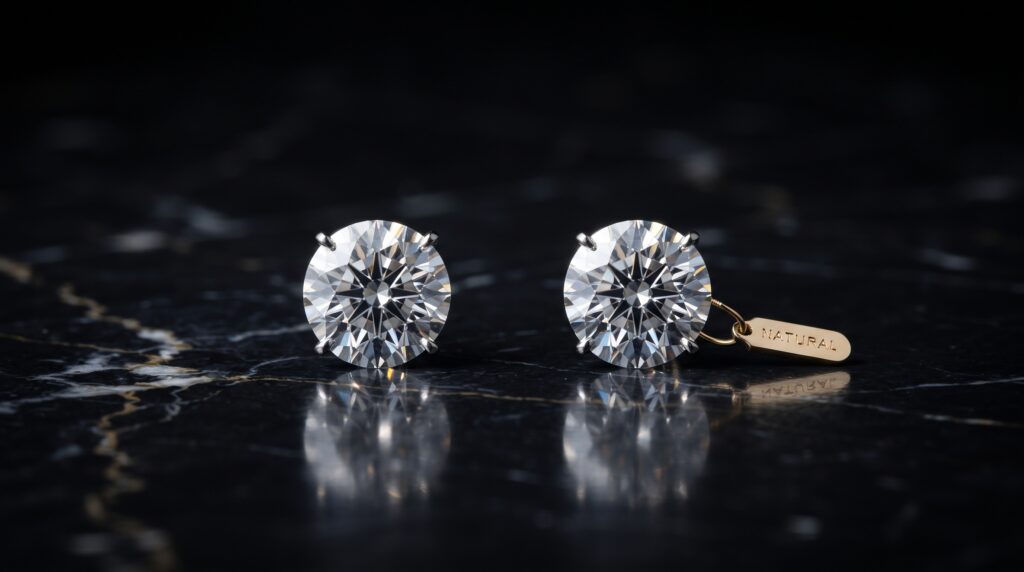
| Factor | Lab Grown Diamond Grades | Natural Diamond Grades |
|---|---|---|
| Grading Scale Used | Same GIA/IGI 4Cs scale | Same GIA/IGI 4Cs scale |
| Price per Carat | 60-80% lower at equivalent grade | Higher, driven by rarity |
| Availability in High Grades | FL/IF and VVS readily available | FL/IF and VVS rare and costly |
| Certification Bodies | GIA, IGI dominate | GIA, AGS, GIA historically dominant |
| Resale Value Perception | Still building consumer trust | Established but softening demand |
The truth is, the grading scale itself doesn’t change based on origin. A VS1 clarity grade means the same thing whether the stone grew underground for a billion years or inside a reactor chamber for a few weeks. The optical properties, the inclusion mapping, the color scoring: all of it follows identical protocols.
What changes is availability and pricing behavior. Because lab-grown production allows tighter control over growth conditions, higher clarity grades appear more frequently and at dramatically lower cost, which shifts how retailers should think about markup and positioning compared to natural stock. To be fair, round diamonds and natural stones still dominate overall bridal sales in most parts of the country, so this shift is real but gradual rather than sudden. Resale perception also remains a genuine variable. Natural diamonds carry decades of established secondary market infrastructure that lab-grown stones are still building, piece by piece, year over year.
How to Choose the Right Lab Grown Diamond Quality Grade for Your Business
- Match grade to your customer profile. Budget-focused buyers want VS clarity and G-H color, and pushing them toward VVS or better usually just eats into your close rate without adding real value they can perceive.
- Consider setting compatibility. Prong settings expose inclusions more than bezel or halo settings, so lower clarity grades hide better in certain designs. Knowing your typical setting mix should directly inform your clarity sourcing strategy.
- Align grade with use-case. Engagement rings demand stricter eye-clean standards than fashion earrings or pendants, since the ring gets examined up close far more often than a pair of studs across a room.
- Weigh the budget advantage. Lab-grown stones let you offer a full grade higher, say VVS instead of VS, at the same price point as natural. This is genuinely one of the strongest selling arguments in the entire category right now.
- Factor in occasion. Investment-focused buyers still lean toward rarer FL/IF grades regardless of origin, while commercial fashion lines can absorb SI clarity without any customer pushback whatsoever.
- Decide between lab-grown and natural stock. Retailers building a value-driven case increasingly stock lab grown diamonds alongside natural inventory to serve both price-sensitive and traditional buyers under one roof, rather than forcing customers to shop elsewhere for the option they actually prefer.
Most buyers assume higher grades always mean higher profit. That’s not always true once you factor in slower turnover on ultra-premium stock that sits in a case for months while your VS-clarity inventory keeps moving weekly.
Before you finalize your choice, walk through your actual customer data instead of guessing at preferences based on industry averages or what a trade publication claims is trending nationally.
What B2B Buyers and Diamond Manufacturers Should Know
Bulk sourcing changes the calculus entirely compared to buying a single stone for a single customer. A Diamond Retailer buying one stone at a time can afford to be picky about every individual inclusion. A wholesaler moving hundreds of carats needs consistency across every parcel, not just impressive individual certificates that look good in isolation.
Cut grading consistency matters more than most new buyers realize, and it’s often the first thing that separates a strong supplier from a mediocre one. Two stones can carry identical color and clarity grades yet perform completely differently under light if cut quality varies even slightly. This is where working with an established fancy cut diamond manufacturer becomes valuable, since fancy shapes lack the standardized cut grade that round brilliants receive from GIA, leaving far more room for quality drift between suppliers.
IGI has become the dominant certifying body for lab-grown stones in bulk trade, while GIA still carries more weight for premium and colorless-range inventory sold to discerning end consumers. Rapaport pricing benchmarks remain useful for natural diamonds but require real adjustment when applied to lab-grown material, since supply dynamics and production costs differ substantially from mined stones.
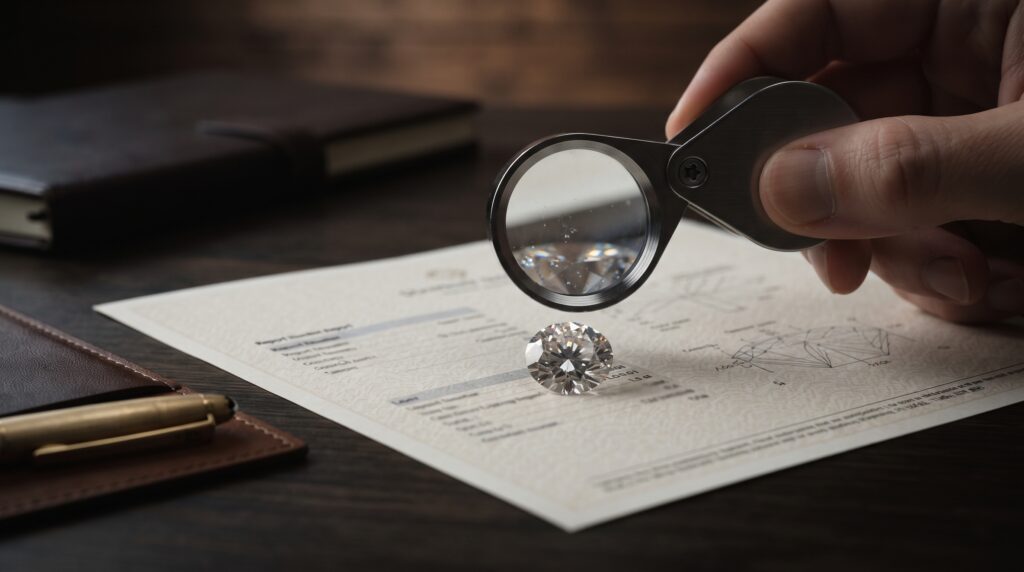
In my experience, the biggest sourcing mistake wholesalers make is trusting a supplier’s internal grading over independent lab paperwork. I always tell new buyers: request the actual Lab Diamond Certification before confirming any parcel, not after the invoice is paid and the stones are already in transit.
Manufacturers like Lepdo Diamonds, working out of Surat’s diamond manufacturing hub, typically grade CVD and HPHT stones against IGI and GIA benchmarks before parcels ever reach a wholesale buyer, which reduces the grading disputes that plague less transparent supply chains further down the line.
Lab Grown Diamond Jewelry Trends in the USA (2026-2027)
Fancy shapes are pulling ahead of round brilliants in bridal categories, particularly oval and cushion cuts paired with hidden halo settings that add perceived size without adding real cost. This shift reflects a broader consumer appetite for pieces that photograph distinctly on social media rather than blending into a crowd of similar round solitaires.
Yellow and rose gold settings are regaining ground against platinum, partly driven by red carpet influence and vintage-inspired design movements gaining traction among younger buyers who grew up watching estate jewelry trends resurface online. Toi et moi styles and East-West set stones continue climbing in popularity among couples wanting something outside traditional solitaire territory entirely.
Industry data suggests lab-grown diamonds now account for a significant and rapidly growing share of US engagement ring sales, a trend jewelry trade associations have tracked closely since around 2023. That growth pushes more retailers toward stocking fancy cut diamond jewellery in lab-grown material specifically, since margin flexibility allows experimentation with shapes and settings that would be cost-prohibitive to test in natural stone at scale.
How to Evaluate Quality in Lab Grown Diamond Grading
When I assess a lab-grown parcel, the first thing I check isn’t color or clarity. It’s light performance, because a technically high-graded stone can still look flat and lifeless in hand, no matter what the certificate promises on paper.
Here is what separates a strong stone from a mediocre one on paper versus in reality: brilliance, fire, and scintillation working together under normal ambient lighting, not just controlled laboratory conditions. Pavilion angle and table percentage directly influence how light returns to the eye, and depth percentage outside ideal ranges creates dark zones even in otherwise high clarity stones.
Five things I check on every stone before approving it for resale:
- Cut grade first, since it drives roughly 80% of a diamond’s visual performance regardless of everything else.
- Table percentage, ideally between 54-58% for round shapes, adjusted for fancy shape proportions.
- Depth percentage, watching carefully for windowing or excessive light leakage through the pavilion.
- Bowtie effect in elongated fancy shapes like oval or marquise, which signals cutting inconsistency between facets.
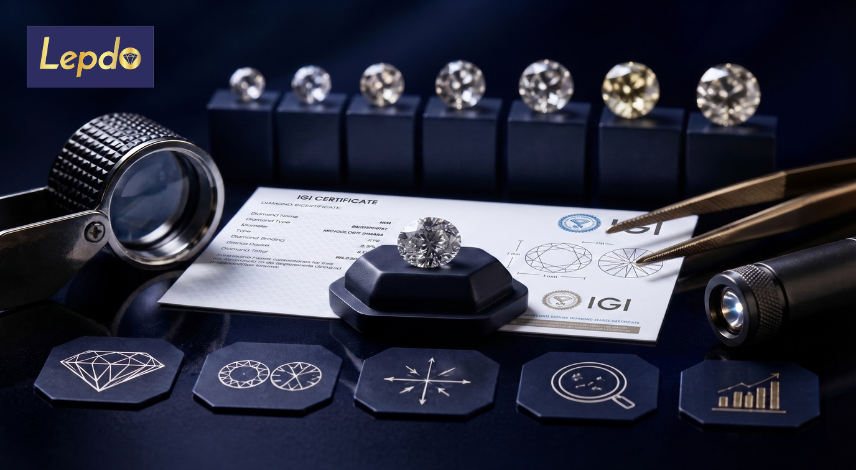
- Certification match, confirming the physical stone matches its Diamond Grading Report exactly, not approximately.
You will want to pay attention to length-to-width ratio too, especially on fancy shapes, since a poorly proportioned stone undersells its own carat weight visually and can sit unsold longer than a properly cut equivalent.
Conclusion
Grading a lab-grown diamond correctly comes down to three things that matter more than anything else on the list: trusting independent certification over seller claims, understanding how cut quality affects fancy shapes differently than round stones, and matching grade tiers to your actual customer base instead of chasing the highest number available on paper. Retailers who skip these steps end up with inventory that looks impressive in a spreadsheet but sits unsold in a display case for months, quietly eating into margin the whole time.
To be fair, round diamonds still dominate overall engagement ring sales nationwide, and that isn’t changing overnight regardless of how fast fancy shapes are growing in popularity. But the fancy shape and lab-grown categories are where margin opportunity is expanding fastest right now, and buyers who understand grading fundamentals are positioned to capture that growth rather than get burned chasing it blindly.
Retailers sourcing certified lab-grown diamonds can explore Lepdo Diamonds current stock, built on IGI and GIA certified parcels sourced through vetted Surat manufacturing partners with consistent grading documentation. Whether you’re stocking a single case or filling a wholesale order that fills an entire shipment, grading knowledge is the one investment that pays for itself on the very first parcel you buy correctly, and keeps paying you back on every parcel after that.
Frequently Asked Questions About Lab Grown Diamond Quality Grades
1. What are lab grown diamond quality grades?
Lab grown diamond quality grades are standardized ratings covering cut, color, clarity, and carat weight, issued by labs like GIA or IGI. They follow the same evaluation criteria used for natural diamonds. Retailers use these grades to price inventory accurately and set customer expectations before a sale is finalized, avoiding disputes later.
2. Is a lab grown diamond quality grade cheaper than an equivalent natural grade?
Yes, lab grown diamonds typically cost 60 to 80 percent less than natural diamonds at the same grade. This price gap exists because lab-grown production removes the rarity premium and mining costs tied to natural stone extraction. The grading criteria themselves remain identical between both origins.
3. Which lab grown diamond shape looks biggest for its carat weight?
Elongated shapes like oval, marquise, and pear typically appear larger than round diamonds of equal carat weight. This happens because their surface area spreads across more visible space on the finger. Cushion and radiant cuts also offer strong face-up size due to their broader table proportions and shallower depth.
4. Does a lab grown diamond receive a GIA cut grade?
Round lab-grown diamonds receive a full GIA cut grade, ranging from Excellent to Poor, exactly like natural rounds. Fancy shapes don’t receive an official GIA cut grade, so buyers must evaluate proportions manually or rely on supplier expertise. This makes working with an experienced fancy cut diamond manufacturer essential for non-round inventory.
5. What is the biggest quality risk with lab grown diamond quality grades?
The biggest risk is trusting seller-issued grading over independent lab certification. Grading inconsistency between suppliers creates real pricing disputes and customer trust issues down the line. Always request the actual lab report before finalizing any wholesale purchase, regardless of how confidently the seller describes the stone.
6. Are lab-grown diamonds graded as strictly as natural diamonds?
Yes, GIA and IGI apply the same clarity, color, and cut standards to lab-grown stones as they do to natural diamonds. There is no separate, looser scale for lab-grown material anywhere in the process. The only functional difference is a required disclosure noting the diamond’s laboratory origin on the certificate itself.
7. Which lab grown diamond grade is best for an engagement ring?
VS1 to VS2 clarity paired with G-H color offers the strongest balance of eye-clean appearance and value for most engagement ring buyers. This combination looks colorless and flawless to the naked eye without FL/IF pricing attached to it. Retailers consistently report this tier moves fastest across mainstream bridal counters.
8. How do I choose a reliable lab grown diamond manufacturer or supplier?
Look for suppliers offering GIA or IGI certification as standard practice, not an optional upgrade, along with transparent grading documentation for every parcel shipped. Request sample stones before committing to bulk orders whenever possible. Consistency across shipments matters more than any single impressive certificate a supplier shows you upfront.