
Lab grown diamonds certified are real diamonds, grown in controlled laboratory environments using CVD or HPHT technology and graded by IGI or GIA using the same 4Cs as mined stones. For USA buyers and retailers, they deliver identical brilliance and durability at 30–50% lower cost. Explore certified options at Lepdo Diamonds to design a custom piece built around the right stone.
Sixty-eight percent of American couples who purchased an engagement ring in 2024 said they would have chosen a lab grown diamond, if they’d understood the certification process. That’s the finding from The Knot’s annual jewelry survey, and it points to a gap that costs buyers thousands of dollars every year. Lab grown diamonds certified by IGI or GIA are not a workaround or a trade-off. They are chemically, physically, and optically identical to mined diamonds, graded on the same 4Cs, and available in every shape, carat weight, and color grade imaginable.
The custom jewelry market is responding faster than most people realize. From bespoke solitaire engagement rings showcasing a 2 carat lab grown diamond to intricate multi-stone designs built around parcels of loose grown diamonds sourced in bulk, certified lab grown stones are now powering the most creative and commercially successful fine jewelry in America.
Whether you’re a direct consumer designing your dream piece or a retailer building 2025 inventory around the best lab grown diamonds available, certification is your foundation. Understanding which custom designs work best, and why is your competitive edge.
What Are Lab Grown Diamonds Certified?
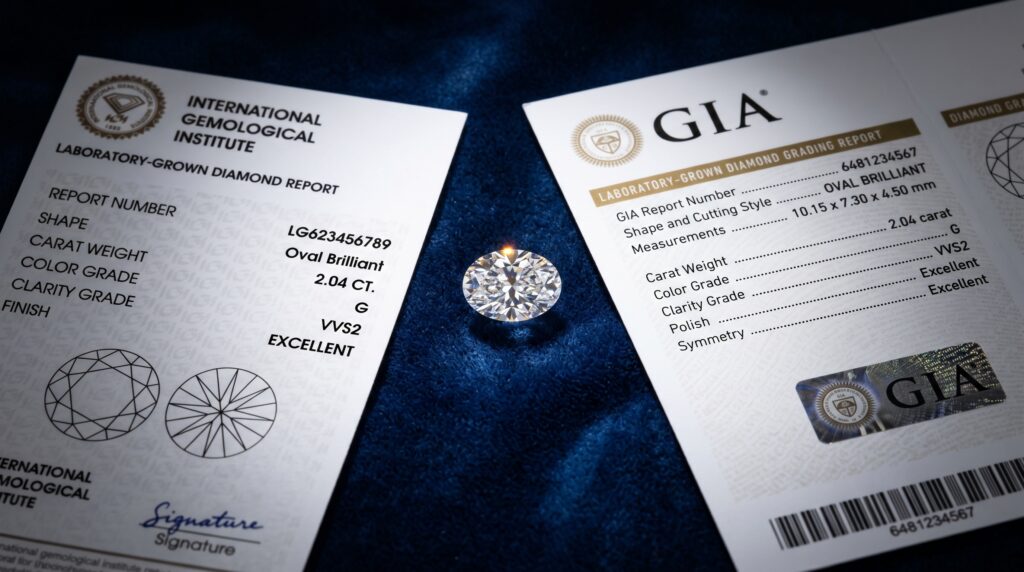
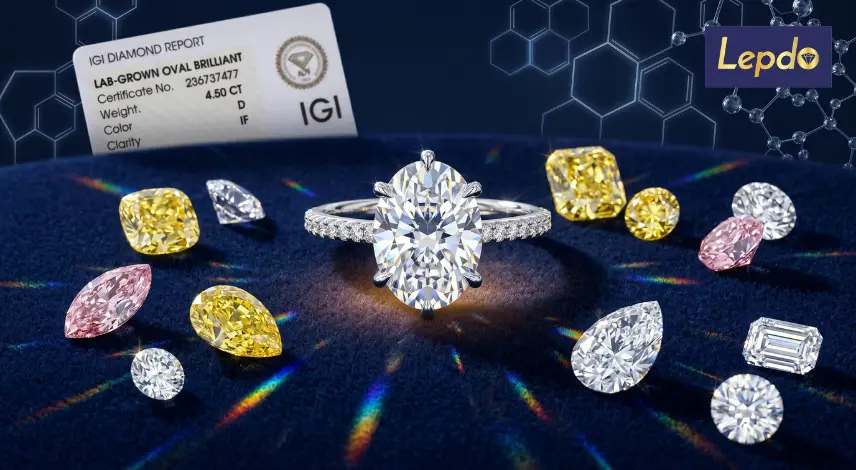
A lab grown diamond is a real diamond. Not a simulant, not cubic zirconia, not moissanite. It is a carbon crystal with the same atomic structure as a mined diamond, grown in a controlled environment using either High Pressure High Temperature (HPHT) or Chemical Vapor Deposition (CVD) technology. Lab grown diamonds certified means those stones have been submitted to an independent grading laboratory most commonly IGI or GIA and received an official diamond grading report documenting their four core quality factors.
Quick Info Box:
- Definition: A lab grown diamond independently graded by IGI or GIA for cut, color, clarity, and carat weight, with a documented and verifiable report.
- Common Types: Round brilliant, oval, cushion, princess, pear, emerald, marquise, radiant, heart
- Best For: Engagement rings, custom fine jewelry, anniversary bands, fashion pieces, B2B retail inventory
- Key Difference from Mined: Grown in weeks rather than billions of years same carbon crystal structure, significantly lower lab grown diamond price
Certification is not optional where quality matters. Uncertified stones leave buyers and retailers exposed to mispricing and misrepresentation. That’s why sourcing fancy shape diamonds or rounds from a supplier who provides traceable IGI or GIA reports is non-negotiable at every level of the market. Every stone in Lepdo Diamonds’ certified diamonds inventory comes with an authenticated, verifiable grading report that’s the baseline, not the exception.
The Most Popular Custom Jewelry Ideas Using Lab Grown Diamonds Certified
Here’s what makes lab created diamonds uniquely powerful for custom jewelry: their lower price point doesn’t translate into compromise it translates into creative freedom. When a client saves 35–50% on the center stone, that budget flows directly into setting quality, metalwork detail, and side stone count. The result is a more impressive finished piece at the same total spend. So the real question isn’t whether to use a certified lab grown diamond. The question is: which design does it best?
Solitaire Engagement Rings
The solitaire remains America’s most purchased engagement ring style, and it is the ultimate showcase for a certified lab grown diamond. A clean four-prong or six-prong platinum setting places every aspect of the stone’s brilliance, fire, and scintillation on full display. For solitaires, cut quality is everything an Excellent-cut round or a well-proportioned oval with ideal depth percentage and table percentage will outperform a higher-color, lower-cut stone every single time. Most buyers who select a 2 carat lab grown diamond in an Excellent-cut round solitaire walk away with a ring that visually outshines mined stones priced twice as high. That’s the arithmetic of good diamond grading applied intelligently.
Halo Settings
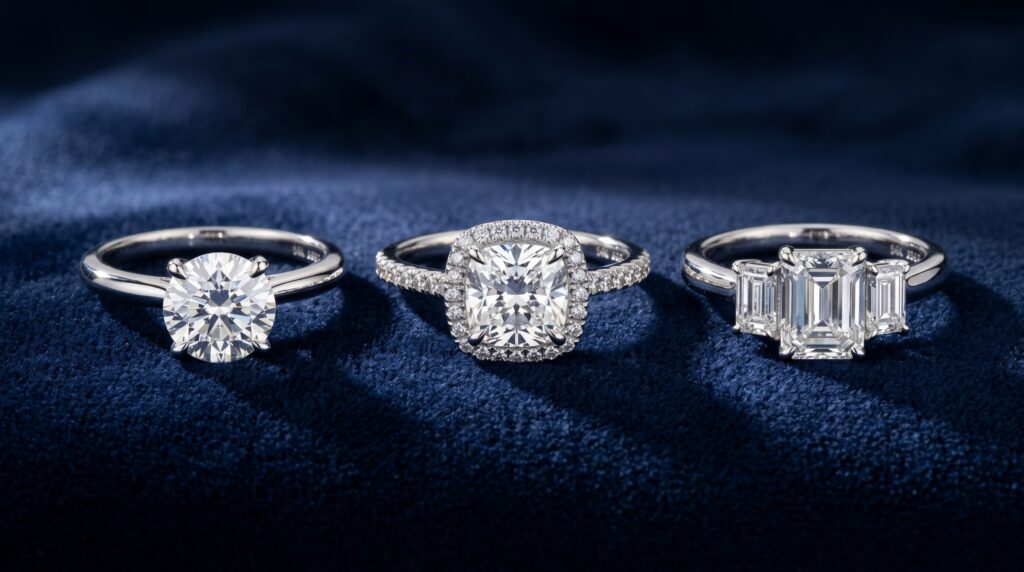
Halo settings surround the center lab grown diamond with a ring of smaller accent stones, amplifying visual size and light return dramatically. A 1.5 carat certified center stone in a micro-pavé halo appears comparable in presence to a 2.5 carat solitaire a significant perceptual advantage for budget-conscious buyers who refuse to sacrifice presence. The best lab grown diamonds for halo settings tend to be cushion cuts or oval cuts, where the halo echoes the elongated or soft-cornered silhouette with geometric elegance.
Matching the accent stones in color grade to the center stone something far easier to achieve affordably with lab created diamonds than with mined stones is what separates a halo that reads as luxury from one that reads as assembled.
Three-Stone Rings
Symbolic, architectural, and stunning. Three-stone rings pair a certified center lab grown diamond with two flanking gemstones, traditionally representing past, present, and future. This setting works exceptionally well with fancy shapes: an elongated cushion flanked by two tapered baguettes, or a pear-shaped center balanced by two round brilliants. Because IGI and GIA grade lab grown diamonds to the same clarity grade standards as mined stones, matching three stones across a single parcel consistent color, consistent clarity, consistent cut quality is a realistic and affordable design goal. That consistency is genuinely difficult to achieve at scale with mined inventory.
Additional High-Impact Custom Design Ideas:
- Tennis Bracelets: Uniform-size lab created diamonds, all IGI-certified to matching grades, create the consistent sparkle line that defines this classic. Lab grown production efficiency means matched parcels are far more accessible than in the mined market.
- Eternity Bands: Pavé or channel-set lab-grown diamonds in a full eternity configuration are a landmark custom piece, now accessible at price points that make them a realistic purchase rather than a once-in-a-lifetime splurge.
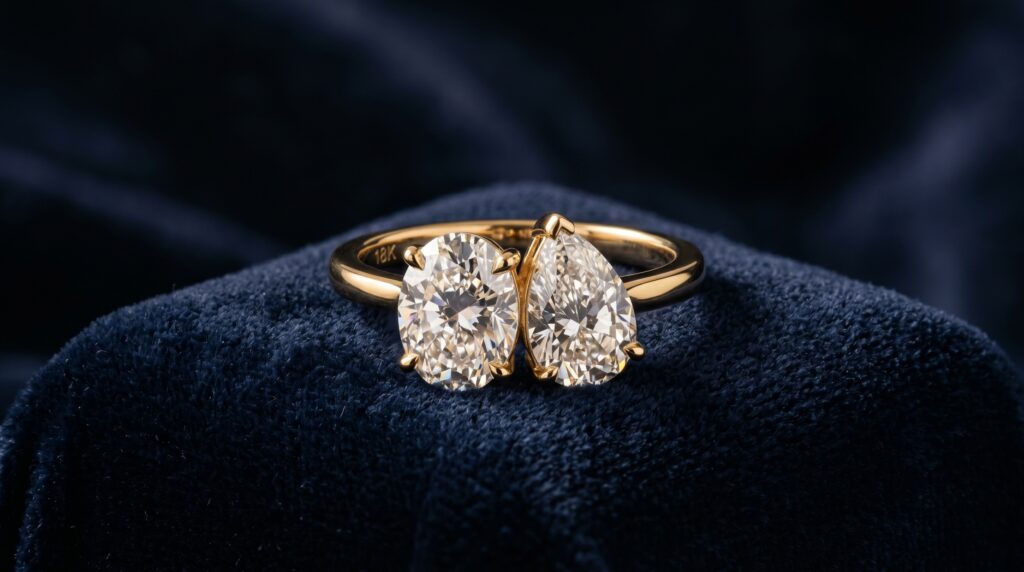
- Toi et Moi Rings: Two distinct fancy shapes an oval and a pear, a cushion and a marquise set side by side in a fashion-forward custom ring. This style is dominating USA bridal trends right now, and certified lab grown diamonds make it achievable across a wide range of budgets.
- Custom Pendants and Drop Earrings: Loose grown diamonds in emerald or radiant cuts set in custom pendants deliver maximum light performance with modern geometric lines that polished diamond buyers consistently respond to.
Lab Grown Diamond vs Natural – The Real Difference
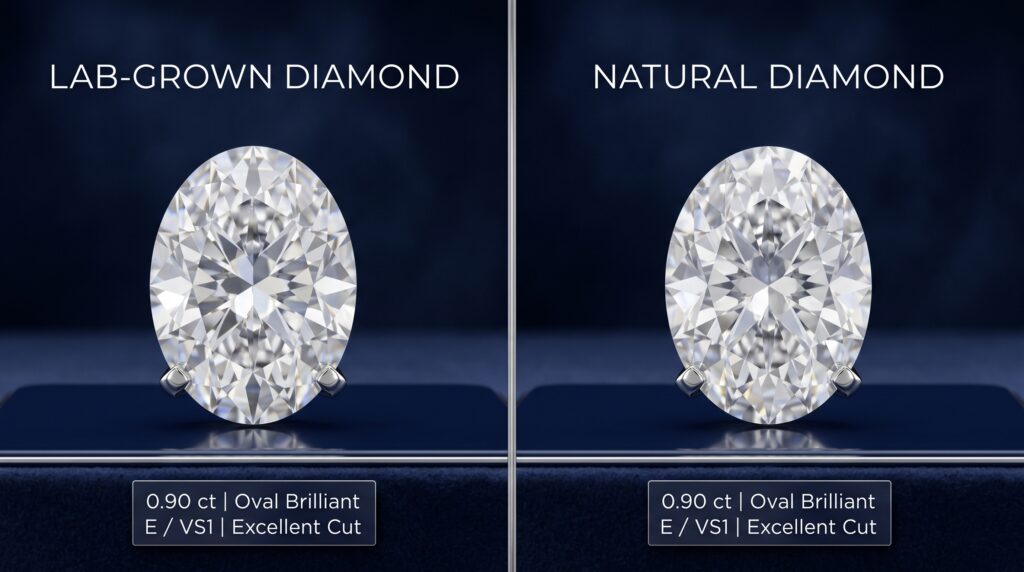
The truth is, the physical differences between a lab grown diamond and a mined diamond are undetectable to the naked eye – and to most standard jeweler’s loupes. The differences that actually matter to buyers are economic, ethical, and psychological. Here is an honest side-by-side:
| Factor | Lab Grown Diamond | Natural Diamond |
|---|---|---|
| Price per Carat | 30–50% less | Higher baseline |
| Certification | IGI, GIA (same labs) | IGI, GIA, GHI, others |
| Chemical Composition | Identical (pure carbon) | Identical (pure carbon) |
| Brilliance & Fire | Identical | Identical |
| Resale Value | Lower secondary market | Established resale market |
| Environmental Impact | Lower (energy-dependent) | Higher mining impact |
| Availability | All shapes, all sizes | Supply-constrained |
| Ethical Sourcing | Guaranteed conflict-free | Kimberley Process varies |
The lab grown diamond vs natural conversation most frequently pivots to resale value – and that’s a legitimate concern worth addressing directly. Lab grown diamond prices have declined substantially over the past four years as global production capacity scaled, and secondary market values reflect that trajectory. For buyers purchasing for wear, meaning, and design rather than resale speculation, the certified lab grown diamond delivers the complete diamond experience at a fraction of the cost. For B2B buyers, lower acquisition cost translates into healthier margins or more competitive retail price points – both meaningful advantages in a market that is increasingly price-sensitive at the consumer level.
To be fair, natural diamonds still dominate collector markets and remain preferred by buyers for whom geological provenance carries genuine emotional weight. That preference is valid. But for custom jewelry particularly engagement rings where the design is deeply personal and the center stone is meant to be worn for decades, not traded lab grown diamonds certified by IGI or GIA represent an extraordinarily intelligent choice.
How to Choose the Right Lab Grown Diamond for Your Custom Piece
Before you finalize your choice, work through these six decision factors. They apply whether you’re sourcing a single loose grown diamond for a one-of-a-kind custom ring or evaluating a wholesale parcel for retail inventory.
1. Shape First, Everything Else Second The shape of your lab grown diamond determines the entire character of the custom piece before a single facet is cut. Round brilliants offer standardized, well-understood light performance. Fancy shapes – oval, cushion, pear, marquise, emerald, radiant offer elongation, visual size advantages, and distinctive style identity. Your hand profile, finger length, and personal aesthetic should drive this decision, not trend cycles alone.
2. Prioritize Cut Quality Above All Other Factors Cut is the most consequential of the 4Cs for visual performance. GIA issues cut grades for round brilliants but not for fancy shapes a nuance we’ll address in the quality evaluation section. For round lab grown diamonds, target Excellent or Very Good. For fancy shapes, study the length-to-width ratio and depth percentage carefully rather than relying on report shorthand.
3. Set a Real Budget – Then Reallocate Strategically Lab grown diamond price advantages are real and actionable. A certified 2 carat lab grown diamond in G color, VS1 clarity can run 40–60% below a comparable mined stone. The savings don’t have to go back in your pocket – reallocating them toward platinum over white gold, hand-engraved details, or additional side stones produces a substantially more impressive finished piece at the same total budget.
4. Match Color and Clarity to Your Setting Metal Yellow gold settings mask warmer color grades – a J or K color lab grown diamond faces up beautifully in yellow gold and represents significant price savings. White gold and platinum demand D–H color for a visually crisp result. Clarity matters less in brilliant-cut styles where facets scatter light; in step cuts like emerald, inclusions are considerably more visible face-up and warrant a higher clarity grade minimum.
5. Verify the Certification Before Any Purchase Every stone should come with an IGI or GIA report. Verify the report number directly on the issuing lab’s official website. This single step protects against overgrading, misrepresentation, and the costly confusion between a lab grown diamond vs natural stone that occasionally occurs with uncertified inventory.
6. Explore Fancy Cut Lab Grown Diamonds for Visual Scale Lab-grown diamonds in elongated non-round shapes – particularly ovals, pears, and marquises deliver superior visual presence relative to stated carat weight. A well-cut 1.5 carat oval lab grown diamond looks measurably larger face-up than a 1.5 carat round brilliant of equal quality. For custom jewelry where visual presence per dollar spent is the design objective, elongated fancy cuts are consistently the winning answer.
What B2B Buyers and Diamond Manufacturers Should Know
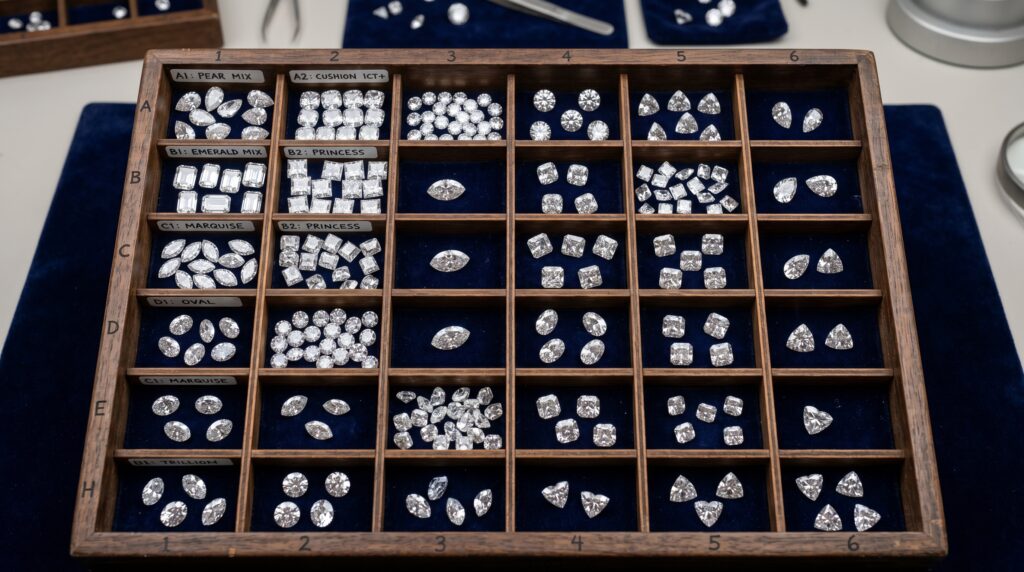
Most buyers in the B2B space – manufacturers, wholesalers, retailers are already sourcing lab grown diamonds. The operational question in 2025 is not whether to stock them but how to source them with consistent certification standards and cut quality that holds up across retail display and customer scrutiny.
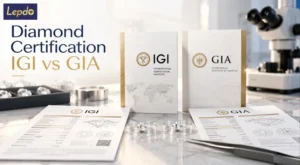
Here’s what the wholesale side of lab grown diamonds certified looks like right now: IGI has become the dominant certification body for lab grown stones in the USA market, with faster turnaround times and lab-grown-specific grading protocols that have matured significantly since 2020. GIA began issuing full 4Cs grading reports for lab grown diamonds in 2023, previously they issued Origin Reports only and their institutional involvement has increased buyer confidence across the segment in meaningful ways.
For manufacturers and retailers sourcing unique cut diamonds, radiants, marquises, hearts in bulk, cut consistency is the primary quality challenge. Unlike rounds, fancy shape diamonds do not carry a standardized GIA cut grade. IGI reports use terms like “Excellent Make” as a proxy, but that language covers a wider range of actual stone geometry than most buyers realize. Reviewing stone measurements directly table percentage, depth percentage, length-to-width ratio is essential, not optional.
Rapaport pricing provides the reference framework for lab grown diamond price negotiations at the wholesale level, but lab grown discounts off Rap are considerably wider than natural stone discounts and continue to shift with production volume. Staying current on Rap list adjustments is a genuine competitive requirement for any B2B operation running meaningful volume.
From my own experience sourcing fancy shapes for retailer clients: always write “eye-clean” as a minimum clarity specification into purchase orders for step-cut stones, and verify that all diamonds in a matched parcel fall within a single color range bracket. A parcel that averages G-H in reported color but spans E to J in actual appearance creates serious retail challenges in matched-set and bridal suite pieces. That detail alone has saved clients from costly inventory problems more than once.
Lab Grown Diamond Jewelry Trends in the USA (2024 – 2025)
The American fine jewelry market has shifted decisively toward lab-grown diamonds and the pace of that shift accelerated between 2023 and 2025 in ways that even optimistic industry projections underestimated. Data from the Plumb Club’s 2024 retail survey indicates that lab grown diamonds now account for over 40% of diamond engagement ring sales by unit at USA independent jewelers. Five years ago, that figure was below 10%. The category isn’t growing, it has grown. What’s happening now is refinement: buyers who are already committed to lab created diamonds are becoming more sophisticated about cut quality, certification standards, and design.
Several specific trends are shaping how certified lab grown diamonds appear in custom jewelry right now:
Elongated Fancy Shapes Are the Dominant Format. Oval cuts represent the fastest-growing shape category among lab grown diamonds in the engagement ring segment. Their length creates the illusion of greater carat weight and flatters virtually every finger profile. Pear-shaped and marquise-cut lab grown diamonds are close behind, particularly in east-west settings that orient the stone horizontally across the finger for a deliberately modern, architectural look. Most buyers in this category specifically request IGI-certified stones the report gives them confidence to buy elongated shapes they can’t standardize by cut grade alone.
Toi et Moi Rings Have Become a Cultural Moment. This two-stone format pairing two distinct fancy cut lab grown diamonds, or combining a lab grown with a fancy color gemstone has moved from a celebrity accessory into mainstream bridal and fashion categories simultaneously. The design flexibility of best lab grown diamonds, available in all color grades, shapes, and carat weights without the supply constraints of mined stones, makes them ideal raw material for this bespoke format.
Yellow Gold Is Driving Color Grade Strategy. The resurgence of yellow gold in American fine jewelry is genuinely good news for certified lab grown diamond buyers. Warmer color grades, I through K that represent meaningful savings in lab grown diamond price perform beautifully in yellow gold settings, expanding design range and budget flexibility in the same move.
How to Evaluate Quality in Lab Grown Diamonds Certified
You’ll want to pay attention to evaluation details that most retail-level buyers never learn because they determine real-world visual performance far more than the certificate grade alone.
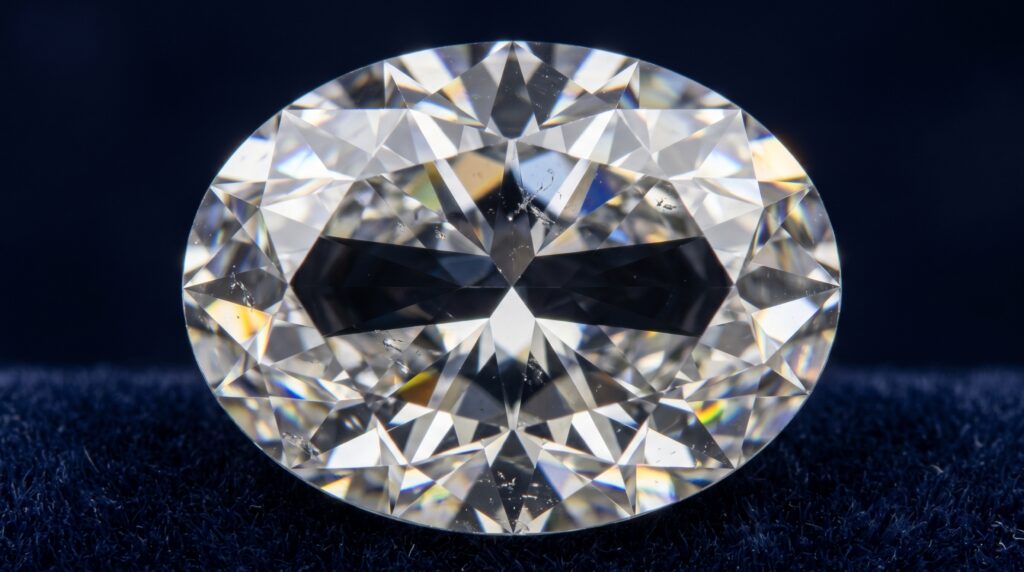
When I assess an oval-cut lab grown diamond, the first thing I check is the bowtie effect. This is a dark, bow-tie-shaped shadow that runs across the center of elongated fancy shapes – ovals, pears, marquises when light enters from certain angles. A well-cut oval minimizes the bowtie to a faint, barely perceptible darkening that actually adds depth and character.
A poorly cut oval shows a stark, intrusive black shadow that kills the stone’s brilliance regardless of its stated color or clarity grade. No IGI or GIA report scores the bowtie you must see the stone in motion, under multiple lighting conditions. This is why buying elongated fancy shapes without a video or in-person review is a genuine risk, even with perfect paperwork.
Five Expert Evaluation Points for Lab Grown Diamonds Certified:
- Cut Before Color, Every Time. For brilliant-cut lab grown diamonds rounds, ovals, cushions, radiants an Excellent cut in H color outperforms a Very Good cut in F color consistently. Brilliance, fire, and scintillation are products of cut geometry and pavilion angle. Color is secondary to light return in any brilliant-facet gemstone.
- Read the Depth and Table Percentage. For round lab grown diamonds, target 59–63% depth and 54–58% table. Stones outside these ranges sacrifice light return measurably. For fancy shapes, request actual millimeter measurements rather than relying on report notation, the numbers tell you more than the grade label does.
- Understand Clarity by Cut Style. VS2 in a round brilliant is eye-clean in virtually all cases. VS2 in an emerald cut is not a guarantee, inclusions visible at 10x magnification can be visible face-up in step-cut fancy shapes where the large, open facets offer no scattering to obscure internal characteristics. Source certified diamonds with explicit eye-clean confirmation for any step-cut design.
- Verify the Pavilion Angle. A poorly angled pavilion, the cone-shaped lower portion of the stone causes light to leak out the base rather than reflect back through the table to your eye. This is the root cause of most “dead” looking polished diamonds regardless of their other grades. For round brilliants where ideal cut is expected, Hearts and Arrows imaging provides the most reliable cut quality confirmation available.
- Reassess Your Position on Fluorescence. Medium to strong blue fluorescence in lab grown diamonds can make a lower-color stone appear whiter in daylight conditions a genuine value feature, not a defect. In lab grown diamonds graded I color and below, strong blue fluorescence consistently functions as a visual upgrade. It is systematically undervalued and represents one of the best value opportunities in certified lab grown diamond purchasing.
Conclusion
Choosing lab grown diamonds certified for custom jewelry is not a compromise it is a deliberate, strategic decision that expands creative options, protects buying power, and delivers every dimension of the diamond experience that buyers expect. Three things define success in this category. Certification is the non-negotiable foundation: IGI and GIA grading reports protect buyers from consumer to wholesale level, ensuring that what the paperwork says matches what the stone actually delivers.
Cut quality drives real-world visual performance more decisively than any other factor, evaluating depth percentage, table percentage, and the bowtie effect in fancy shapes will tell you more about a stone than its color grade ever will. And the design possibilities unlocked by best lab grown diamonds are genuinely expansive: from toi et moi rings pairing two fancy cut certified stones to the classic architectural clarity of a 2 carat lab grown diamond solitaire in platinum.
The USA market is moving toward lab grown diamonds certified at a pace that no serious jewelry business and no informed consumer, can afford to ignore. The best time to understand this category fully was three years ago. The second-best time is now.
Explore our fancy shape collection at Lepdo Diamonds, IGI and GIA certified lab grown diamonds across every cut, color, and carat range, ready for the custom piece you’ve been designing in your head. When the stone is right, everything else follows.
Frequently Asked Questions About Lab Grown Diamonds Certified
1. What are lab grown diamonds certified?
Lab grown diamonds certified are genuine diamonds, chemically and physically identical to mined stones, that have been independently graded by a recognized gemological laboratory such as IGI or GIA. The grading report documents the stone’s cut, color, clarity, and carat weight, providing buyers and retailers with a verified quality benchmark and complete protection against misrepresentation or overgrading.
2. Are lab grown diamonds cheaper than natural diamonds?
Yes, significantly. Lab grown diamonds typically cost 30–50% less per carat than comparable mined diamonds in 2025. A certified 2 carat lab grown diamond in G color and VS1 clarity may retail for $2,000–$3,500, while an equivalent natural diamond starts at $6,000–$10,000 or more. The price gap has widened as global lab grown production capacity has continued to scale and manufacturing costs have declined across both HPHT and CVD methods.
3. Which lab grown diamond cut looks biggest on the finger?
Oval, marquise, and pear shapes maximize visual size relative to carat weight because of their elongated profiles and face-up surface area. An oval lab grown diamond can appear 10–15% larger face-up than a round diamond of identical carat weight. For buyers seeking maximum visual impact within a defined budget, IGI-certified elongated fancy shapes are consistently the most effective choice available.
4. Do lab grown diamonds have GIA or IGI certification?
Yes. Both GIA and IGI issue full grading reports for lab grown diamonds, evaluating the same 4Cs used for mined stones. IGI is currently the most widely used certification body for lab grown diamonds in the USA B2B and retail market. GIA began issuing full 4Cs reports for lab grown diamonds in 2023, significantly increasing institutional confidence and broadening the segment’s acceptance among traditional diamond retailers.
5. What is the bowtie effect in lab grown fancy cut diamonds?
The bowtie effect is a dark, bow-tie-shaped shadow visible across the center of elongated fancy cuts, ovals, pears, and marquises, when light enters at certain angles. It results from light leaking through the pavilion rather than reflecting back toward the eye. No IGI or GIA grading report quantifies the bowtie; buyers must evaluate it by viewing the stone in motion under varied and realistic lighting conditions before purchasing.
6. Are lab grown diamonds as good as natural diamonds?
In physical and optical terms, brilliance, hardness (10 on the Mohs scale), fire, scintillation, and chemical composition, lab grown diamonds are identical to natural diamonds. They are not “as good as” natural diamonds; they are the same material, grown differently. The meaningful differences are price (substantially lower), secondary resale market depth (thinner for lab grown), and emotional provenance for buyers who value a stone’s geological origin above all else.
7. Which lab grown diamond shape is best for an engagement ring?
The best shape depends on personal style, hand profile, and setting preference. Round brilliants remain the most popular for their standardized light performance and timeless appeal. Oval cuts are the fastest-growing choice due to their elongating effect and superior visual size advantage per carat. Cushion cuts offer romantic, vintage-inspired character. Any well-cut shape paired with a properly graded IGI or GIA certified lab grown diamond makes an exceptional engagement ring center stone.
8. How do I choose a certified lab grown diamond manufacturer?
Prioritize manufacturers who provide IGI or GIA grading reports for every stone, offer consistent cut quality with verifiable measurements on request, and maintain transparent Rapaport-based pricing without hidden tiers. Request sample parcels before committing to bulk orders and confirm they can supply consistent color ranges for matched-set pieces. Sourcing from an established, reputable supplier like Lepdo Diamonds ensures both quality accountability and full traceability across your inventory.