
Introduction
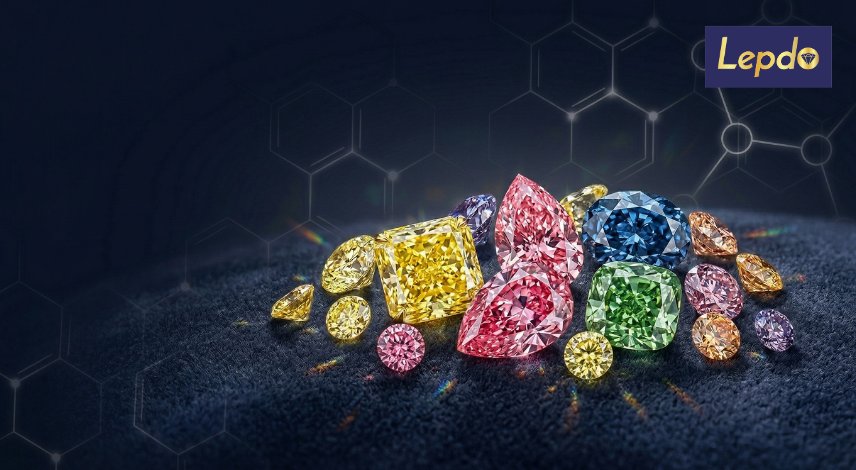
The allure of fancy color diamonds lies in their breathtaking spectrum of natural hues. From the sunlit warmth of a canary yellow to the deep ocean blue of a rare gem, these colored diamonds offer a unique twist on the classic “white” diamond. Once considered curiosities, fancy colored diamonds have become one of the most coveted segments of the jewelry market. Their vibrant colors are not merely surface coatings or treatments; they are ingrained in the crystal lattice by nature’s hand. This makes every fancy color diamond truly one-of-a-kind, an aspect that captivates both luxury consumers and B2B buyers.
For the U.S. market – including designers, wholesalers, and retailers – understanding how these diamonds obtain their hues is key to appreciating their value and crafting the perfect piece. In this article, we explore the causes of fancy diamond color, how gemologists classify these gems, and which colors command the highest prices. We’ll also discuss trends in demand and design ideas for leveraging colored diamonds’ beauty in custom jewelry. By the end, you’ll see why fancy color diamonds are not just precious minerals, but natural works of art that come with a scientific story.
What Are Fancy Color Diamonds?
A fancy color diamond is a diamond whose body color is visibly different from normal “white” (colorless) diamonds. In gemology, diamonds are traditionally graded on a D-Z scale for presence of faint yellow or brown color. Any diamond with noticeable color beyond that range falls into the “fancy” category. In practice, this means hues like yellow, pink, blue, green, orange, and more. Fancy colors may be vivid and saturated or more subtle (“light” or “fancy light”).
Unlike ordinary diamonds, the value of a fancy color diamond increases with the strength and purity of its hue. (This is opposite the D-Z scale, where less color is more valuable.) Only about one in 10,000 gem-quality diamonds shows a fancy color, so these stones are truly rare. Within the fancy category, jewelers often further grade the saturation (light, intense, vivid). The result is an extraordinary range: for example, vivid pinks, deep blues, and intense canary yellows. Each fancy colored diamond is unique, and their natural colors make them stand out in any design. (For context, GIA notes that large, vivid fancy diamonds “are extremely rare and very valuable”.)
From a market perspective, fancy color diamonds can serve both decorative and investment roles. They demand educational storytelling: explaining to buyers that these colors come from the diamond’s formation deep in the earth. As luxury pieces, they convey exclusivity – with some of the most famous gems (like the 59.60 ct Pink Star which sold for $71.2 million) being fancy colored diamonds. This level of prestige makes fancy color diamonds a powerful offering for brands and retailers aiming to elevate their collections.
How Diamonds Get Their Color: Nature’s Palette
Diamond crystals are made of pure carbon (C), so what gives them color? The secret lies in atomic impurities and structural anomalies introduced during their birth under immense pressure and heat. Here are the primary natural mechanisms by which a diamond acquires a fancy hue:
- Nitrogen Impurities (Yellow/Orange): Nitrogen is the most common impurity found in natural diamonds. When nitrogen atoms become trapped in the crystal lattice, they can absorb blue light and impart a yellow or orange tint to the gem. In fact, almost all fancy yellow and orange diamonds owe their color to nitrogen. When nitrogen atoms cluster in certain ways (so-called C-centers or N3 centers), they produce bright canary yellows. (Subtler nitrogen defects can yield golden or brownish tones.) The GIA gemologists point out that nitrogen-related defects are the dominant cause of fancy yellow color. Because nitrogen is common in the mantle where diamonds form, yellow diamonds are the most frequently seen fancy color in the market.
- Boron Impurities (Blue): Very rarely, boron atoms can substitute for carbon in the lattice. Boron absorbs red light, giving the diamond a blue appearance. Only about 1 boron atom per million carbon atoms is needed to turn a diamond blue. Blue diamonds are exceedingly rare – the famous Hope Diamond is a 45.52‑carat fancy deep grayish-blue. Because they are so scarce, blue diamonds often fetch higher prices than more common yellows.
- Plastic Deformation (Pink, Red, Brown): Some colors arise from structural distortion rather than impurities. When diamonds are subjected to intense stress (often during or after growth deep underground), their crystal lattice can deform at the atomic level (a process called plastic deformation). This creates planar defects that absorb light in parts of the spectrum, producing pink or red hues. (Many brown and intense orangey-brown diamonds also result from similar lattice damage.) In other words, these diamonds have no special element inside – their color comes solely from shifts and imperfections in their carbon lattice. Diamonds with strong plastic deformation are typically Type IIa (very pure carbon). Famous red and pink diamonds (like the Graff Pink or the Williamson Pink Star) belong to this group. Because such distortions are uncommon, truly red diamonds are the rarest of the rare, and even less-extreme pinks are among the priciest colors.
- Radiation (Green): A small number of diamonds turn green when they are exposed to natural radiation (from uranium or other radioactive materials) after formation. The radiation knocks electrons out of position, creating color centers that absorb light and make the diamond look green on the surface. True natural green diamonds are rare and often have only a green sheen on an otherwise colorless body.
- Other Colors (Purples, Grays, Blacks): Some fancy colors are the result of combinations of the above factors or other rarer causes. For example, purple diamonds may be the result of the same plastic deformation that makes pink, plus red. Gray and black diamonds usually have dense clusters of tiny inclusions (like graphite or sulfide) or a mix of structural defects that give a dark tone. In any case, each color corresponds to a specific “flavor” of atomic change in the diamond’s structure.
The upshot is that each hue tells a geological story. Nitrogen-heavy volcanic carbon brought that yellow gem; a shocked tectonic event birthed that pink one; radiation deep in the earth gave the emerald-green tinge. As GIA sums up, “each fancy color traces back to a distinct geological event,” making these diamonds truly irreplaceable.
Color Grading and Classification
Understanding fancy color diamonds also requires knowing how they are graded. Diamonds are graded on two separate systems:
- Colorless Grading (D–Z): For the vast majority of diamonds (D, E, F = colorless, down to Z = light yellow/brown), gemologists use the GIA D-to-Z scale. A diamond graded “M color” is a light yellowish diamond on this scale, not a fancy color. (M color diamonds are simply lower on the colorless scale; fancy color grading begins beyond Z.) Gems that would fall on the normal scale don’t qualify as “fancy color.”
- Fancy Color Grading: If a diamond’s hue is strong enough (typically beyond Z), it’s graded as a fancy color. The GIA fancy scale identifies hue (yellow, pink, blue, etc.), tone (light to dark), and saturation (faint to vivid). For example, “Fancy Vivid Pink” is the top grade for pink diamonds. Importantly, value generally increases with color strength. In fancy grading, a vivid vivid blue or intense pink is worth far more than a fancy light tint. (One in 10,000 diamonds is fancy colored, so demand outstrips supply at every grade.)
Today’s gemological labs use advanced tools to certify color. A GIA or AGS report will indicate if the color is natural or treated (irradiation/HPHT) and the exact shade. For buyers, knowing the colored diamond scale (GIA’s method for fancy hues) is essential. It means looking at hue, tone, saturation rather than just “yellow vs. blue.” Each fancy color has its own scale (for example, pink’s scale differs from yellow’s). The result is a precise language for these stones.
The Rarest and Most Valuable Fancy Colors
Not all fancy colors are created equal in terms of rarity and value. Some colors occur more frequently, while others are almost mythic:
- Yellow and Brown: By far the most common fancy colors (due to nitrogen). Light yellow diamonds are frequently seen in retail (“canary yellow” sells at mid-range prices). Brown or champagne diamonds are also relatively common – often used in fashion jewelry. These stones are beautiful but less rare. (Hence, they tend to be more affordable than vivid blues or pinks of the same size.)
- Blue: Exceptionally rare because boron is rare in diamond-forming depths. Natural blue diamonds (like the blue Hope or the largest flawless blue diamonds) command extraordinary prices per carat. The GIA notes that less than one boron atom per million carbon atoms produces a blue hue. Top-quality blue diamonds – especially in “Fancy Vivid Blue” grade – are among the world’s costliest gems.
- Pink and Red: Also extraordinarily rare, arising from lattice distortion. Pure red diamonds are nearly nonexistent in large size; only a handful of true red diamonds are known. Rich pink diamonds (think the pink diamonds of the Argyle mine or famous museum pieces) regularly sell for hundreds of thousands of dollars per carat. In fact, pinks often exceed blues in price. For example, the 59.60-ct Pink Star set an auction record (about $71M), reflecting how intense pink is the pinnacle of fancy color value.
- Green: True natural greens are unusual but not as coveted as pink/blue in the market (green is often a surface effect and sometimes treated). Fancy green diamonds, especially in fancy vivid grades, still command premium prices, though often a bit below pink and blue. Famous green diamonds (like those in royal jewelry) are prized for their mystical look.
- Orange, Purple, Others: Pure orange diamonds are also extremely rare (the most famous is the 5.54 ct Pumpkin Orange). GIA research shows that orange diamonds are often related to the same nitrogen defects as yellow. Purple and graphite-gray diamonds are rarer still and typically valued less, unless the color is intense.
In summary, the “color crown” falls on vivid reds, pinks, and blues. Gemologists point out that “the most valuable hues are pink, blue, and green”, with any strong, pure color being highly prized. This hierarchy is important for both B2B buyers and consumers: it influences sourcing and pricing strategies.
A quick table of common causes vs. colors can help:
| Fancy Color | Primary Cause | Rarity/Value |
|---|---|---|
| Yellow/Orange | Nitrogen impurities | Most common fancy color; widespread; moderate value |
| Blue | Boron impurities | Extremely rare; very high value |
| Pink/Red | Plastic deformation (lattice defects) | Very rare; extremely high value |
| Green | Natural radiation exposure | Rare; high value |
| Brown | Plastic deformation or multiple defects | Common; lower value |
| Other (gray, black) | Structural inclusions or mixed causes | Less common; varied value |
How Colored Diamonds Are Viewed in the Market
For U.S. jewelers and wholesalers, fancy color diamonds represent both opportunity and complexity. They require educating clients, since average consumers know far less about colored diamonds than clear ones. However, good storytelling can turn their rarity into a selling point. Internal data show growing interest in color. Keywords like “colored diamond” and “fancy diamonds” have healthy search volumes (1300 and 390 monthly searches, respectively), reflecting consumer curiosity. Terms like “blue and yellow diamonds” or “blue diamond and yellow diamond” (590 searches) suggest people look for contrasting pairs or comparisons.
Market trends indicate that millennials and Gen Z buyers prize uniqueness and ethical sourcing, which favors responsibly mined or lab-grown fancy colors. Note: lab-grown colored diamonds are chemically identical and are gaining popularity due to lower cost. Lepdo Diamonds (for example) offers lab-grown fancy colors certified by IGI. Pointing to such collections (e.g. Lepdo’s Fancy Color Diamonds inventory) can reassure clients about choice and authenticity.
From a pricing standpoint, expect wide ranges. A big, vibrant fancy pink or blue can sell for hundreds of thousands per carat, whereas a light yellow may only be a few thousand per carat. Factors affecting price include color hue, tone, intensity, clarity, and carat weight. Auction results underscore the extremes: multi-million-dollar sales for vivid pinks and blues, versus more accessible prices for browns or light yellows. Wholesalers should note that treated vs. natural also matters: treatments (like HPHT or irradiation) can create fancy color, but treated stones are valued much lower. Always disclose treatment status.
Designing with Fancy Color Diamonds
How can jewelers best use these vivid gems? Fancy colors open creative avenues:
- Contrast and Compliment: Designers often mix colored diamonds with white diamonds or colored gemstones. For example, a vivid yellow center stone looks striking surrounded by a halo of sparkling white brilliants. Conversely, a deep blue diamond pairs beautifully with a pink sapphire halo. Even black-and-white themes emerge: yellow and blue diamonds set side by side in a modern ring can evoke a “black-and-white” graphic effect. In fact, Lepdo Diamonds’ collections demonstrate creative combos (link to Fancy Shape Diamonds and Unique Cut Diamonds), where an unusual cut can amplify the color’s impact.
- Shape Matters: Some cuts enhance color. Broad facets show off a diamond’s tone, while fancy shapes (cushion, emerald, radiant) tend to preserve and intensify color better than rounds. Jewelers often recommend cushion cuts or radiant cuts for colored stones. Lipdo Diamonds even highlights “fancy shapes” collections for maximum color brilliance. (For instance, an emerald-cut fancy blue exhibits flash and depth, whereas a round might lose some saturation.)
- Paired Sets: Another approach is using pairs or triads of colored diamonds. A yellow-blue pair can be symbolic (sun vs. sky). The keyword data “yellow diamond blue diamond” suggests interest in such combos. Designing a duo or trio ring, earrings, or pendant with two colors can create a signature look.
- Metal and Setting Choice: The metal color can accentuate the diamond’s hue. Warm yellow gold intensifies a yellow diamond’s glow, while cool platinum or white gold can make a blue or green pop. Many designers also embed colored diamonds in intricate white-gold filigree to let the colors shine.
- Stories and Collections: Because each fancy color diamond has a unique origin, brands often build narratives. For example, a jewelry line might be inspired by sunsets (yellow-orange stones) or ocean depths (blue and green stones). These stories resonate with consumers looking for emotional connections. Mentioning a piece’s color origin (“This sapphire-blue diamond owes its color to trace boron captured deep in the earth”) can enhance appeal.
From a practical standpoint, fancy color diamonds are fully suitable for all jewelry types: engagement rings (for the adventurous bride), luxury necklaces, earrings, and even men’s rings or cufflinks for a bold twist. Each piece becomes a collectible when set with a vivid colored stone, which helps B2C clients justify the premium.
Conclusion
Natural fancy color diamonds derive their stunning hues from pure earth chemistry and geology: trace atoms and crystal quirks created at the depths of our planet. This natural origin makes every colored diamond uniquely fascinating and highly prized. Key takeaways: nitrogen gives diamonds yellow/orange color, boron yields blue, and lattice deformation produces pink/red. These and other mechanisms explain why certain colors (like vivid pinks and blues) are so rare and valuable.
For jewelers and buyers, fancy color diamonds are both an opportunity and a differentiation strategy. They allow designers to craft truly bespoke luxury pieces that tell a story of nature’s artistry. By understanding the science behind the colors and leveraging creative designs (see Lepdo’s Fancy Color collection), businesses can educate clients, build trust, and command premium pricing.
If you’re looking to source rare colored diamonds or design a custom piece, now is the time to act. Reach out for a consultation or quote, our experts at Lepdo Diamonds can guide you to the perfect fancy color diamond for your project. Elevate your creations with gemstones whose very color captures imagination and value.
Frequently Asked Questions
Q1: What makes a diamond “fancy color”?
A fancy color diamond has a visible hue outside the normal D-Z colorless range. Its color comes from natural factors (trace elements or structural defects) rather than just the absence of impurities. For example, canary yellow diamonds get their color from nitrogen, while pink diamonds get theirs from lattice distortion. Each fancy-colored gem is graded on a special scale by hue and intensity.
Q2: What color diamond is most expensive?
The rarest colors – pure red, vivid pink, and intense blue – are typically the most expensive. Red diamonds (from structural strain) are exceptionally scarce. Large, vivid pinks (like the famed Pink Star) and bright blues (like the Hope Diamond) have sold for tens of millions at auction. Generally, the stronger and more saturated the color, the higher the value. Yellow diamonds are more common and usually less costly than these top-tier fancy colors.
Q3: Are yellow and blue diamonds natural or treated?
Most yellow and blue diamonds on the market are natural. Yellow color often comes from nitrogen; blue from natural boron. However, some diamonds are treated (HPHT to create yellow, irradiation for blue/green). Always require a lab report. Reputable dealers like Lepdo clearly disclose treatment status. Natural, untreated blues and yellows carry higher value.
Q4: What is the “colored diamond scale”?
Colored diamonds are graded using a specialized scale by GIA that considers hue (e.g. “fancy yellow” vs “fancy pink”), tone (light to dark), and saturation (faint to vivid). It differs from the D-Z scale for colorless diamonds. For example, “Fancy Vivid Pink” is a grade on the colored scale indicating a strong, bright pink. M color diamonds (per D-Z) are not fancy – an “M color” is simply a light yellow and would be described as very light yellow on the colored scale.
Q5: Why do some diamonds look blue and yellow at the same time?
Diamonds normally show one dominant hue. If a stone appears blue and yellow, it might be an optical effect (blue fluorescence) or actually two different colored diamonds set together. In jewelry design, yellow and blue stones are sometimes paired for contrast. There are also rare stones (like certain green diamonds) with a mix of tones. Always look for separate stones rather than a single diamond claiming two colors.
Q6: Do I need to buy an expensive fancy color diamond?
It depends on your goals. Fancy colors range widely. If you want bold rarity, vivid pinks, reds, or blues are top-tier. But more modest fancy diamonds (fancy yellow or lighter pink) offer beautiful color at more accessible prices. Decide what color and grade excite you, then consult an expert. Lepdo offers both premium (vivid grades) and lighter fancy color diamonds to fit different budgets.
Q7: What if I can’t afford natural fancy colors?
Lab-grown fancy diamonds are a great alternative. They have identical chemistry and beauty, usually at 30-70% of natural prices. Lepdo’s collection includes lab-grown blues, pinks, greens, etc., all IGI-certified for color. Use filters to compare. Whether natural or lab-grown, the key is certification of color origin and grade.
Q8: How are fancy color diamonds used in design?
Designers often make the color the centerpiece. Fancy shapes (cushion, radiant, oval) and white diamonds accentuate the hue. Consider pairing complementary colors or using multiple colored stones (for example, a blue-yellow diamond ring). Fancy shapes and unique cuts help maximize color; check out Lepdo’s Fancy Shape Diamonds and Unique Cut Diamonds for ideas. Ultimately, a colored diamond transforms any design into a signature statement piece.