
Buying (Certified) loose diamonds online has moved from “risky” to “routine” for U.S. jewelry buyers, but only when you follow a repeatable, verification-first process. High-resolution videos, lab reports, insured shipping, and liberal return windows have made e-commerce the natural choice for everyone from boutique retailers to major wholesalers. At the same time, fraud has evolved: misleading “certified” claims, lab reports that don’t match the stone, unclear disclosure of lab-grown status, and marketplaces where the “seller” is a third party you didn’t realize you were buying from. U.S. regulators and industry bodies are clear on one point: misrepresentation, of quality, origin, treatment, or even the meaning of terms like “diamond”, is deceptive.
This guide is designed for a USA-based audience across B2B and B2C: diamond manufacturers, jewelry brands, wholesalers, retailers, and end buyers. You’ll learn how “certified” really works, how to verify a grading report in minutes, what to demand from an online seller, and how to protect the transaction from checkout to delivery, so the stone you buy is the stone you receive.
Why “Certified” Matters When Buying Loose Diamonds Online
In everyday jewelry retail, “certified” usually means the diamond is accompanied by an independent grading document that describes the stone’s measurable quality factors (commonly the 4Cs: cut, color, clarity, carat) and identifying characteristics. That independent grading is the foundation for trust because it reduces reliance on the seller’s opinion alone.
What “certified” is and what it is not
A grading document is not the same thing as a price appraisal, and it is not a guarantee that you paid a “good deal.” It is a standardized quality description. In fact, some labs explicitly distinguish between a “report” (an expert opinion with disclaimers) and a “certificate” described as a warranty-style product, terms consumers often mix up.
Equally important: the U.S. jewelry advertising rules focus on net impression and require that product descriptions not mislead about any material aspect, including type, kind, grade, quality, treatment, origin, and value. These guides apply at every level of trade (manufacturers, suppliers, retailers), which matters for B2B listings and line sheets just as much as consumer product pages.
Natural vs lab-grown vs imitation: disclosure is non-negotiable in the U.S.
If a diamond is laboratory-created, U.S. guidance emphasizes clear and conspicuous disclosure that it is not minedm, using terms such as “laboratory-grown” or “laboratory-created” immediately with the word “diamond.” Likewise, if a stone is simulated/imitation, that must be disclosed as well.
For buyers, this means your “certified loose diamonds” workflow should always start with a simple question: What exactly is the stone and how is that disclosed on the listing and on the lab document?
Start With the Right Specs: 4Cs, Shape, and Budget
Even the safest buying process won’t save a purchase that was poorly specified. The most successful online buyers, B2C or trade, set minimum specs first, then shop within them.
Use the 4Cs as your common language
The 4Cs framework, cut, color, clarity, and carat weight, is the global standard for communicating diamond quality and is central to modern diamond grading.
- Color (D–Z for many white diamonds): the scale begins at D (colorless) and moves toward Z (light yellow/brown) under controlled grading conditions.
- Clarity: diamonds are evaluated under 10× magnification, and grades reflect the nature, size, and location of characteristics (inclusions/blemishes).
- Cut (especially for round brilliants): cut strongly influences brightness/sparkle, and cut evaluation includes craftsmanship factors like polish and symmetry.
- Carat weight: pricing is often nonlinear; prices per carat can jump at round “magic number” thresholds (like 1.00, 1.50, 2.00).
A key nuance online: not every shape gets a cut grade
One of the most common online buying mistakes is treating cut grades like they apply equally to all shapes. GIA currently issues a formal cut grade for round brilliant diamonds (with standard criteria), while fancy shapes are evaluated for polish and symmetry but don’t receive the same cut grade system.
Practical takeaway: if you are shopping emerald cut, oval, pear, radiant, cushion, etc., you must rely more heavily on:
- side-by-side videos and stills,
- proportion numbers (table %, depth %, length-to-width),
- and your return window / inspection step.
Real-world example: value engineering without “downgrading beauty”
If you are planning a 1.00 carat look, you can often avoid the “magic number” price jump by choosing a slightly lower carat that faces up similarly (for example, just under 1.00). This is a long-standing pricing dynamic described in diamond buying guidance.
Where secondary keyword searches often go wrong
Online shoppers frequently use different phrasing that leads them into mixed-quality listings:
- “diamond loose” searches can surface bulk lots, unverified marketplace sellers, or stones without full grading info. Your defense is to filter for a recognized lab report and a return policy before you even compare price.
- “loose grown diamond” listings require extra attention to disclosure and to the lab document type (natural vs lab-grown report formats can differ).
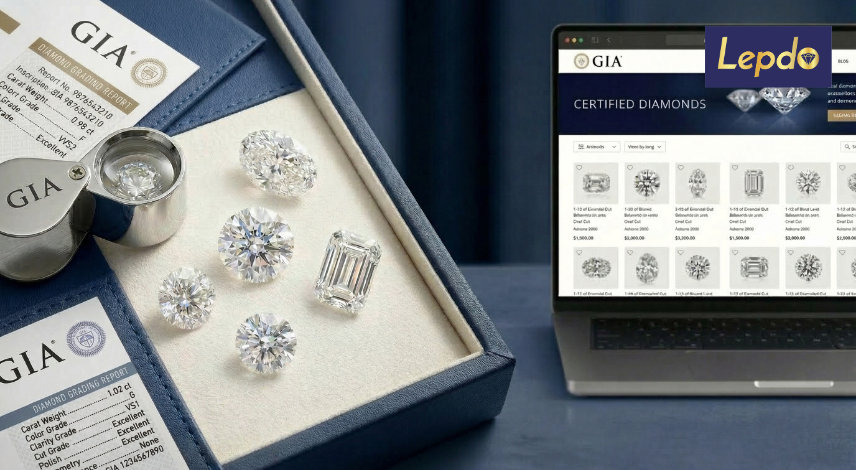
- Buyers searching specifically for “gia certified loose diamonds” or “loose diamonds gia certified” are usually trying to reduce grading uncertainty; the key is verifying the report number in the issuing lab’s database and ensuring it matches the stone delivered.
Verify the Grading Report: GIA, IGI, GCAL and More
Online diamond safety is mostly document security, because the report is how you anchor the listing to an independently described stone.
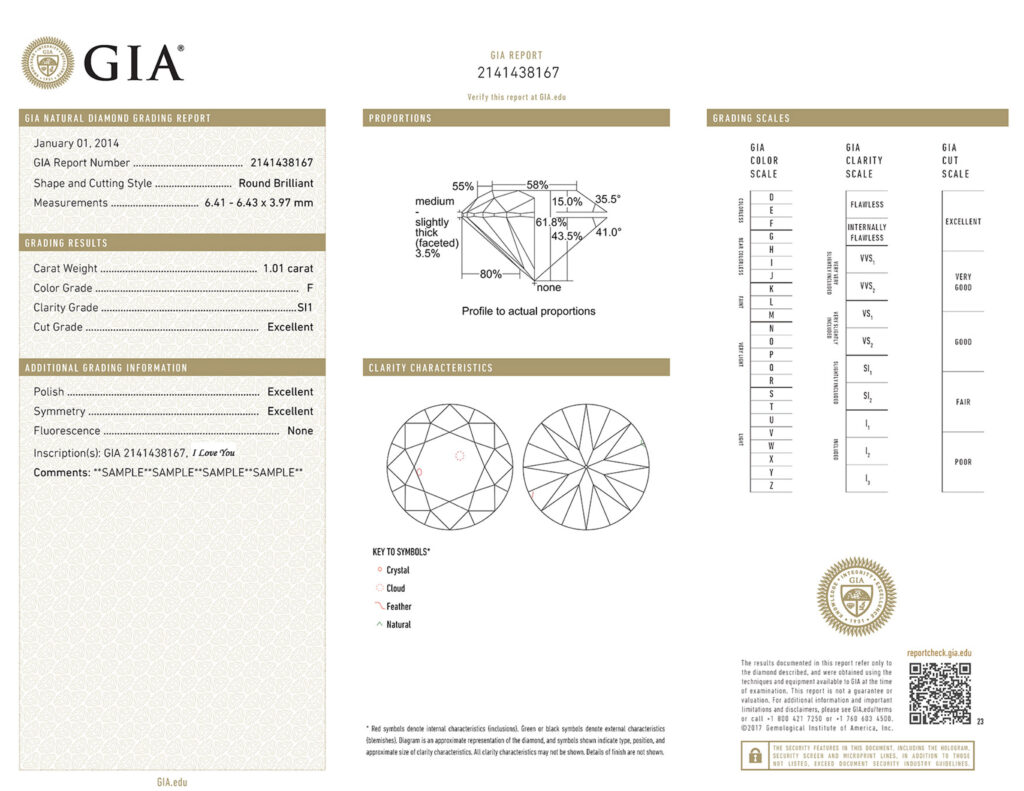
The minimum standard: report number + database verification
A credible online seller should provide either a PDF of the grading document or a report number you can verify.
- GIA provides a Report Check tool that allows you to confirm the report data matches what’s archived in its database.
- IGI offers online report verification via report number.
- GCAL provides certificate verification and emphasizes a distinction between “certificate” (warranty framing) and “report” (opinion with disclaimers).
If a seller says “certified” but won’t share the report number before purchase, treat it as a high-risk listing. This aligns with best-practice guidance: review reports/paperwork and ensure claims are supported.
Match the report to the stone: laser inscription and identifying features
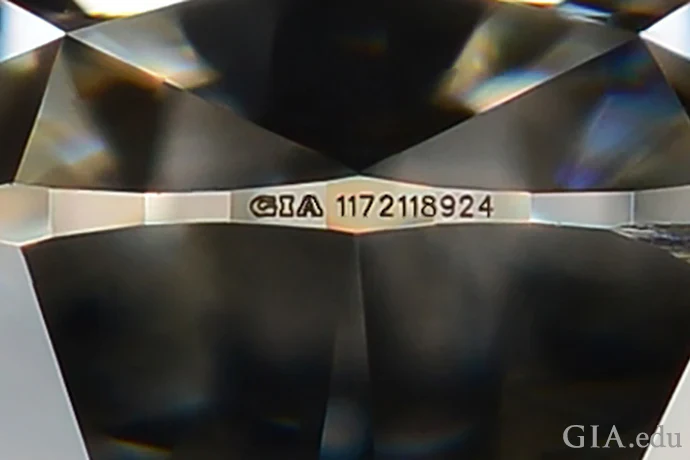
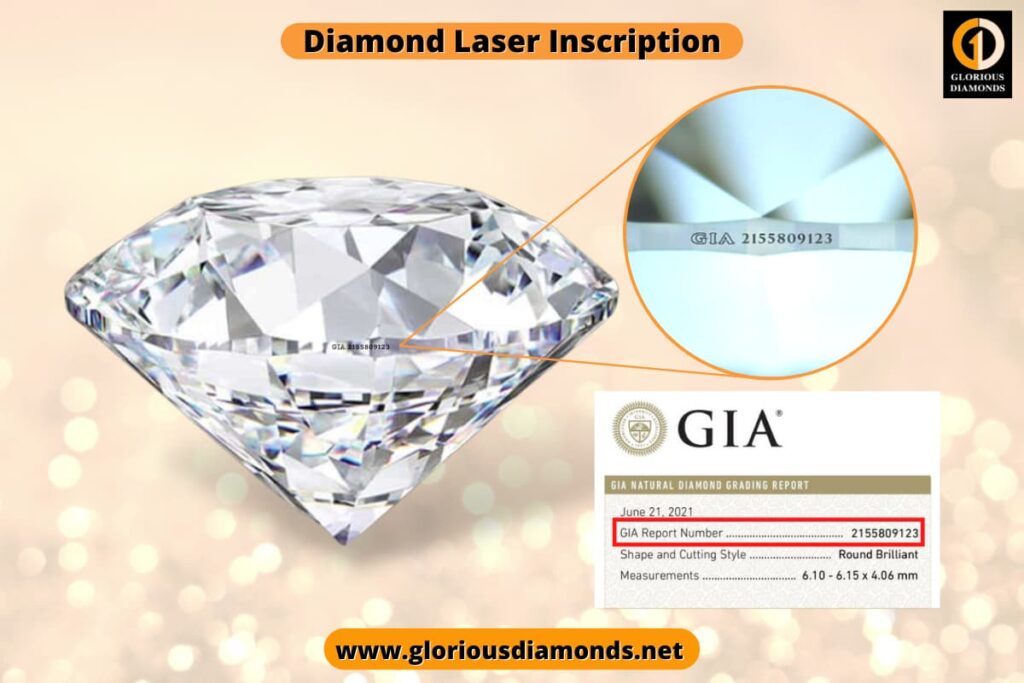
For many buyers, the most powerful anti-swap check is the laser inscription (when present): a report number inscribed on the diamond’s girdle. GIA references report-number laser inscription as part of certain services, and industry education also points to laser inscription as a method of matching stone to report.
If you are buying without the ability to inspect pre-purchase, prefer listings that include:
- a full grading report (not just “certified” text),
- a 360° video of the exact stone (not a stock clip),
- and either a laser inscription or another unique identifier (clarity plot, inclusion map, measurements) you can match on arrival.
Lab-grown paperwork: look for explicit LG disclosure and report format differences
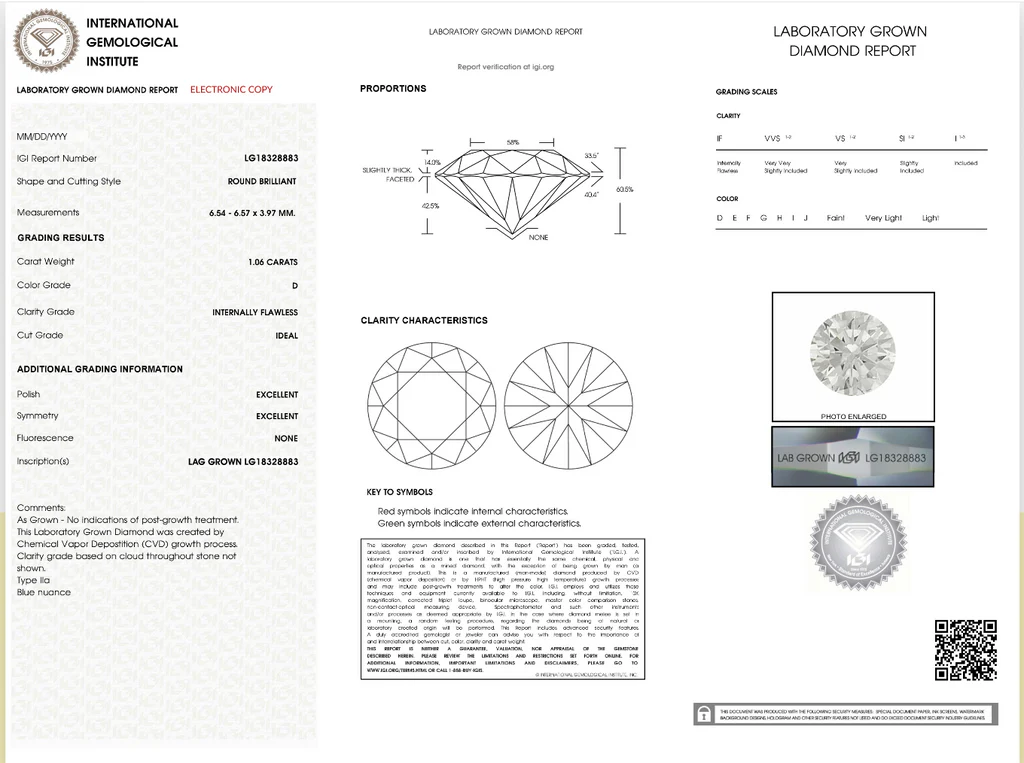
GIA notes that its reports for laboratory-grown diamonds are designed to reduce confusion and can look significantly different from natural diamond reports. It also describes how laboratory-grown reports are labeled as such.
GIA also describes that its laboratory-grown diamond reports include inscriptions indicating “LABORATORY-GROWN” and the report number, and can state the growth method (CVD or HPHT).
For U.S. buyers, this isn’t just paperwork trivia; it ties directly to clear disclosure expectations for laboratory-created diamonds.
Advanced verification for premium goods: light performance supplements
For brands and high-end retailers, beauty metrics beyond the 4Cs can be commercially relevant. GIA has introduced an AGS Ideal® supplemental report designed to measure light performance (brightness, fire, contrast) as a complement to a GIA grading report.
This is most useful when your value proposition is super-ideal performance and you need a consistent way to communicate optics across sales channels.
Vet the Seller Like a Pro: Security, Policies, and Proof
A legitimate grading report is necessary, but not sufficient. You also need to know the seller will honor returns, ship securely, and handle disputes professionally.
Payment safety: prioritize methods with strong buyer protections
U.S. consumer guidance recommends paying by credit card when possible for better protections if something goes wrong, and to look for “https” when entering payment information, while also noting that https alone doesn’t prove legitimacy.
For organizations buying at scale (brands, retailers, wholesalers), this translates into an operational policy:
- card or bank rails with defined dispute mechanisms,
- documented invoices and serial/report numbers on paperwork,
- and procurement approval steps for new vendors.
Return policies: the easiest risk filter you have
A strong return policy is not “nice to have” for online diamonds, it is your inspection window.
The Better Business Bureau emphasizes reading return policies before you buy and notes that retailers in the U.S. (and Canada) often are not required to have a specific refund/exchange policy, meaning you must check the fine print, restocking fees, and return shipping requirements upfront.
Red flags (especially for loose diamonds):
- no written return policy or policy is hard to find,
- unclear restocking fees or short inspection windows,
- “final sale” language applied broadly to certified stones,
- or policies that don’t explain what happens if the stone doesn’t match the report.
Marketplace risk: know who the real seller is
If you shop through a marketplace, even a reputable one, you may be buying from a third-party seller, not the platform itself. U.S. consumer guidance specifically suggests verifying the seller and using safer payment methods on marketplaces.
A practical tactic: if the listing looks unusually discounted, slow down and validate the business identity, contact options, and the report number before checkout. The GIA’s online-buying guidance encourages buyers to research listings, read terms of sale, and be cautious about “amazing discount” deals.
Review hygiene: don’t let fake social proof sell you a stone
Fraud ecosystems also manipulate reviews. For example, the U.S. Postal Inspection Service has warned about “brushing” scams designed to inflate ratings through fake review activity. While brushing isn’t diamond-specific, the principle holds: reviews are helpful only when you can corroborate them with independent evidence (report verification, return policy clarity, and payment protections).
Quick seller due diligence table
| What to check | What “good” looks like | Why it matters |
|---|---|---|
| Report number & lab | Report number available pre-purchase; verifiable in lab database | Anchors the listing to a third-party record |
| Disclosure language | Lab-grown vs mined is clearly disclosed next to “diamond” | Required to avoid misleading impression |
| Returns & fees | Clear inspection window, minimal restocking, documented process | Your safety net for online buying |
| Payment methods | Credit card or buyer-protected system; secure checkout | Stronger dispute rights if problems occur |
| Photos/videos | Real stone imagery + proportions/measurements | Helps catch mismatches or misleading listings |
From Loose Diamond to Finished Piece: Settings, Shipping, and Appraisals
A safe online diamond purchase is not complete at checkout, it ends when the stone is verified in-hand and set (or stored) securely.
“Buy setting for loose diamond”: plan the setting before you buy the stone
Consumers commonly search “buy setting for loose diamond” because settings affect how a stone looks and whether it’s structurally appropriate.
A few practical planning rules:
- Fancy shapes with pointed corners (pear, marquise) typically benefit from protective prongs or V-prongs.
- Step cuts (emerald/asscher) emphasize clarity and symmetry, so your acceptable clarity/color range may differ than for rounds.
- If you’re buying loose now and setting later, confirm whether the seller’s return policy changes once the stone is mounted (many do).
Shipping: insist on security, discretion, and signature
Shipping is a major risk point, and best practices emphasize discreet packaging and secure delivery methods. Jewelers Mutual’s loss prevention guidance highlights nondescript packaging to avoid drawing attention to valuable contents.
For delivery controls, the American Gem Society recommends prioritizing signature confirmation, specifically noting that “Adult Signature” offers strong protection by requiring direct handoff to an adult recipient.
For U.S. buyers returning or shipping diamonds for service, be aware that carrier liability and insurance options can have limits and conditions. For example, FedEx notes typical limits for jewelry shipments and indicates that higher declared value for jewelry can require eligibility/program participation rather than one-time shipping.
Your “arrival day” protocol: verify fast, then document
When the package arrives:
- Video the unboxing (one continuous shot) in case you need evidence for a dispute.
- Match the stone’s measurements and (when applicable) laser inscription to the report.
- Confirm the report number in the lab database again (especially if the seller provided only a PDF).
- Store the diamond and paperwork together (you’ll need them for insurance, resale, or upgrades).
Independent appraisal: the professional “double-check”
GIA’s guidance for online diamond buying recommends having an independent appraiser confirm that the diamond matches the seller’s description and paperwork, and to obtain a value for insurance purposes.
For U.S. buyers, two credible credential pathways frequently referenced in the market include:
- American Gem Society appraiser credentials and guidance around diamond and jewelry appraisals.
- American Society of Appraisers, which describes itself as a professional appraisal organization accrediting appraisers across disciplines.
- National Association of Jewelry Appraisers, which focuses specifically on appraisal of gems and jewelry in the United States.
Also note: insurance appraisals should reflect realistic replacement cost; Jewelers of America explains that the “point of insurance is to return the value of the item,” so appraisals should match the cost of replacing the item in a jewelry store that regularly sells that type of item.
B2B Buying: Manufacturer-to-Retailer Checks for Compliance and Consistency
B2B buyers typically face a different risk matrix than consumers: consistency across lots, disclosure compliance across channels, and reputational/chargeback exposure if product claims are misleading.
Compliance baseline: accurate claims across the entire pipeline
Because U.S. jewelry advertising guidance applies to marketing at all levels of trade, manufacturers and wholesalers should treat product specs, grading lab identity, treatments, and disclosure language as supply chain data, not just consumer-facing copy.
The FTC’s guidance also highlights that misrepresenting material aspects (grade, quality, treatment, origin, value) is deceptive, and that clear, prominent disclosures maximize the likelihood consumers understand qualifications.
Responsible Sourcing and Documentation: What Sophisticated Buyers Expect
When purchasing loose diamonds, especially in the U.S. luxury and B2B market, responsible sourcing and proper documentation are critical factors that define trust and long-term value.
For mined diamonds, many B2B programs rely on globally recognized frameworks such as:
- The Kimberley Process Certification Scheme (KPCS) – an international initiative designed to prevent conflict diamonds from entering legitimate supply chains. It is enforced by participating governments worldwide.
- U.S. Customs and Border Protection (CBP) guidelines – which reinforce Kimberley Process compliance for rough diamond imports into the United States.
- The World Diamond Council System of Warranties – requiring suppliers to include warranty statements on invoices, ensuring diamonds originate from conflict-free sources.
In today’s market, however, sourcing transparency goes beyond conflict-free assurances. Buyers increasingly expect compliance with broader ethical, environmental, and labor standards. This is where organizations like the Responsible Jewellery Council (RJC) play a vital role. Their Code of Practices establishes responsible business standards across the entire supply chain, from mining to retail.
In addition to ethical sourcing, certification plays a key role in building buyer confidence. High-value transactions typically involve:
- GIA Certified Diamonds – widely considered the global benchmark for grading accuracy, offering detailed reports on cut, clarity, color, and carat weight.
- IGI Certified Diamonds – another trusted certification authority, especially popular for both natural and lab-grown diamonds in commercial and retail markets.
For sophisticated buyers, whether wholesalers, jewelry brands, or informed consumers, combining ethical sourcing standards with recognized certification (GIA or IGI) ensures not only authenticity but also long-term value, traceability, and peace of mind.
Also See: Glossary
B2B consistency checklist for loose diamonds listings
If you are building a scalable loose diamond program (for retailers, wholesalers, or brands), align these elements across systems:
- Lab alignment: define which labs are acceptable for which categories (natural vs lab-grown), and require report-number verification.
- Disclosure language templates: ensure “lab-grown” is disclosed clearly and consistently in PIM systems, invoices, and PDPs.
- Treatment disclosure workflow: if any treatment affects value, requires special care, or is not permanent, the FTC’s advertising guidance emphasizes disclosure and care instructions, especially relevant for online selling where consumers may buy without viewing in person.
- Returns and QA: implement inbound inspection and outbound photo/video capture to reduce disputes over “stone mismatch.”
A note on “gemstones loose” and colored stones in the same basket
Many wholesalers and retailers cross-sell gemstones loose alongside loose diamonds, especially emerald, sapphire, ruby. Treatments and disclosure expectations can be more complex with colored stones. FTC guidance discusses gemstone treatments (oils/resins, fracture filling, irradiation, etc.) and emphasizes disclosure when treatments are non-permanent, require special care, or significantly affect value.
This matters because a shopper searching “loose emerald for sale” may be comparing stones that look similar in photos but differ massively in treatment stability and long-term care requirements.
Also Read: How Fancy Color Diamonds Get Their Stunning Natural Hues
Conclusion
Buying certified loose diamonds online in the U.S. can be exceptionally safe when you treat the purchase like a verification workflow, not a scrolling contest. Anchor every listing to an independently issued grading document, verify the report in the lab database, and prioritize sellers with transparent return terms, secure payment options, and professional shipping controls. U.S. guidance is consistent: avoid misleading impressions, disclose lab-grown status clearly, and take treatments seriously, especially when selling without in-person inspection.
If you’re sourcing for a business (manufacturer, brand, wholesaler, retailer), build repeatable standards: acceptable labs, disclosure templates, report verification, QA capture, and responsible sourcing documentation.
For buyers and trade partners who want a streamlined path from search to secure delivery, explore Lepdo Diamonds and review its certified inventory and B2B positioning. For current selection, browse the Loose Diamonds collection and request a tailored quote or consultation based on your target specs (natural or lab-grown, size range, shapes, and compliance requirements). If you’re considering a distinctive step-cut look, the Portrait Emerald-Cut Lab Grown Diamond product page is a useful example of how a supplier can communicate cut style, color/clarity ranges, and buyer-facing logistics.
FAQs
1. Are “certified” loose diamonds always safer to buy online?
They’re safer when “certified” means an independent grading document from a recognized lab and you verify the report number in the lab’s database. Certification reduces reliance on seller-only claims but doesn’t replace seller vetting.
2. How do I verify a GIA or IGI report before paying?
Use the report number in the lab’s online verification tools (GIA Report Check; IGI Verify Your Report). Confirm the report details match the listing specs.
3. Do lab-grown diamonds need different disclosures in the U.S.?
Yes. U.S. guidance states that laboratory-created diamonds should be clearly disclosed as not mined (e.g., “laboratory-grown” immediately with “diamond”), and such terms should only be used when the product has essentially the same optical, physical, and chemical properties as a mined diamond.
4. Why do some diamonds have no cut grade on the report?
GIA notes that only round brilliant diamonds currently receive a formal cut grade, while other shapes are still evaluated for polish and symmetry. For fancy shapes, use proportions + video + return-window inspection.
5. Should I get an independent appraisal after my diamond arrives?
Yes, GIA’s online buying guidance recommends having an independent appraiser confirm the diamond matches its description and paperwork and to establish insurance value.
6. What’s the safest way to handle delivery and returns for high-value diamonds?
Use secure, nondescript packaging practices and require signature (ideally adult signature). Keep all documentation, and follow the seller’s return instructions precisely.
7. If I’m thinking “sell my loose diamond” later, what should I keep now?
Keep the grading report, proof of purchase, and any appraisal documentation. Resale and upgrade options vary by seller, and documentation supports verification and valuation.
8. Are “emerald loose diamonds” the same as loose emerald gemstones?
Usually no. Many shoppers use “emerald loose diamonds” to mean emerald-cut loose diamonds (a diamond shape), while “loose emerald” refers to the green beryl gemstone, often treated and requiring treatment disclosure and care considerations.