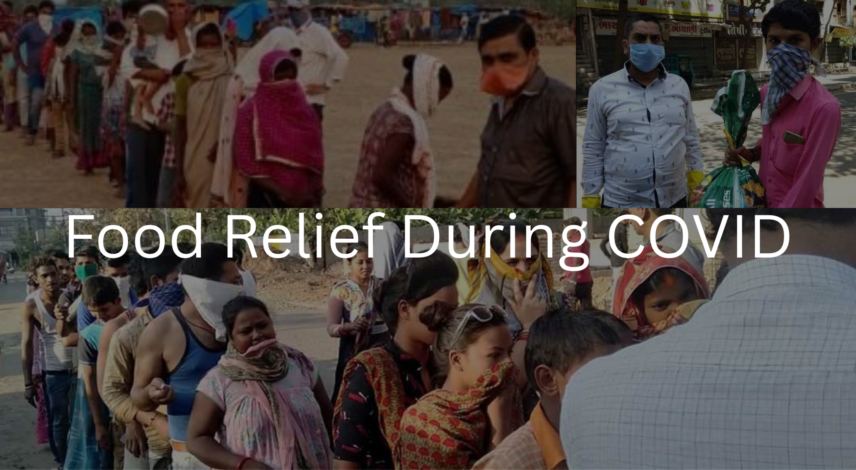
Food Relief During COVID: How LEPDO Supported 500+ Families During the Pandemic
 by Lepdo Diamonds
0 comments
by Lepdo Diamonds
0 comments
The COVID-19 pandemic turned everyday life upside down. Within days, people lost their jobs, travel came to a halt, and thousands of workers were left stranded far from their families. For many households, even necessities became difficult to arrange. Alongside the fear of the virus, hunger quietly became a daily reality for countless families.
Seeing this situation unfold, LEPDO Group felt a responsibility to act. At a time when uncertainty was everywhere, our focus was simple: help people meet their most basic need: food. Our team stepped out during lockdowns to support families with limited access to resources and even fewer options.
Over the course of the lockdown months, more than 500 families across different regions received freshly cooked meals, grocery supplies, and essential household items. These efforts were not planned campaigns but immediate responses to real needs we saw around us. What began as emergency support gradually became a consistent effort to stand with communities facing extreme hardship.
This blog reflects on LEPDO’s Food Relief During the COVID initiative, the challenges, the people we reached, and the impact were created through collective effort. As part of our CSR work, this initiative remains a reminder that small actions, taken at the right time, can make a meaningful difference.
Why Food Relief Was Needed During the COVID Pandemic
When the nationwide lockdown was announced, daily life came to a sudden stop. For millions of families, this also meant losing access to food, income, and basic support systems. What followed was a period of uncertainty that hit vulnerable communities the hardest.
Some of the key challenges people faced included:
- Sudden loss of employment
Daily wage earners, factory workers, street vendors, and small business owners saw their incomes disappear almost overnight. With no savings to fall back on, many families struggled to manage even one meal a day. - Disrupted supply chains
As transport services were suspended and shops remained closed, getting essential groceries became a major challenge. In many areas, food availability was limited, and prices increased, putting further pressure on already struggling households. - Migrant workers stranded far from home
Thousands of migrant workers were left stuck in cities without work, shelter, or support. With travel restrictions in place, returning home was not an option, leaving many dependent on food relief for survival. - Rising food insecurity
Families with elderly members, children, and single parents were at high risk.
Hunger became a silent pandemic of its own.
This is where LEPDO Group decided to step in and act immediately.
LEPDO’s Food Relief Mission: A Humanitarian Response
With growing distress visible across communities, the LEPDO team came together to support those who were struggling the most. The focus was clear: reach vulnerable families with timely food support when it was needed the most.
Supporting 500+ Families With Freshly Cooked Meals
During the peak months of the lockdown, LEPDO volunteers prepared and distributed freshly cooked meals across multiple neighborhoods. These were simple, nourishing meals meant to provide comfort and sustenance during an extremely difficult time.
Each food packet typically included:
-
Rice or khichdi
-
Vegetable sabzi
-
Chapatis
-
Clean drinking water
-
Occasionally, fruits or biscuits
Through this ongoing effort, more than 500 families received regular meals, helping them get through the toughest phase of the pandemic with dignity and care.
Grocery Kits for Longer-Term Support
Along with freshly cooked meals, LEPDO also distributed monthly grocery kits to families who needed more sustained help. These kits were designed to support households beyond a single day and give them some stability during the lockdown period.
Each grocery kit generally included:
-
Atta (wheat flour)
-
Rice
-
Pulses (dal)
-
Cooking oil
-
Salt and basic spices
-
Tea and sugar
-
Essential sanitary items
By providing these supplies, families were able to prepare their own meals for weeks at a time, reducing their dependence on daily food distribution and helping them cope better during an uncertain period.
Priority Support for Senior Citizens and Single-Parent Families
While planning the relief work, the LEPDO team made a conscious effort to identify families who needed urgent and consistent support. Certain households were more vulnerable than others and required immediate attention.
This included:
-
Elderly couples living on their own
-
Single mothers managing households alone
-
Families with members who had disabilities
-
Households with no earning member
These families were prioritised during distribution to ensure that help reached those who had the least ability to cope during the lockdown. The goal was simple, provide timely support where it was needed the most.
How LEPDO Managed the Relief Efforts
Running a relief effort at this scale was not easy. It required careful planning, coordination, and constant on-the-ground communication to make sure help reached the right people at the right time.
Identifying the most affected areas
The team worked closely with local volunteers and community leaders to understand which neighbourhoods were facing the most severe challenges. This helped prioritise areas where families had little or no access to food.
Setting up a dedicated cooking team
A central kitchen was organised to prepare meals safely and efficiently. Hygiene was treated as a top priority, with staff wearing masks and gloves, workstations cleaned regularly, and utensils sanitised throughout the day.
Daily meal preparation and packing
Meals were cooked fresh every morning and packed carefully to maintain cleanliness and quality. The focus was on providing simple, nutritious food that could be distributed quickly.
Safe and contactless delivery
Volunteers followed strict COVID safety measures while distributing meals and grocery kits. Masks, gloves, social distancing, and sanitised vehicles were mandatory to ensure everyone’s safety.
Tracking and follow-up
The team kept records to make sure families received meals consistently. Grocery kits were monitored to reach the correct households, and new families in need were added as situations changed on the ground.
Impact Overview: Lives Reached During the Relief Effort
The relief work reached hundreds of families during one of the most difficult periods of the pandemic. Below is a snapshot of the impact created through this initiative:
| Category | Impact |
|---|---|
| Total Families Supported | 500+ |
| Freshly Cooked Meals Delivered | 15,000+ |
| Grocery Kits Distributed | 600+ |
| Senior Citizens Supported | 120+ |
| Single-Parent Families Assisted | 80+ |
| Volunteers Involved | 40+ |
While these numbers reflect the scale of the effort, they don’t fully capture its true value. Behind every meal and every kit was a family that felt seen, supported, and less alone during an uncertain time. The real impact lay in the sense of hope and relief these small actions brought to people’s lives.
Real Stories From The Community
A widowed mother feeding her children
A mother with two small children had no income during the lockdown. Our grocery kits kept her kitchen running for weeks.
An elderly couple living alone
An 80-year-old couple with no support were unable to step out. Our team provided daily meals and regular check-ins.
Supporting Stranded Migrant Workers
During the lockdown, many migrant workers were left stranded, far from home and without any source of income. Travel restrictions made it impossible for them to return, leaving daily food support as their most immediate need.
LEPDO ensured that groups of migrant workers received freshly cooked meals every day until travel restrictions were gradually lifted. This consistent support helped them get through an uncertain and stressful period with some sense of stability.
These experiences reinforce why CSR efforts matter. Beyond corporate responsibility, they reflect a shared human responsibility to step in, support one another, and act when people need help the most.
Challenges Faced During the Relief Work
Relief work during the pandemic came with its own set of difficulties. Nothing was straightforward, and the situation changed almost every day. LEPDO faced several challenges while carrying out the mission.
There were fewer volunteers available, as many people were understandably afraid of exposure to the virus. Movement restrictions made transportation difficult, and reaching certain areas required extra coordination. Identifying the families who were most in need was also challenging, especially in densely populated neighbourhoods.
Maintaining hygiene standards while cooking, packing, and distributing food required constant effort. On top of this, access to supplies was limited due to closed markets and disrupted supply chains.
Despite these obstacles, the team remained committed. The focus stayed on ensuring that every identified family received support, no matter how difficult the circumstances were.
How Food Relief Fits Into LEPDO’s Larger CSR Vision
The Food Relief During COVID initiative was not a standalone effort. It reflects LEPDO Group’s broader approach to social responsibility, one that focuses on long-term impact and meaningful support.
LEPDO’s CSR work extends across several key areas, including:
-
Sustainability and water revival
-
Child welfare and education
-
Animal welfare
Each initiative is guided by the same belief: businesses have a role beyond growth and profits. They exist within communities and share responsibility for their well-being.
LEPDO believes that progress should happen together, with society, not in isolation.
Conclusion: A Commitment Beyond Business
The COVID-19 pandemic reminded the world of something simple yet powerful, humanity comes before business. For LEPDO, supporting more than 500 families during the lockdown was never about charity. It was about responsibility.
The real outcome of this effort wasn’t just the number of meals served or kits distributed. It was the relief on people’s faces, the reassurance that someone cared, and the small sense of hope restored during an incredibly uncertain time.
This commitment doesn’t end here. Through LEPDO’s broader CSR initiatives, across education, environmental sustainability, and animal welfare, we continue to work toward a future where support reaches those who need it most.
If you share this belief in building a more compassionate world, we invite you to walk this path with LEPDO Group. Together, we can strengthen communities, protect our environment, and ensure that no one is left behind.
Explore our full CSR initiatives
FAQs (Frequently Asked Questions)
1. How many families did LEPDO support during COVID?
LEPDO supported over 500 families with meals and essential supplies.
2. What kind of food was provided?
Freshly cooked meals including rice, chapati, sabzi, and water.
3. Were grocery kits also distributed?
Yes, monthly grocery kits with essentials were provided.
4. Which groups were prioritized?
Senior citizens, single-parent families, disabled individuals, and low-income households.
5. How did LEPDO ensure safety during distribution?
By following strict COVID protocols – masks, gloves, sanitization, and contactless delivery.
6. Was the support continuous?
Yes, support continued for several months during the lockdown.
7. Did volunteers participate?
40+ volunteers helped prepare, pack, and deliver food.
8. Is this part of LEPDO’s CSR Program?
Yes, it is a major initiative under Lepdo Group’s CSR Work.