
When buying a diamond, most people focus on the famous 4Cs: cut, color, clarity, and carat weight. But there is one lesser-known characteristic that often creates confusion, debate, and even fear among buyers: diamond fluorescence. Some believe fluorescent diamonds are flawed. Others think fluorescence is a hidden advantage that can improve appearance and value. So what is the truth?
Diamond fluorescence can be misunderstood because it behaves differently depending on lighting, diamond quality, and individual preference. For diamond buyers, jewelry brands, wholesalers, retailers, and manufacturers, understanding fluorescence is essential for making confident decisions and educating customers properly.
This in-depth guide explains what diamond fluorescence is, how it behaves under UV light and sunlight, whether fluorescence in diamonds is good or bad, and how it impacts beauty, pricing, and resale value. By the end, you will know exactly when fluorescence is a benefit, when it is neutral, and when it should be avoided.
Whether you are purchasing a diamond for personal use or sourcing stones for business, this guide will help you separate myths from gemological facts.
What Does Fluorescence in a Diamond Mean?
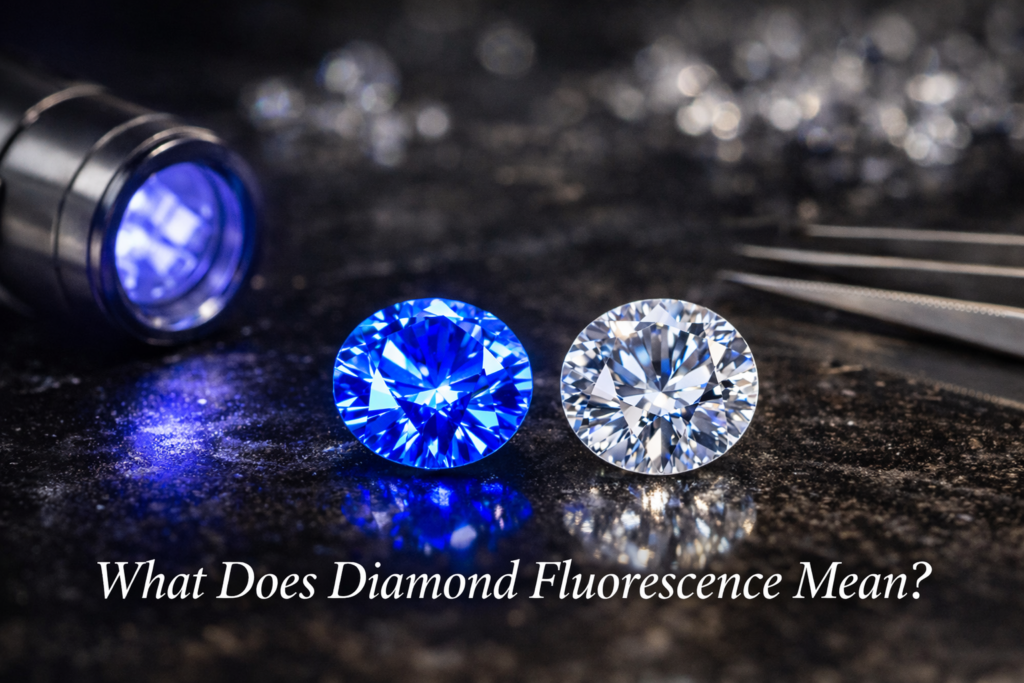
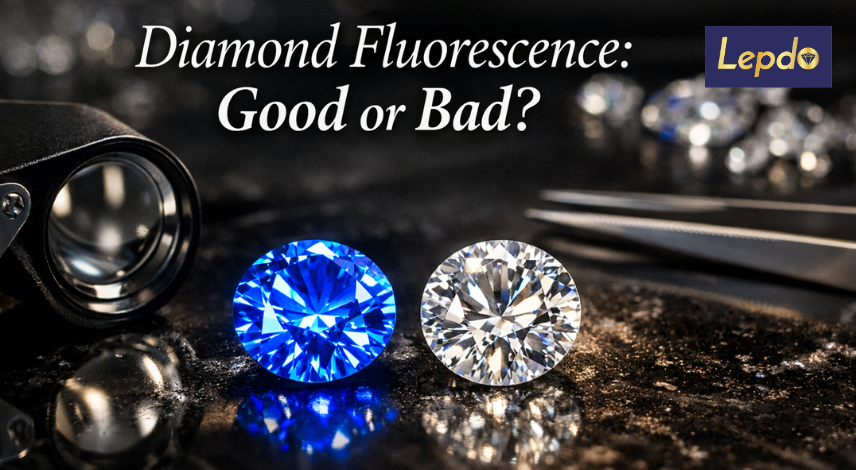
Fluorescence in diamonds refers to a natural optical phenomenon where a diamond emits a visible glow when exposed to ultraviolet light. This glow usually appears blue, though other colors like yellow, white, or green can occasionally occur.
Why Do Diamonds Fluoresce?
Fluorescence happens because of trace elements within a diamond’s crystal structure, most commonly boron. When ultraviolet energy interacts with these elements, the diamond absorbs the energy and releases it as visible light.
Key Points to Know
- Fluorescence is a natural characteristic, not a defect
- It occurs only under UV light or strong sunlight
- Most diamonds do not fluoresce at all
- Blue is the most common fluorescence color
Understanding what does fluorescence in a diamond mean is critical before judging whether it is good or bad.
How Diamond Fluorescence Is Graded
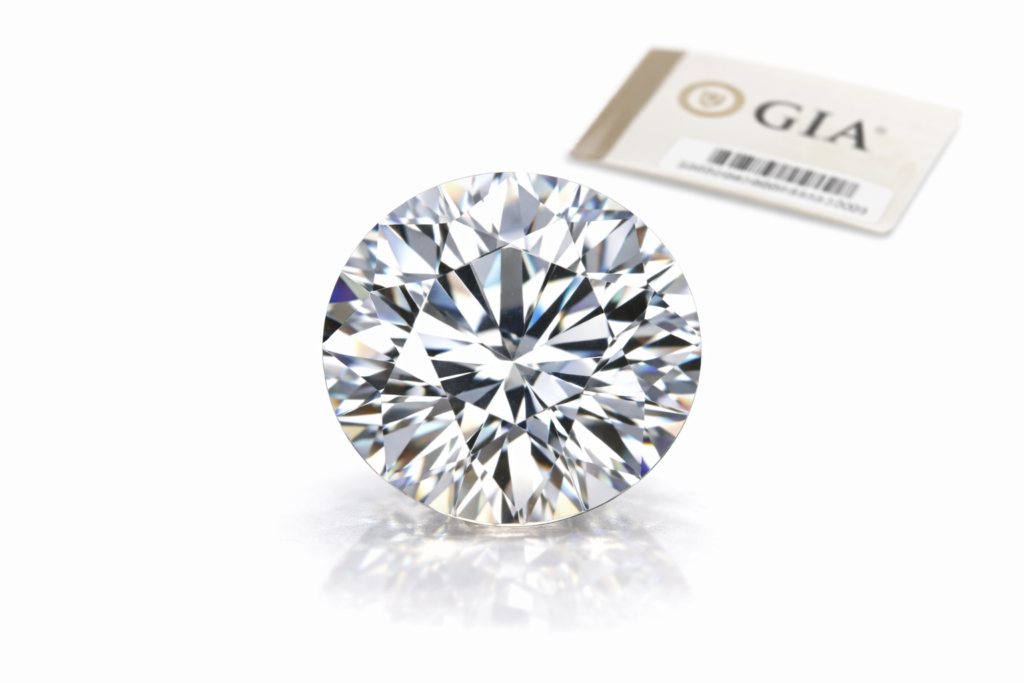
Reputable gemological laboratories evaluate fluorescence and include it on diamond grading reports.
Fluorescence Strength Scale
- None
- Faint
- Medium
- Strong
- Very Strong
This scale describes intensity, not quality. A medium fluorescence diamond can still be visually stunning, while a strong fluorescence diamond may or may not show visible effects depending on the stone.
Diamonds and UV Light: What Actually Happens?
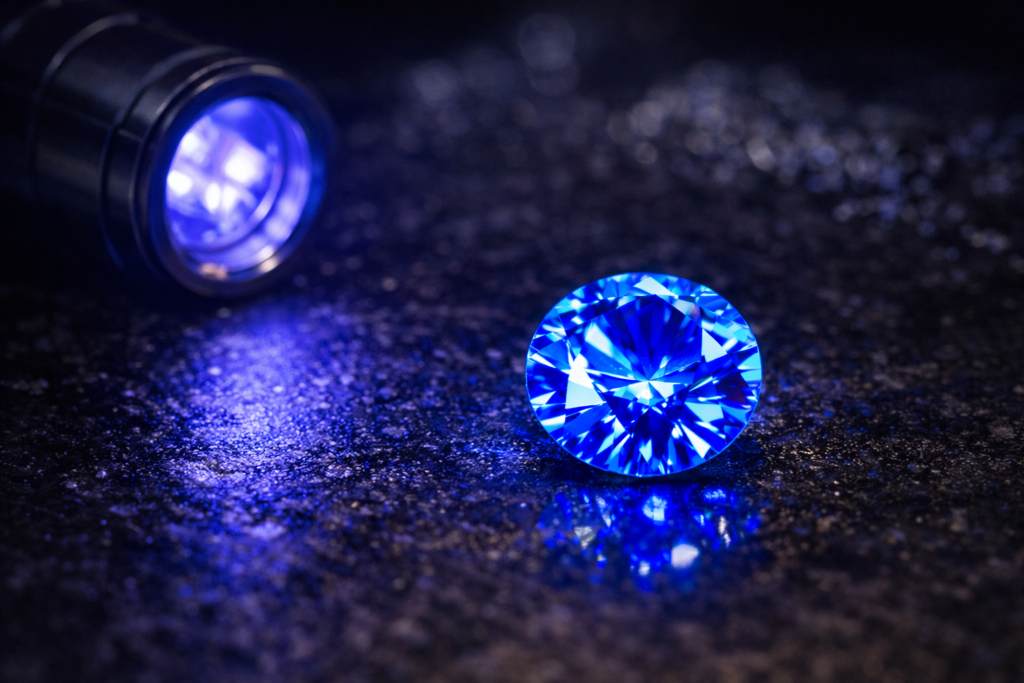
Diamonds Under a Black Light
When placed under a black light, fluorescent diamonds glow, usually blue. This reaction is immediate and harmless. The glow disappears as soon as the UV source is removed.
Diamond Fluorescence in Sunlight
Sunlight contains natural ultraviolet rays. In some cases, diamonds with strong fluorescence may appear slightly brighter outdoors. Rarely, very strong fluorescence can cause a milky or hazy appearance in direct sunlight.
This is why buyers often ask about diamond fluorescence sunlight behavior before purchasing.
Fluorescent Diamonds: Good or Bad?
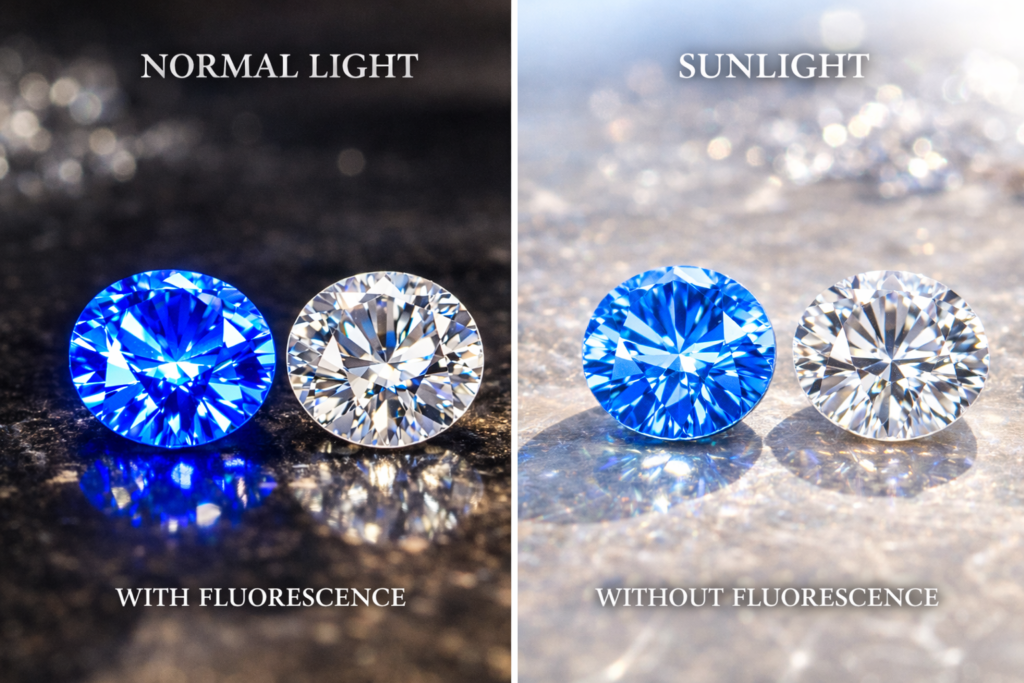
The question most buyers ask is simple: are fluorescence diamonds good or bad?
The real answer is nuanced.
When Diamond Fluorescence Is Good
Fluorescence can actually improve the appearance of certain diamonds.
Benefits
- Makes lower-color diamonds look whiter
- Can increase brilliance in daylight
- Often priced lower than non-fluorescent diamonds
- No impact in indoor lighting
For diamonds in the I to K color range, medium blue fluorescence can be an advantage.
When Diamond Fluorescence Is Neutral
In many diamonds, fluorescence has no visible effect at all.
- Faint fluorescence is usually unnoticeable
- Medium fluorescence often looks identical to non-fluorescent diamonds indoors
- No impact on durability or longevity
Most buyers never notice fluorescence unless it is pointed out on a certificate.
When Diamond Fluorescence Can Be Bad
Strong or very strong fluorescence can occasionally cause issues.
Possible Drawbacks
- Slight haziness or oily look in rare cases
- Reduced transparency under strong sunlight
- Lower resale appeal for certain markets
These effects are uncommon but more likely in high-color diamonds like D or E.
Does Fluorescence Affect Diamond Value?
Yes, but context matters.
Pricing Impact
- High-color diamonds with strong fluorescence may be discounted
- Lower-color diamonds with fluorescence may be more desirable
- Market perception influences resale pricing
In wholesale and B2B markets, fluorescence is priced strategically rather than emotionally.
What Does Fluorescent Mean in a Diamond Certificate?
On a grading report, fluorescence is listed separately from the 4Cs. It does not affect cut, clarity, or durability.
Understanding what does fluorescent mean in a diamond helps buyers read certificates confidently and avoid unnecessary fear.
Fluorescence Diamond Good or Bad for Engagement Rings?
For engagement rings, fluorescence is usually not a problem.
Recommended Choices
- Faint to medium fluorescence is safe
- Ideal for I to J color diamonds
- Avoid very strong fluorescence in D to F color diamonds
The setting, lighting environment, and personal taste matter more than fluorescence alone.
Common Myths About Diamond Fluorescence
Myth 1: Fluorescent diamonds are fake
False. Fluorescence occurs in natural diamonds as well as lab-grown ones.
Myth 2: Fluorescence weakens a diamond
False. Fluorescence has no impact on durability.
Myth 3: Fluorescence always reduces value
False. In many cases, it improves appearance and affordability.
How Professionals Evaluate Fluorescence
Experts assess fluorescence by:
- Viewing the diamond under different lighting
- Checking transparency and brilliance
- Matching fluorescence strength with color grade
At Lepdo Diamonds, fluorescence is evaluated visually, not just by certificate data, ensuring every diamond performs beautifully in real-world conditions.
Explore more educational insights at Diamond Education.
Who Should Choose Fluorescent Diamonds?
Ideal Buyers
- Budget-conscious buyers seeking higher appearance value
- Jewelry brands optimizing price to beauty ratio
- Wholesalers sourcing competitive inventory
- Retailers offering transparent education to customers
Conclusion: Should You Worry About Diamond Fluorescence?
Diamond fluorescence is neither inherently good nor bad. It is simply a natural characteristic that behaves differently based on diamond color, intensity, and lighting conditions. For many buyers, fluorescence offers an opportunity to purchase a beautiful diamond at a better value without sacrificing appearance or quality.
The key is education, not fear. Understanding how fluorescence interacts with light allows buyers, retailers, and brands to make smarter decisions. When evaluated correctly, fluorescence can enhance beauty, improve affordability, and create stronger purchasing confidence.
If you are sourcing diamonds for retail, wholesale, or personal use, expert guidance makes all the difference. Explore certified diamonds, detailed education, and transparent consultation at Lepdo Diamonds.
Make informed choices. Buy diamonds for how they look and perform, not just what the certificate says.
FAQs About Diamond Fluorescence
1. What does fluorescence in a diamond mean?
It means the diamond emits a visible glow under ultraviolet light due to trace elements.
2. Are fluorescence diamonds good or bad?
They can be good, neutral, or rarely bad depending on color grade and fluorescence strength.
3. Can you see fluorescence indoors?
Usually no. Most indoor lighting has minimal UV exposure.
4. Do diamonds under a black light always glow?
Only diamonds with fluorescence will glow under a black light.
5. Does fluorescence affect diamond durability?
No. Fluorescence does not weaken or damage diamonds.
6. Is diamond fluorescence visible in sunlight?
Sometimes. Strong fluorescence may appear brighter or slightly hazy in direct sunlight.
7. Should I avoid fluorescent diamonds for engagement rings?
No. Many engagement rings feature fluorescent diamonds without any issues.
8. Are fluorescent diamonds cheaper?
Often yes, which can be a smart value opportunity.