Certified Loose Diamonds & Loose Lab-Grown Diamonds
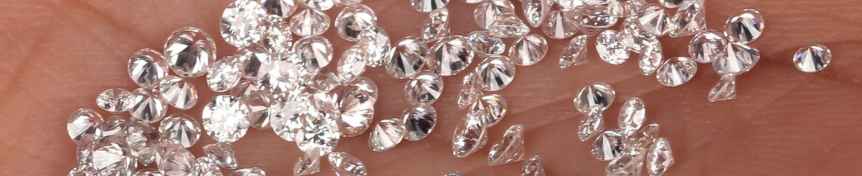
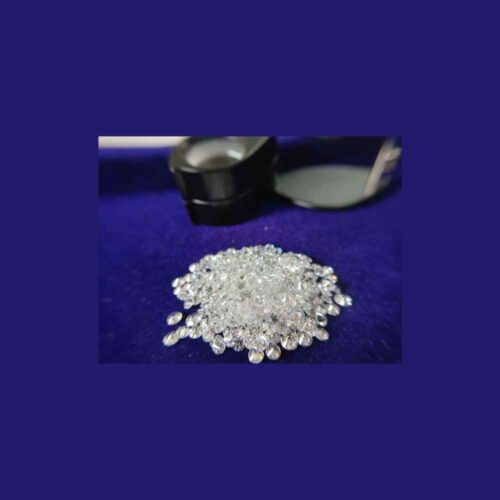
Selecting loose diamonds represents the ideal starting point for custom fine jewelry manufacturing, high-end retail collections, and bespoke engagement rings. Unlike pre-mounted jewelry, purchasing loose lab diamonds allows trade jewelers, private buyers, and B2B professionals to evaluate every gemological parameter independently before setting. From verified chemical purity and facet symmetry to exact color saturation and carat dimensions, unmounted gems offer total visual transparency and maximum design versatility. At LEPDO DIAMONDS, our inventory of loose lab grown diamonds is synthesized using advanced plasma reactors in Surat, Gujarat, providing direct factory pricing and guaranteed origin traceability.
Strategic Commercial Advantages of Buying Unmounted Diamonds
Navigating the global gemstone market requires evaluating both commercial margin protection and raw material quality. Sourcing lab-created stones directly from primary manufacturing facilities provides distinct operational advantages for international jewelry brands, wholesale distributors, and bespoke designers.
Wholesale Pricing Structures and Direct Factory Margins
Sourcing loose lab grown diamonds directly from CVD primary synthesis reactors eliminates intermediary brokers, trade markups, and long supply chain delays. Primary B2B pricing benefits include:
Superior Price-per-Carat Ratios: Access lab grown diamonds for sale at 70% to 90% lower costs than mined alternatives without sacrificing optical brilliance or physical durability.
Consistent Parcel Production: Maintain predictable manufacturing yields for commercial jewelry lines without facing raw material shortages or price volatility.
Precision Calibrated Stock: Order bulk parcels of loose cultured diamonds sorted by exact millimeter measurements, color spectrums, and clarity grades.
Guaranteed Origin and 100% Conflict-Free Manufacturing
Every loose lab created diamond produced by LEPDO DIAMONDS is grown under sustainable energy management protocols. Laboratory synthesis guarantees absolute ethical accountability, providing 100% conflict-free origin traceability back to our state-of-the-art facility in Surat. Independent grading certificates confirm that our cultivated stones possess identical physical, chemical, and optical metrics to mined gems.
Design Freedom for Custom Engagement Rings and Fine Jewelry
Purchasing unmounted lab diamonds empowers custom jewelers to craft bespoke mountings tailored precisely around individual gem dimensions. Designers can adjust prong angles, bezel depth calibrations, and accent stone arrangements without visual constraints or spatial compromises.
Comprehensive Product Categories for Unmounted Gems
Our loose gemstone inventory fulfills diverse commercial requirements, ranging from high-carat solitaire centerpieces to precision-sorted accent melee parcels.
1. Round Brilliant Lab-Grown Diamonds (E-F Color, VS Clarity, 1mm–5mm)
Our certified round brilliant lab-grown diamonds in E-F color and VS clarity represent the pinnacle of high-purity CVD plasma growth technology. Precision-cut for maximum brilliance, scintillation, and optical fire, these calibrated melee and accent gems are available across standard millimeter sizes (1mm to 5mm) for luxury fine jewelry settings:
Micro-Pave Accent Stones (1mm–2mm): Precision-calibrated 1mm to 2mm round brilliant stones, ideal for pave bands, halo borders, and luxury watch bezels.
Side-Stone Accent Gems (2mm–3.5mm): High-clarity E-F color accent diamonds designed for three-stone ring arrangements, channel settings, and tennis bracelets.
Solitaire & Stud Centerpieces (3.5mm–5mm): Eye-clean VS clarity stones in 0.15ct to 0.50ct equivalent sizes, perfect for solitaire stud earrings, pendant clusters, and fine bridal jewelry.
2. Handmade Pear Brilliant Cut Lab-Grown Diamond (D-E Color, VVS Clarity, 3EX)
Our handmade pear brilliant cut lab-grown diamonds in D-E color, VVS clarity, and 3EX (Triple Excellent cut, polish, and symmetry) represent the pinnacle of high-purity CVD plasma growth and master artisan craftsmanship. Featuring an elongated teardrop geometry engineered for exceptional light dispersion and visual finger coverage, these premium loose gems are categorized across primary application tiers:
Solitaire Centerpiece Stones (1ct–3ct+): High-carat D-E color centerpiece diamonds with 3EX symmetry, ideal for luxury engagement rings, east-west solitaires, and halo pendant designs.
Matched Earring & Drop Pairs (0.50ct–1.50ct): Precision-matched pear brilliant pairs sorted for identical millimeter length-to-width ratios, color depth, and VVS clarity for fine drop earrings.
Custom Fine Jewelry Accents (0.25ct–0.75ct): Hand-cut teardrop accent gems designed for vintage-inspired clusters, floral arrangements, and bespoke multi-stone ring bands.
3. 1.5mm Fancy Vivid Blue Lab-Grown Diamond (Round Brilliant Cut)
Our certified 1.5mm Fancy Vivid Blue lab-grown diamonds represent the pinnacle of high-purity CVD plasma growth technology and precise trace boron atom integration. Featuring intense ocean-blue color saturation cut to round brilliant faceting proportions, these micro-calibrated accent gems are categorized across primary application tiers:
Micro-Pave & Halo Accent Bands: Precision-calibrated 1.5mm round brilliant gems designed for seamless micro-pave setting in engagement rings, halo frames, and eternity bands.
Luxury Watch Dial & Bezel Inlays: High-density ocean-blue melee accent stones engineered for custom watch face indices, bezel borders, and luxury timepieces.
Bespoke Multi-Stone Fine Jewelry: Calibrated blue accent diamonds ideal for contrasting against white diamond pave settings, two-tone gold mountings, and vintage-inspired fine jewelry.
Evaluating Unmounted Gems: The 4 Cs of Lab-Grown Gemology
Evaluating unmounted gems involves assessing four primary criteria established by independent testing institutions such as IGI.
Carat Weight and Dimension Tolerances
Carat weight measures physical mass (1.00 carat = 0.200 grams). Because loose lab created diamonds are priced without natural mining markups, buyers can select larger surface dimensions:
0.50ct to 0.99ct: Preferred sizes for solitaire stud earrings and delicate side-stone accents.
1.00ct to 2.99ct: The standard carat tier for modern engagement ring centerpiece stones.
3.00ct to 10.00ct+: High-carat statement gemstones engineered for luxury fine jewelry collections.
Color Saturation and Purity Standards
Color evaluation varies depending on whether the stone is colorless or fancy colored:
Colorless Tier (D-F): Completely transparent gems displaying zero color tint under standardized daylight lamps.
Near Colorless Tier (G-J): High-value stones displaying clean optical clarity once mounted in precious metal settings.
Fancy Color Scale: Graded based on saturation strength from Fancy Light to Fancy Vivid.
Clarity Grading: Atomic Purity in CVD Growth
Advanced CVD plasma growth minimizes structural inclusions, producing eye-clean stones:
Flawless (FL / IF): Zero internal inclusions visible under 10x gemological magnification.
Very Very Slightly Included (VVS1-VVS2): Microscopic inclusions extremely difficult to detect under professional optics.
Very Slightly Included (VS1-VS2): Minor inclusions that do not impair structural integrity or light transmission.
Cut Quality: Engine of Brilliance and Fire
The cut quality of a loose diamond dictates how incoming light rays interact with internal pavilion facets:
Brilliance: The total volume of white light reflected back through the crown table.
Fire: The dispersion of white light into spectral rainbow colors.
Scintillation: The flash patterns produced when the stone or light source moves.
Technical Synthesis: CVD vs. HPHT Growth Protocols
Understanding the synthesis physics behind loose lab diamonds highlights material purity and crystal habit differences.
Chemical Vapor Deposition (CVD) Plasma Physics
CVD growth occurs inside specialized vacuum chambers where methane and hydrogen gases are ionized into high-temperature plasma. Carbon atoms break free from methane molecules and deposit onto diamond seed plates layer by layer. This low-pressure environment avoids metallic flux inclusions, producing Type IIa gems renowned for high optical transparency.
High Pressure High Temperature (HPHT) Growth Comparison
HPHT synthesis replicates Earth’s upper mantle conditions using heavy hydraulic presses and molten metal catalysts (iron, nickel, cobalt). While effective for white diamond growth, HPHT can occasionally trap microscopic metal flux particles within the crystal matrix.
Faceting Proportions and Ray-Tracing Simulations
To ensure maximum brilliance in unmounted lab-grown diamonds, master diamond cutters perform computer-assisted ray-tracing simulations prior to faceting.
Angle Proportions and Critical Light Bending
The physical angles of an unmounted stone dictate internal light reflection behavior:
Crown Angle (34.0° to 35.0°): Directs incoming light rays toward pavilion facets while scattering white light into fire.
Pavilion Angle (40.6° to 41.0°): Reflects incoming light rays internally at critical angles, preventing light leakage through the culet.
Table Diameter (54% to 60%): Balances central light reflection with crown facet flash patterns.
Surface Polish and Facet Symmetry
Faceting polish removes microscopic polishing lines that cause light diffusion. High symmetry alignment guarantees that opposing crown and pavilion facets reflect light evenly across the gem.
Supply Chain Strategy and B2B Wholesale Procurement
Trade jewelers sourcing lab grown diamonds for sale benefit from streamlined B2B ordering workflows at LEPDO DIAMONDS:
Automated Optical Sieve Sorting
In mass commercial manufacturing—such as line production of eternity bands, pave watch bezels, or halo settings—manual sorting creates production bottlenecks. Our primary facilities utilize automated optical sorters:
Standardized Sieve Sizes: Sieve fractions matching precise millimeter diameter ranges.
Tight Diameter Variance: Millimeter tolerances held within ±0.02mm across high-volume orders.
Spectrophotometer Sorting: Automated hue grouping ensuring identical color saturation across wholesale orders.
Technical Quality Assurance Standards
Every stone departing LEPDO DIAMONDS undergoes strict laboratory testing:
FTIR Spectroscopy: Fourier-Transform Infrared Spectroscopy confirms Type IIa atomic purity.
Photoluminescence (PL) Scanning: Laser PL testing evaluates lattice integrity and verifies post-growth history.
3D Inclusion Mapping: High-resolution optical scanning verifies eye-clean visual clarity.
Computerized Proportion Analysis: Analyzers verify facet alignment against strict gemological benchmarks.
Care, Handling, and Setting Protocol for Unmounted Stones
Proper handling protects unmounted stones prior to mounting:
Tweezers Handling: Always hold unmounted gems by the girdle edge using grooved gemological tweezers to avoid oil transfer.
Cleaning Protocol: Wash stones in warm water mixed with mild grease-cutting soap, using a soft brush behind facet junctions.
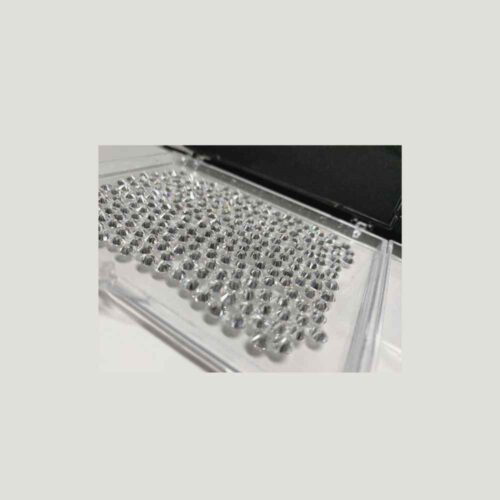
Gem Pod Storage: Store individual unmounted stones in padded gem pods to prevent surface contact wear against other hard materials.
Setting Pressure: Ensure bench jewelers verify girdle thickness before setting, avoiding excessive mechanical tension on delicate culet points.
Market Dynamics: Global Demand for Lab-Grown Gems in 2026
The global luxury market in 2026 has witnessed rapid growth in demand for lab grown diamond jewelry and loose lab grown diamonds across major retail centers including New York, London, Dubai, Hong Kong, and Tokyo. Modern fine jewelry consumers increasingly prefer ethical supply chains, verified sustainability, and superior price-per-carat value.
Conscious Consumerism and Sustainable Luxury
Contemporary buyers prioritize environmental accountability. Traditional earth mining involves geological excavation and heavy fuel consumption. In contrast, advanced CVD plasma growth takes place inside controlled environments powered by clean energy. This shift has established lab created diamonds as the preferred choice for engagement rings and luxury accessories.
Wholesale Market Stability and Price Predictability
For trade jewelers and retail brands, raw material price stability is essential for launching consistent collection lines. Mined diamond supply chains remain vulnerable to mining yield fluctuations and geopolitical disruption. Controlled CVD lab synthesis stabilizes wholesale prices, allowing jewelry manufacturers to run predictable commercial lines year-round.
Visual Inspection Protocols for Unmounted Gems
Before setting an unmounted stone into a gold or platinum mounting, jewelers should complete a technical evaluation:
Surface Polish Check: Inspect facet junctions under 10x magnification to ensure smooth light reflections without polish drag marks.
Girdle Inscription Verification: Confirm that the microscopic laser report number matches physical certificate documentation.
Culet Integrity Inspection: Verify that the culet point is sharp and free of chips or surface abrasion.
Color Distribution Check: For fancy color gems, examine color saturation across the table and pavilion under neutral daylight lamps.
Symmetry Alignment Check: Ensure crown facets line up symmetrically with pavilion facets to prevent optical distortion.
B2B Ordering and Custom Procurement Workflows
To support trade clients worldwide, LEPDO DIAMONDS provides a streamlined B2B procurement framework:
Custom Carat and Cut Selection: Select specific carat weights, clarity tiers, and custom faceting styles tailored to seasonal collections.
Calibrated Bulk Shipping: Certified loose stock and sorted parcels are packaged in secure, tamper-evident gem containers with full door-to-door insurance coverage.
Dedicated Account Management: Trade jewelers work directly with our manufacturing specialists in Surat to coordinate production schedules, custom sieve sizing, and ongoing inventory fulfillment.
Conclusion
Sourcing loose diamonds through modern plasma chemical vapor deposition delivers an extraordinary combination of technical precision, ethical sustainability, and commercial value in 2026. By choosing unmounted lab-grown gems directly from primary manufacturing facilities in Surat, Gujarat, jewelry designers, retail brands, and B2B buyers gain complete control over gemological specifications, facet symmetry, and color purity. Whether acquiring individual IGI-certified solitaire centerpieces or ordering bulk calibrated melee parcels for commercial jewelry production, LEPDO DIAMONDS guarantees direct factory pricing, absolute origin transparency, and conflict-free manufacturing. As global luxury demand continues to embrace conscious innovation, certified loose lab created diamonds provide the perfect foundation for creating timeless fine jewelry pieces without ethical or optical compromise.
Frequently Asked Questions (FAQs)
Q.1: What are unmounted diamonds and why buy loose diamonds prior to setting?
Unmounted diamonds are cut and polished loose lab-grown diamonds not yet secured in jewelry mountings. Purchasing certified loose diamonds allows buyers to conduct a full independent evaluation of the 4 Cs, facet symmetry, and custom setting flexibility.
Q.2: Are loose lab-grown diamonds real certified loose diamonds?
Yes, loose lab-grown diamonds possess identical chemical, physical, and optical properties to natural mined stones, testing positive on electronic detectors and rating 10 on the Mohs scale of mineral hardness for durable loose lab diamonds.
Q.3: How do loose lab diamonds compare in price to natural mined loose diamonds for sale?
Certified loose lab-grown diamonds cost 70% to 90% less than natural mined stones of equivalent carat weight, clarity grade, and color saturation, making lab grown diamonds for sale high-value options for B2B trade jewelers and retail buyers.
Q.4: What are calibrated loose diamond parcels?
Calibrated loose diamond parcels are sorted batches of loose lab-grown diamonds uniform in millimeter size, color grade, and cut precision, engineered for seamless setting in mass commercial fine jewelry production.
Q.5: Do certified loose diamonds come with independent grading reports?
Yes, certified loose lab diamonds include official grading reports from independent gemological authorities such as the International Gemological Institute (IGI) to verify cut symmetry, clarity, and color saturation for loose diamonds.
Q.6: What is a Type IIa unmounted diamond in loose lab created diamonds?
A Type IIa unmounted diamond contains pure carbon with virtually no nitrogen impurities, representing the rarest 2% of natural stones and premium CVD loose lab-grown diamonds crafted by LEPDO DIAMONDS.
Q.7: How can trade jewelers order wholesale loose diamonds from LEPDO DIAMONDS?
Trade jewelers can order calibrated parcels and certified loose diamonds for sale directly from LEPDO DIAMONDS primary manufacturing facilities in Surat, Gujarat for direct factory pricing.
Q.8: Can loose diamonds scratch each other during storage?
Yes, because loose diamonds rate 10 on the Mohs scale of hardness, unmounted gems can scratch one another if stored together without individual padded gem pod isolation for loose lab-grown diamonds.
Q.9: Which cut geometries enhance body color in fancy color loose diamonds?
Radiant and cushion cuts feature multi-faceted pavilion arrangements engineered to reflect light internally multiple times, significantly intensifying color saturation in fancy color loose diamonds and cultivated gems.
Q.10: How are laser inscriptions used on certified loose diamonds?
Official IGI grading numbers are microscopically laser-inscribed on the outer girdle edge of certified loose diamonds for instant verification under 10x magnification. For in-depth trade guides, laser inscription safety benchmarks, and manufacturing insights, trade buyers can follow our official Medium publication.